By Tracie Savage
WORKING DRAFT V-5 • OCTOBER 2026
NOTES:
THIS VERSION HAS RECEIVED ONE COPY-EDIT PASS!
I tried to fix typos, spelling and punctuation errors. I also attempted to eliminate redundancies and tighten and generally improve sentence structure. I also tried to standardize style.
PLEASE NOTE THE PAGE NUMBER when you spot errors that I missed.
***TITLE – This is just a “working title.” Thoughts?
***CHAPTER TITLES are place holders and may or may not be changed. Thoughts?
***SUBHEADS may or may not be permanent. They were added to help determine if sections should be moved to other chapters for better continuity and flow. Thoughts?
***I have hundreds of photos that I could include. I am just starting to compile the photos.
***MY GOAL – I am not attempting to write a literary masterpiece, but rather this book is simply a storehouse for the stories of my life.
I hope to self-publish and take copies to horror conventions to sell to fans.
I don’t want to open a can of worms that I will later regret – thinking of the chapter on the O.J. Simpson trial. Thoughts?
PART 1 – Prologue (Page 3)
Chapter 1 – Before I knew what a career was (Page 6)
Chapter 2 – The start of the family business (Page 10)
Chapter 3 – A little girl on television (Page 20)
Chapter 4 – The late 1970’s. My career winds down, my mom’s winds up (Page 24)
Chapter 5 – Friday the 13th Part III: 3D (Page 29)
Chapter 6 – Screentests and salaries; so many close calls (Page 38)
Chapter 7 – The decision to leave acting (Page 42)
Chapter 8 – Becoming a journalist (Page 47)
Chapter 9 – Moving to Dayton (Page 55)
Chapter 10 – Back to LA and Mickey Mouse (Page 65)
Chapter 11 – KNBC-TV Channel 4 (Page 76)
Chapter 12 – The OJ Simpson Trial (Page 86)
Chapter 13 – Television wasn’t my only stage (148)
Chapter 14 – From the newsroom to the classroom (154)
PART 2
Chapter 15 – Judy Savage and the women who came before me (Page 165 )
Chapter 16 – George Savage, a passion for journalism runs in the family (Page 173)
Chapter 17 – Mark Savage, a way out (Page 177)
Chapter 18 – Brad Savage, the youngest did all of the heavy lifting (Page 183)
Chapter 19 – The Savages, a modern-day Von Trapp family (Page 192)
Chapter 20 – The unexpected return to acting (Page 198)
Chapter 21 – The Savage grandchildren, the next generation of show biz kids (Page 200)
Chapter 22 – We are family (Page 208)
Chapter 23 – Why this book, why now, and what’s next? (Page 211)
PART 3
A final word
Archives
Who’s Who? The people behind the stories
PART I – PROLOGUE
If someone had told me as a little girl that my life would take me from television sets and movie studios to newsrooms and crime scenes, to some of the biggest trials and breaking-news stories in Los Angeles and across the country — and eventually into a college classroom — I probably would have thought they were describing several different people.
But they were describing me.
My name is Tracie Savage.
My life has unfolded in chapters that, at first glance, don’t seem to belong together.
I was a child actor. I grew up in front of television cameras, working on everything from commercials to television series to feature films, including the quintessential family series Little House on the Prairie and the cult horror classic Friday the 13th Part III.
While most kids were playing with their friends, I was going on auditions, memorizing scripts and working alongside some of Hollywood’s biggest stars. I was earning a paycheck, paying taxes and helping support my family before I was even 10 years old.
I didn’t know it at the time, but those early years were preparing me for a very different career.
I became a broadcast journalist. I worked as a reporter and anchor at five different television stations, first in the Midwest and then in Los Angeles, the second-largest television news market in the country.
I covered murders, riots, natural disasters, political scandals and some of the most important and controversial stories of my generation.
I reported from crime scenes, courthouses and disaster zones. I interviewed everyone from ordinary people caught up in extraordinary circumstances to politicians, celebrities and some of the most notorious figures in the headlines.
And then there was the O.J. Simpson trial. I spent months covering what became known as the “Trial of the Century,” reporting on the proceedings and the extraordinary spectacle surrounding them.
Then, in a remarkable turn of events, I went from reporting on the trial to becoming part of the story myself. I was called to the witness stand and testified under oath in the very courtroom I had been covering as a journalist. O.J. Simpson’s “dream team” tried to force me to reveal my confidential sources.
That experience taught me a great deal about the power of the news media, the responsibilities of journalists and what can happen when the person telling the story suddenly becomes the story.
After years in television news, I moved into radio, working as the evening-drive anchor at an all-news radio station in Los Angeles. It was a different medium, but the mission was the same: Get the facts, tell the story and make sure the audience understands why it matters.
And then, after decades in the news business, I found myself starting over again.
At 50, I went back to school and earned my master’s degree. I became a college professor, teaching young people how to report, write and tell stories of their own.
It wasn’t a career path I could have predicted. But looking back, I can see that the chapters of my life have always been connected.
The little girl memorizing lines on a Hollywood movie set was learning many of the same skills she would later use standing in front of a television camera reporting breaking news.
The reporter who spent decades asking questions and searching for answers would eventually become the professor teaching students how to do the same.
Along the way, I’ve had extraordinary opportunities, met remarkable people, made mistakes, taken chances and experienced more than a few unexpected twists and turns.
I’ve also learned that careers don’t always follow a straight line. Sometimes the biggest changes in our lives come when we least expect them, and sometimes the skills we develop in one chapter turn out to be exactly what we need in the next.
Looking back, I realize that my life has never really been about three or four different careers.
They are all about communication.
They are all about people.
And, most of all, they are all about stories.
This book is a storehouse for of those stories.
Authors note: Warning! I name names. I name a lot of names.
In Part 3 of this book, I have included a directory, a “Who’s who.”
Many are no longer with us, but I can’t underplay their contributions to their industries during the height of their careers, nor can I downplay the incredible feelings of excitement we had when we worked with each and every one of these remarkable people.
PHOTOS
Chapter 1: Before I Knew What a Career Was
My introduction to television came long before I was old enough to understand what a career meant.
I grew up as a child actor in a show-business family. I started in the entertainment industry when I was 2 years old, doing print work in Detroit, Michigan. One of my first modeling jobs I did was for Hudson’s department store. I went on to do numerous print advertisements for Hudson’s that ran in the Detroit Free Press newspaper. I also did a print ad for the General Motors Sportvan 90. My mother, father and older brother were in the same ad with me.
I was born in 1962 in Chicago, Illinois, the second of three children and the only daughter in the family.
My parents were young. They had their first child, my older brother Mark, when they were just teenagers. I came along four years later, and Brad, my little brother, was born when I was 3.
So, by the time my mom and dad were in their mid-20s, they had three kids.
My parents were both born and raised in Caro, Michigan, a small town about two hours north of Detroit. It made sense for them to move us back to Michigan to be closer to our extended family.
So, in 1965, we left Chicago and moved to Michigan.
My dad worked to support us, doing copyediting jobs in advertising. My mom was a stay-at-home mother with a lot of drive and ambition.
She put Mark, her very talented firstborn, in community theater when he was about 5. But my mom had bigger ideas for her kids.
It was then that my childhood acting career was launched. My mom found my brother Mark and me an agent in Detroit, and we began going on auditions and booking jobs.
MY FIRST COMMERCIAL
I did my first television commercial when I was 4.
It was July 23, 1967, and we were living in Livonia, a suburb of Detroit.
The commercial, for the American Motors Rambler automobile, was shot at Warren Airport, a private airport near Detroit. In the commercial, the actor who played my father arrived in a single-engine plane, and I jumped out of the Rambler and ran to greet him.
I don’t remember much from that day, but I do remember being frightened on the ride home.
DETROIT RIOTS
A riot had broken out just a few miles from where we were filming.
It was the first day of what would become five days of civil unrest in Detroit, involving violent clashes with police, widespread fires, looting and the deployment of the Michigan National Guard and U.S. Army.
Detroit’s Black population had faced decades of housing discrimination, residential segregation, employment discrimination and particularly tense relations with the largely white police force.
While my mom and I were arriving on the set that early Sunday morning, Detroit police raided an unlicensed after-hours drinking club, known as a “blind pig,” at Clairmount Avenue and 12th Street, now Rosa Parks Boulevard, on Detroit’s near west side.
As police arrested the people inside, a crowd gathered outside, and the confrontation escalated. For several days, parts of the city looked like a war zone.
By the time order was restored, 43 people had been killed, hundreds had been injured and more than 7,000 people had been arrested. Roughly 2,500 stores were looted or burned, and hundreds of buildings were destroyed or seriously damaged.
It was one of the deadliest episodes of urban unrest in 20th-century American history.
A FRIGHTENING RIDE HOME
During our drive home that day, my mom had me duck down on the floor of the car. We had to avoid parts of the city or risk getting caught up in the violence.
That was my first experience with a riot, but not my last. Decades later, I would be covering the riots in Los Angeles as a TV news reporter.
MY CHILDHOOD WASN’T NORMAL
I spent nearly 20 years as a child actor, growing up in an environment where cameras, studios, auditions and actors were part of everyday life.
Waking up before dawn to be in the makeup chair by 7 a.m.
Doing my schoolwork in a small trailer with a “set teacher.”
Making sure not to get my clothes dirty so the wardrobe matched the previous shot.
Knowing how to hit my mark so the camera stayed in focus and I didn’t block the light for my fellow actor.
And putting in a full day’s work in the hot sun or in single-digit temperatures before I had even turned double digits myself.
My childhood was different from that of the average kid.
While other kids were going to school and playing with their friends, I was going to callbacks and wardrobe fittings, doing screen tests and voice-over work, and walking onto television and movie sets.
I was a child in an adult world. I made money. I helped pay my family’s bills. I collected unemployment.
I also learned at a very young age how to memorize lines, take direction, work with adults and perform when a camera was pointed at me.
I didn’t know it at the time, but those experiences were teaching me skills that would stay with me for the rest of my life.
I learned how to be comfortable in front of a camera.
I learned how to listen.
I learned how to observe people.
And I learned something else that would become enormously important later: how to tell a story.
PHOTOS
Chapter 2: The Start of the Family Business
I worked steadily as a young actor, and I have a decent list of credits to show for it.
I would never say I was a brilliant actress, but I was well-behaved, could memorize lines, follow directions, and had the “all-American” look that was popular on TV in the 1970s.
I was cast in about 30 national television commercials and numerous episodic TV series in the late 1960s and throughout the 1970s.
The producers and directors must have liked me because they kept calling me back for more. I appeared in three episodes of My Three Sons, three episodes of Family, three episodes of General Hospital and two episodes of Marcus Welby, M.D., including one in which my real brother Brad played my TV brother.
Brad and I got to play siblings on TV a couple of times.
Plus, I appeared in nearly a dozen episodes of Little House on the Prairie.
I had guest roles in The Mod Squad, Love, American Style, Adam-12, Happy Days, Eight Is Enough and many other popular TV shows of the era.
I appeared in numerous made-for-TV movies, which were a big part of television programming in the 1970s. I also had roles in several feature films.
I have copies of my original work permits from 1969 to the mid-1970’s. All child actors must apply for a permit to work in the entertainment industry. When you arrive at a set, you present your work permit to the teacher, who is also the set welfare worker. If you don’t have a valid work permit, you will get sent home. The teacher signs and puts the date near the bottom of the permit. It’s a great way to keep a record of when you worked.
Looking at my early permits, when I was 6 to about 10 years old, I worked an average of once per month on a commercial or TV Show. Once I got the role on Little House, that average went way up.
1968: MOVING ACROSS THE COUNTRY
My career began in earnest in 1968, when my family moved from Livonia, Michigan, to Northridge, California, a suburb of Los Angeles. I was 5.
I had done one commercial and quite a bit of print work in Detroit, but if we were going to make it in show business, we needed to get out of the Midwest.
It was either Los Angeles or New York. We picked Los Angeles. We figured if we didn’t make it in show business, we’d rather struggle in a place with nice weather.
GOING ON INTERVIEWS
Nearly every afternoon, my brothers, Mark and Brad, and I would jump into our mother’s yellow and brown American Motors Hornet station wagon, and my mom would drive us from our home in Northridge, at the northern end of the San Fernando Valley, into Hollywood.
Between the three of us kids, we almost always had at least one audition, a callback or a wardrobe fitting to attend.
We’d bring a change of clothes to switch into in the back seat, depending on the roles we were auditioning for. I would put my hair in pigtails if I was up for a “counter girl” role. I’d take down the pigtails and mess up my hair if the role was for a runaway.
NAVIGATING THE FREEWAYS
We spent hours on the freeways of Los Angeles commuting to interviews and production studios and locations.
I grew so familiar with the streets of L.A. that I usually navigated for my mom. I could read a Thomas Guide with ease by the age of 8. By the time I was 9, I had memorized the names and exact order of the offramps on the 5 Freeway between Northridge and Hollywood.
I guess it was good practice for the days when I booked a gig and had to memorize lines from a script.
A BIG COMMITMENT
Being a child actor was a commitment that meant missing out on the usual things that are done by non-working kids. I missed camping trips and friends’ birthday parties. My brothers and I sometimes missed our own birthday parties. We could never make vacation plans if we were up for a big role.
I also missed a lot of regular school, sometimes for weeks at a time. I would get my assignments from my teachers and do the classwork on the set.
I never became a Girl Scout. I didn’t have time. I couldn’t join the cast of a school play or participate in team sports because I couldn’t guarantee that I could make the practices. After school playdates were conducted in casting offices with the other child actors.
If I was under contract, I wasn’t allowed to do anything even slightly dangerous for fear I might get injured. Riding minibikes was definitely not allowed.
My two brothers and I were working actors, earning money to support our family.
COLLECTING UNEMPLOYMENT
And if we weren’t working, we were collecting unemployment.
As child actors, we paid taxes. Because we had very few write-offs and no dependents, the government got a big chunk of our money. We were entitled to collect unemployment in between jobs. For years, we were constantly on unemployment.
Back in the 1970s, we had to go into the rundown, grungy unemployment office at the corner of Santa Monica Boulevard and Selma Avenue in Hollywood each week and stand in line to collect our benefits. Selma Avenue was the Hollywood street where the hookers used to hang out. We often got an eyeful heading into the office. We also frequently ran into other child actors at that same old office.
The unemployment benefits were paid in cash, but you still had to sign for the money.
My younger brother, Brad, and I weren’t tall enough to reach the high counter to sign for our money.
We had to stand on a chair.
INCREDIBLE EXPERIENCES
It was “the family business,” and while it was unusual, it was often a lot of fun.
We got to travel when acting jobs took us on location, and whenever possible, we would all go.
We never traveled in first class, instead my mom would trade in the two first class tickets provided by the production companies to buy four economy seats so we could all fly together and she didn’t have to pay for the tickets.
These location shoots took us from one end of the country to the other. It took us to major cities and to small, abandoned ghost towns. We would all cram into one hotel room. Sometimes we’d be on location for just a few days, but there were times, when my older brother was cast in a touring company of a Broadway musical, we’d be away from home for nearly a year.
At various times when I was grade-school age, my mom would enroll me in schools in these different cities. I’d head into a new classroom for a few weeks so I didn’t get behind.
I spent six weeks filming a TV pilot called Friendly Persuasion in Blue Springs, Missouri with actors Richard Kiley and Shirley Knight.
Both of my brothers, at different times, were cast in roles that took the whole family to Hawaii. No offense to Blue Springs, but these Hawaii gigs were incredible.
There were numerous occasions when all three of us kids were working in three different cities at the same time.
In 1972, my brother Brad and I filmed a commercial together for Nestlé Quik on the Matterhorn at Disneyland. The two of us rode that famous roller coaster repeatedly without waiting in line. For little kids, this was fantastic.
WORKING WITH FAMOUS PEOPLE
We met and worked with dozens of famous people, celebrities of all kinds. To us, they were just co-workers playing our mom or dad in a movie or TV commercial.
When I was 9, I filmed a commercial for the Bowery Bank of New York with baseball great Joe DiMaggio.
Joe DiMaggio was an American legend. Known as “The Yankee Clipper,” the New York Yankees superstar was widely considered one of the greatest players ever to play the game. His record of hitting safely in 56 consecutive games remains one of baseball’s most extraordinary achievements. He was a nine-time World Series champion and a national hero.
His brief marriage to Marilyn Monroe only added to his mystique.
When I worked with him, he had been retired from baseball for more than 20 years.
Brad and I worked together on another commercial, this one with movie star Henry Fonda for a new toy called the “Talking View-Master.”
Watch the Talking View-Master commercial
Henry Fonda was one of the most revered actors of the 20th century. Among his most celebrated films were The Grapes of Wrath (1940), 12 Angry Men (1957) and On Golden Pond (1981), for which he won the Academy Award for best actor. He was also the father of actors Jane and Peter Fonda and the grandfather of Bridget Fonda.
Brad did a Disney movie with actress Bette Davis called No Deposit, No Return.
Bette Davis was one of the most celebrated and formidable actresses in Hollywood history. She received 10 Academy Award nominations for acting and won twice.
And Brad played the son of actor George C. Scott in Islands in the Stream, the movie based on the Ernest Hemingway novel.
George C. Scott’s most famous role was his portrayal of Gen. George S. Patton in the 1970 film Patton. He earned an Academy Award for best actor for his performance, but he refused to accept it, declaring that the Oscars reduced acting to a popularity contest. He was equally memorable in Dr. Strangelove (1964), The Hustler (1961) and A Christmas Carol(1984), in which he played Ebenezer Scrooge.
In 1971, when Brad was 5, he shot a Del Monte Gel Cup commercial directed by Francis Ford Coppola, who around that same time was directing The Godfather. The Del Monte commercial made it into the Library of Congress’ Robert R. Gitt Collection of Television Commercials.
My mom says Coppola rolled up to the location in a limo. A rather robust man got out of the car and strolled onto the set. They had no clue who he was, just some guy named Francis. My mom called him “fantastic ole Francis.” OK, well, “fantastic” may not have been the exact word she used.
Watch the Del Monte Gel Cup commercial
In the fall of 1973, Brad worked with Jodie Foster when he was 7 and she was 11. They appeared in an ABC TV series called Bob & Carol & Ted & Alice. The series was canceled after just seven episodes amid declining ratings and network concerns about its mature themes.
Brad worked with Jodie again a few years later in a feature film shot in Nova Scotia called Echoes of a Summer.
One of Mark’s last TV acting jobs, in 1981, was a Kentucky Fried Chicken commercial with Roberta Flack.
Roberta Flack was one of the great voices of American popular music. She was a soulful, Grammy Award-winning singer whose career soared in the 1970s. Two of her most popular songs were “The First Time Ever I Saw Your Face” and “Killing Me Softly With His Song.”
Before then, Mark performed in the musical Mame in stage productions across the country with a long list of show-business legends.
When he was about 12, starring in Mame in Las Vegas with Juliet Prowse, Elvis Presley came backstage after the show and walked into Mark’s dressing room to tell him that he had “done a great job.”
Stunned, Mark, who was standing in his underwear, shook his hand. After Elvis left the room, my mom yelled at Mark, “Go get his autograph!”
We still have his autograph, addressed to Mark.
SHOWBIZ FRIENDS
Our childhood friends were other show-business kids.
These friendships began while waiting at auditions and competing for the same roles. They grew while working together on sets, in commercials, TV series and films.
My brother Brad, who spent far more time on sets than in regular school, was close friends with many of his childhood acting peers back in the 1970s, and he still keeps in touch with many of them today.
Both of my brothers, my mom and I spent time with Moosie Drier and his family at their home. Moosie had more than 100 credits as a child actor, including appearances as a series regular on Rowan & Martin’s Laugh-In and later on The Bob Newhart Show.
I remember child actor Danny Bonaduce, who starred in The Partridge Family, was often at Moosie’s San Fernando Valley home, too. According to my mom, Danny and his mother lived with the Driers for a while.
Brad used to hang out with several of the kids he worked with on the Walt Disney movies in which he starred.
Robbie Rist, who played Oliver in the last season of The Brady Bunch, is one of Brad’s oldest friends. Brad had screen-tested against Robbie for The Brady Bunch role. Brad may have been disappointed when Robbie got the part and he didn’t, but there were never any hard feelings when our friends were cast in acting roles that we were up for.
We rooted for our friends, and the show-business families helped each other.
Brad ended up with a stack of hand-me-down blue jeans from actor Butch Patrick, who played Eddie Munster in the hit TV show The Munsters.
Jeans and a brightly colored T-shirt were the go-to audition outfit, especially for boys.
JUGGLING THREE KIDS AT ONCE
It wasn’t unusual for my mom, who at times was juggling three kids on three different sets, to ask the mothers of other child actors we were working with to be our guardians on set.
My mom would drop us off in the morning and pick us up after the day’s filming wrapped. She couldn’t be three places at once.
There were two back-to-back summers when I was working on Little House on the Prairie in Simi Valley, Brad was doing a Disney movie either in Burbank or on location somewhere, and Mark was up in San Francisco performing in Oliver! one summer and The King and I the next.
My mom’s youngest sister, my aunt Kristen, was living in Los Angeles at the time, and she took me to the set in Simi Valley.
My mom took Brad to his set every day.
For the first summer Mark spent in San Francisco, he lived with another actor and his mom in a big apartment on the top floor of a high-rise building across the street from the theater.
The second year, when Mark was just 15, he lived in his own apartment. Another kid and his mom lived across the hall.
My mom managed it all – keeping track of our three conflicting schedules, lining up the on-set guardians, getting us to the sets for the early morning call-times. This wasn’t like so many parents who juggle their kids little league schedules. We were professional actors, being paid to be in the right place at the right time, with lines memorized and ready to take direction, often from a total stranger.
WEEKENDS WITH DAD
By the early 1970’s, just a few years after we moved to Los Angeles, my parents divorced. My dad, George, lived close by, and we often spent weekends with him. I have fond memories of him cooking us great dinners, nicknaming himself “Chef Pierre Henri Savage,” which he would say with a thick French accent.
We often spent nights playing poker together. He had a huge jar of pennies we would use to bet with.
Beach days were frequent. At the beach, my dad and I would spend much of our time tossing a football. I had surprisingly great hands for a little kid.
1972: THROWING A FOOTBALL WITH AN NFL LEGEND
On a TV movie set in Nevada in 1972, I was taught how to throw a football by NFL legend Rosey Grier.
Grier played for the New York Giants and then the Los Angeles Rams. He was a two-time Pro Bowl selection. He went on to become an actor and television personality.
The TV movie, filmed in an old Nevada ghost town, was called Second Chance, and it starred actor Brian Keith from the late 1960s TV series Family Affair.
Both Brad and Mark had roles in the movie. I was just along for the ride, and I had fun tossing a football with big, sweet Rosey Grier. I still have a decent arm today.
I also still have that old leather football that my dad and I used to toss around. The leather is now worn down to a smooth, soft suede. It is one of my most prized possessions.
GRIER’S CONNECTION TO THE O.J. SIMPSON TRIAL
Like me, Rosey Grier had a connection to the O.J. Simpson trial.
Two months before the double-murder trial began, Grier, an ordained minister, visited Simpson in jail, where he was being held awaiting trial. A deputy at the jail overheard what he believed was a jail-cell confession by Simpson.
The National Enquirer published a sensational account claiming that Simpson exclaimed, “I did it!” during his conversation with Grier. But that was an unverified tabloid account, not something established in court.
Grier refused to testify about the conversation, claiming he was protected by clergy-penitent privilege.
I called Rosey Grier when I was covering the trial, hoping to get a quote from him. He knew who I was from my work at KNBC, but I’m not so sure he remembered me from those days on the set in the early 1970s, tossing the football. It was fun to talk with him. He was very kind, but he wouldn’t go on the record.
No scoop there.
1974: WEEKENDS IN SAN FRANCISCO
When we weren’t with my dad, my mom, Brad and I would fly up to San Francisco for the weekend to see Mark. I remember the airfare was $17 for a roundtrip ticket.
Those weekend trips were always fun. The musicals Oliver! and The King and I both had many young child actors in them. We would all hang out together. We would take outings as a group on the days the theatre was dark. I saw a lot of San Francisco and rode a lot of cable cars in those two summers.
I remember breaking into the Geary Street apartment building’s basement storage room, where they kept old mattresses stacked up to the ceiling. We would jump on and hide in that big pile of mattresses. We would also throw paper airplanes out the eighth-floor window of the apartment building and watch them soar across Geary Street.
All the kids in those San Francisco musicals could sing. They had great voices, and before the show, several of the child actors would go out on a street corner and “busk” for dollars. These kids were talented, and they made good pocket change.
In the summer of 1974, I was learning to play guitar. I think I knew three chords and could sort of play a few songs. My younger brother Brad, who also had a great voice, and I decided we wanted to get in on the action.
I was 11 and Brad was 8, and he was tiny. We were both little kids. We set up our tin can to collect change. I strummed away, and we both sang our hearts out.
My mom stood about 15 feet away, keeping an eye on us. She remembers overhearing strangers wondering aloud with disgust, “What kind of mother would let her little children beg for money?”
Hey, it’s called showbiz, and we were firmly entrenched in it.
1975: MY FIRST ON-SCREEN KISS
One of my first childhood “boyfriends,” in a fleeting relationship that began with my first on-screen kiss, was teen heartthrob Leif Garrett.
Leif was one of the biggest teen idols of the late 1970s. His face was everywhere — Teen Beat, Tiger Beat, posters, television appearances and merchandise.
Later, his career and personal life were badly affected by addiction and a devastating automobile accident.
In 1975, at the age of 12, I had a guest-starring role on Three for the Road, a short-lived TV series that starred Leif and actor Vince Van Patten as brothers. Their father in the series was Alex Rocco, a well-known actor with credits a mile long.
I played the daughter of actor Bradford Dillman, another workhorse of an actor whose career spanned five decades. Just two years before I worked with him, Dillman had played Robert Redford’s pal in The Way We Were.
In this episode, titled “The Fugitive,” I had my first on-screen kiss with Leif Garrett.
I don’t remember much about shooting the scene, except that I was very nervous.
The relationship with Leif didn’t last long. It probably ended when I finished filming the episode, but I don’t really remember.
And while he attended my birthday party at my family home a few months later, I didn’t see much of him after that.
By the way, if you’ve never heard of the TV show Three for the Road, you aren’t alone.
The series ran for less than a year and would ultimately finish with the lowest ratings among 97 shows that aired during the 1975-76 American broadcast season.
LIFELONG FRIENDSHIP WITH DAWN LYN
Leif’s sister is actress Dawn Lyn, who played Dotie on My Three Sons.
I appeared in three episodes of that show in the late 1960s. My Three Sons was the first theatrical role I was ever cast in, and Dawn was my first childhood actor friend.
She and I have been friends ever since.
There’s an almost instant bond between former child actors. We understand one another because we’ve shared similar experiences and faced many of the same challenges growing up in a tough industry.
Through the years, Dawn and I have had many long talks reminiscing about what it was like being child actors — the pressure, the struggles, the disappointment, the craziness of it all. And then there was the challenge of navigating those tricky teenage years, all while growing up in the spotlight and helping to pay the family’s rent.
MY CHILDHOOD WAS RARELY BORING
I grew up fast.
I was navigating the freeways, paying taxes, collecting unemployment and worrying about a mortgage before I was 10.
I definitely missed out on things that other kids got to experience.
I was a good athlete as a child. I still am. I ski, snowboard, play pickleball, ride bikes and hike. I was the quarterback of my sorority’s powderpuff football team at UCLA. I played coed softball on TV station teams in both Dayton and L.A. I was a solid tennis player, competing in club tournaments for several years.
I might have been able to compete when I was a teenager and perhaps join the high school tennis team. Maybe I could have earned an athletic scholarship to help pay for college.
But I was too busy working in show business. And since the whole family was in it together, it didn’t feel strange.
Sure, I got teased a bit, including once by an elementary school classmate when I was 7.
I had appeared in an episode of Marcus Welby, M.D. One of the stars of the hit medical drama was actor James Brolin, who later married singer Barbra Streisand. In the episode, he called me “princess.” Apparently, my classmate thought this was silly.
I asked that mean classmate of mine, “If you got paid to be called ‘princess,’ wouldn’t you do it, too?”
I was grateful that I had saved enough money from my childhood acting career that I didn’t have to get a job while I was in college. I paid for all four years of college tuition myself, without taking out loans or getting help from my parents. I was proud of that.
My childhood was so different from most, but there was never a dull moment.
PHOTOS
FRIENDLY PERSUASON
My Three Sons
Marcus Welb. M.D.
Leif Garret in Three for the Road
Chapter 3: A Little Girl on Television
One of the most memorable and happy chapters of my childhood was becoming part of the world of Little House on the Prairie.
I screen-tested for the lead role of Laura Ingalls.
I had already read all the books. Most little girls of my generation had. I knew and loved the stories of the Ingalls family’s survival.
I didn’t get the part. Melissa Gilbert did.
But the audition wasn’t the end of the story. Michael Landon was impressed enough by my audition that he created another opportunity for me. I was cast as Christy Kennedy, Laura and Mary Ingalls’ best friend.
This character and the Kennedy family were introduced in On the Banks of Plum Creek, the fourth of nine books in the Little House series.
I became a regular on the TV series, appearing in episodes during the show’s first two seasons, starting in 1974.
FUN ON SET
Being on set, often playing outside with lots of other kids, horses, dogs and chickens, was a wonderful experience.
Michael Landon, who directed many of the episodes I appeared in, was a kind and often funny man. It was a very relaxed show to work on.
I made great friends working on that show, some of whom I’m still in touch with today. Robert Hoffman, the actor who played my little brother in the show, is a dear friend, as are several other of the regular cast members. They were great kids to work with and are now wonderful adults.
Melissa Gilbert was the lead of Little House, but she never demanded the star-treatment. She was very down to earth and a good friend. She hung out with all of the kids on set.
Alison Arngrim played Nellie Olsen; one of the meanest, most hated characters on TV in the 1970s. Alison was anything but mean. She was friendly and funny then and still is today.
I was under contract with Paramount, which produced Little House, for seven out of 13 episodes. I ended up appearing in 10 episodes. Any time Laura and Mary Ingalls were in the schoolroom or with a crowd of kids, I was usually in the scene.
My role was small, a few scenes in each episode with maybe 10 lines of dialogue per show.
I loved going to work at the ranch in Simi Valley and on the set at the Paramount Studios lot. I loved the pretty prairie dresses and lace-up boots we wore. It was a dream production for a child actor to work on.
The producers of Little House on the Prairie also cast many other child actors as guest stars for individual episodes. I knew many of them already, and it was always fun to work with them.
GUEST STARS
Kim Richards, who had been a series regular on Nanny and the Professor from 1970 to 1971, appeared in an episode I was also in, titled “Town Party, Country Party.”
My family was good friends with the Richards family, including Kim and her sister Kyle. Brad did a Disney movie with Kim, Return from Witch Mountain, and my mom used to hang out with their mother, Kathy.
Decades later, Kim and Kyle were both original cast members of The Real Housewives of Beverly Hills.
I didn’t know actor Sean Penn before he appeared in an episode of Little House.
The episode we worked on together was “The Voice of Tinker Jones.” It was directed by Sean’s father, Leo Penn, a prolific television director whose credits included hundreds of hours of prime-time programming.
Of course, in the mid-1970s, Sean Penn wasn’t a megastar yet. He was just the director’s kid.
I loved being a small part of this amazing, highly rated family TV series.
The only downside was that, since I was under contract, I had to turn down potential opportunities for other, larger roles.
1975: LIZZIE BORDEN
In 1975, near the end of my second year on Little House, I was cast to play young Lizzie in The Legend of Lizzie Borden.
I played the younger version of the character portrayed by the star of the made-for-TV movie, Elizabeth Montgomery, of Bewitched fame.
The producers wanted me to dye my hair red to better match Elizabeth Montgomery’s hair. But since I was already under contract with Little House, I couldn’t make such a drastic change, so I wore a red wig.
This was my first experience acting in a horror movie. It turned out to be the first of many.
My agent had to ask the producers of Little House for permission for me to work on The Legend of Lizzie Borden. They agreed and simply didn’t include me in the next week’s script. And as it turned out, I never spent another day on the Little House set.
It was near the end of the show’s second season. The storylines for Laura and Mary Ingalls were moving away from the schoolroom and birthday party scenes, and at the same time, my contract was up.
While Little House ran for a total of nine seasons, my role ended after Season 2.
ONE OF ONLY TWO TO SCREEN-TEST
For decades after I left Little House, my mother used to tell people that I was one of just two girls up for the lead role of Laura Ingalls.
Knowing that my mother would sometimes stretch the truth for the sake of a good story, I thought she was exaggerating.
For 50 years, I thought she was exaggerating.
I remember being on the set at Paramount Studios shooting the screen test.
I remember walking onto the lot just after dawn, incredibly nervous but excited at the same time.
I remember acting in an emotional scene with Michael Landon, and I remember there being many little girls on the Paramount soundstage trying out for roles in the series.
They were casting multiple parts that day.
50TH ANNIVERSARY: MELISSA GILBERT CONFIRMS THE STORY
It was exactly 50 years after the start of the long-running series that I learned my mother’s memory was spot on.
In 2024, I attended a reunion convention in Simi Valley to celebrate the 50th anniversary of Little House on the Prairie. Cast members from Little House were on hand to meet with the thousands of fans who attended.
It was the first time in 48 years that I had been back on the set in Simi Valley, California, where I spent two years of my childhood. It felt very nostalgic and brought back so many happy memories.
It was also my first time reconnecting with Melissa Gilbert since I left the show. She is a lovely and kind person. I have followed her career, including covering her 2001 election as president of the Screen Actors Guild when I was a Los Angeles broadcast journalist.
At the reunion, Melissa told me that she still had the original call sheet for that screen test. It was hanging in a frame on the wall of her home. She also confirmed that it was, in fact, just the two of us up for that major role.
I was stunned.
Lesson learned: I should have more faith in my mom. She has a better memory than I give her credit for.
I wouldn’t change the trajectory of my life for anything. I am grateful for every twist and turn my life and careers have taken. And I’m also very glad I didn’t stay in show business.
My two careers after acting have exposed me to so much and have been so incredibly fulfilling.
But I still have to wonder how different my life would have been if I had been cast as Laura Ingalls instead of Melissa Gilbert.
CHAPTER PHOTOS
“Little House on the Prairie”
50th Reunion of Little House on the Prairie
“The Legend of Lizzie Borden”
CHAPTER 4: The Late 1970s — My Career Winds Down as My Mom’s Career Winds Up
From the day I turned 16, I began driving myself to all of my own auditions.
There weren’t many for me by that age. Producers preferred to hire an 18-year-old who looked 16 to avoid child labor restrictions. Minors could work only eight hours a day, and three of those hours had to be spent in school.
So, the work for me slowed down considerably. But my brother Brad was still working regularly, and I started taking him to his auditions, too.
I also sat on the set with Brad a few times as his legal guardian when my mom couldn’t take him. A legal guardian was supposed to be an adult, someone at least 18 years old.
I did it a few times when I was just 16, but hey, I was very mature for my age.
1979: TAKING BRAD ON LOCATION
Brad was cast to play Danny Glick in Salem’s Lot, a TV miniseries based on the novel by Stephen King. The movie starred David Soul, of Starsky & Hutch fame, and Brad played a creepy vampire kid. Brad had to shoot on location in Ferndale, California, near Eureka. It was several hours north of San Francisco.
My mom was busy trying to start a talent agency, and she asked me to take Brad on location.
It was the summer of 1979, and I was 16.
I remember driving the two of us to LAX in my little Honda Accord to catch a plane to Northern California, wondering if we were going to get away with this. If the child welfare worker on the set found out I was not of legal age, they could shut down production.
When minors work in the entertainment industry, there has to be a studio teacher or welfare worker on the set. This person oversees the child’s education and helps ensure the child’s safety and welfare.
As we got off the airplane, up walked the welfare worker.
Her name was Jules Anderson, and Brad and I had both worked with Jules many times in the past. She knew my family well, and we loved her. She had recently been my own welfare worker on a production shoot. She also knew I wasn’t 18.
She looked at me suspiciously and asked, “Tracie, what are you doing here?”
She gave me a knowing smile and never said another word.
MY MOM BOUGHT AND SOLD REAL ESTATE
Through the years, to supplement our family’s income, my mom bought and sold real estate.
We owned a condo in Mammoth for a few years. That was in Brad’s name. We also had a beach house in Oxnard, listed in my name.
Child actors didn’t really have many tax write-offs. You could deduct the gasoline used to get to auditions, the cost of paying set sitters and got attending acting classes, but still, a large percentage of our income went to taxes. Owning property, even at 9, was a good way to put more money in our pockets.
My mom sold both the ski cabin and the beach house properties for a profit.
One year, she bought a condo in Woodland Hills that we all intended to move into. We sold our house in Northridge and got ready to make the move. But before we could finish packing, she had sold that condo, too, also for a profit.
We had to wait for another condo to become available a few months later, and then we moved.
1979: MOM STARTS HER TALENT AGENCY
By 1979, my mother, Judy Savage, could see the writing on the wall.
My older brother Mark was 20 and a student at UCLA. Mark had pretty much stopped getting acting roles. I was hardly working, either. Brad was still getting work, but he was not nearly as busy as he had been earlier in his childhood.
My mom needed to find a new way to pay the mortgage. Real estate helped a little, but the real estate market wasn’t reliable.
As a stage mom of three successful child actors, my mother knew show business well. She had managed our careers and understood clearly what it took for a child to make it in the industry. She also knew most of the casting directors and many of the producers and directors in Hollywood.
It made sense for her to stick with what she knew.
So, she bought a small house on Banner Avenue in Hollywood, near the intersection of Santa Monica Boulevard and Vine Street, and put up a shingle.
The Savage Agency, a children’s talent agency, was open for business.
If her business didn’t make it, she could always just sell that little house.
The Savage Agency did make it. In fact, my mother turned The Savage Agency into one of the most successful children’s talent agencies in Hollywood.
DELIVERING BREAKDOWNS
In the early years of her business, nothing was computerized.
Each morning, my mother would get the daily breakdowns listing the roles that Los Angeles casting directors were trying to fill.
My mom would figure out which clients fit the roles and often negotiate with casting directors about how many of her clients she could submit for each part.
She would then gather up her clients’ headshots, which were stacked on shelves in the closet of the back bedroom of her little Hollywood house, and have the photos hand-delivered directly to casting offices around town.
Today, of course, it’s all done electronically, but not then.
My younger brother and I would often help deliver these headshots all over Hollywood. We would jump in my Honda Accord and drive from casting office to casting office, on big studio lots and in small office buildings, dropping off the daily submissions.
Again, it was the family business. We all pitched in.
Brad and I had fun together walking onto those famous studio lots: Paramount, MGM, Universal, Warner Bros., Disney and 20th Century Fox.
We had both spent so much of our childhoods working on those lots, and it was always exciting to walk past the soundstages. We knew most of the casting directors, and we never knew who we might spot walking off a set.
SEEING CHICAGO IN L.A.
One day, when we were on the Paramount lot to drop off photos, we had an unexpected treat.
I had spent two years on a soundstage at Paramount Studios shooting the interior scenes for Little House on the Prairie.
I loved that lot. Brad and I were walking past an open soundstage door when we heard some incredible music.
My favorite band, Chicago, a hugely popular group in the 1970s and ’80s, was rehearsing for an upcoming concert. The lead singer, Peter Cetera, was 10 feet away, belting out “If You Leave Me Now.”
Brad and I quietly walked onto the soundstage and climbed on top of a huge production equipment box with the name “Chicago” written across it. We sat back and watched and listened.
We were just feet away as the band rehearsed an entire set. It felt like a private concert.
No one asked us to leave. I had died and gone to heaven.
JUDY REPRESENTS BIG STARS
My mother, Judy Savage, represented and helped build the careers of hundreds of child actors, including several who went on to major careers, such as Emma Stone, Shailene Woodley and Hilary Swank.
In the 1980s, The Savage Agency represented child actors on nearly every family TV series that was on the air. My mom ran The Savage Agency for 40 years and then sold it to her business associates when she retired.
The Savage Agency still exists today.
THE BEGINNING WASN’T EASY
But all of my mom’s success didn’t happen overnight. It was a struggle for her in the beginning. For the first four or five years, money was very tight.
In fact, for about a year, my mom was forced to rent out her Hollywood Hills home. She couldn’t pay the mortgage while trying to get her business off the ground. My mom, her second husband, Phil, and my brother Brad moved into the small back bedroom of that little house in Hollywood.
They were all sleeping in a 10-by-10-foot back bedroom while my mom ran her business in the front room.
I had moved away to attend college in Michigan by then. I dodged that bullet.
The only closet in the house was being used to store her clients’ headshots. The house had one little bathroom and a tiny kitchen. Plus, at any given time, clients would wander through the house.
We were a “close family,” but that was ridiculous.
Her business eventually picked up, and they moved back into the house in the Hollywood Hills.
TIME FOR A CHANGE
For my entire childhood, acting was my world.
The celebrities, the paychecks, the occasional travel, the excitement, the disappointment — all of it. But eventually, I began to realize that I wanted something different.
I didn’t know exactly what I wanted to do with my life, but I knew I wanted to find out who I was outside of show business. For the first time, I was ready to choose a path of my own.
I needed to go to college and find a new career.
I started at UCLA in the fall of 1980, and two years later, I transferred to the University of Michigan.
CHAPTER PHOTOS
Salem’s Lot
Pictures of The Savage Agency Office
Chapter 5: 1982 — Friday the 13th Part III in 3D
My last major role in show business came in 1982 when I starred in Friday the 13th Part III.
The 3D horror film was shot at a ranch north of Los Angeles.
I was attending college at UCLA at the time and getting ready to transfer to the Midwest to finish my degree at the University of Michigan.
My mother, by now a full-fledged children’s talent agent, called to tell me she had set up an audition for a feature film titled Crystal Japan.
The film’s producer, 23-year-old Frank Mancuso Jr., had put a fake name on the script. During preproduction, Mancuso was considering shooting the movie as a nonunion production because it would be cheaper, but he wanted to use union actors. The fake title would help the production fly under the radar.
No stranger to show business, Frank Mancuso Jr. was the son of Frank Mancuso Sr., who served as chairman and CEO of Paramount Pictures.
At this point, I was basically retired from show business. I was in my second year of college at UCLA, commuting to classes from our family home in the Hollywood Hills. I had even joined the Chi Omega sorority in the fall of my second year, and I was looking forward to making new friends.
Crystal Japan was to be shot in Los Angeles over a three-month period. I would have to take the spring quarter off at UCLA, which would delay my graduation by a few months. But I thought, why not? I was transferring to Michigan soon, and the money would help pay for my out-of-state tuition at U of M.
I went to my first audition on Feb. 10, a callback on Feb. 12 and a final callback on Feb. 24. I was booked the next day. My first day of shooting was March 12, 1982.
The movie ended up being a union production, and I later learned its real title.
When I was cast in the role of Debbie, I had no clue that Crystal Japan was actually the third installment of what would become one of the most successful horror franchises ever produced.
And this version was in 3D!
SHOOTING MY GRISLY DEATH SCENE
Much of the movie was shot overnight, with our call times at 7 p.m. and filming wrapping around 7 a.m. We shot my death scene in the hammock in the middle of the night.
In the scene, I was lying in a hammock reading a magazine when Jason, the hockey-mask-wearing killer, reached out from behind me, grabbed my forehead and thrust a knife into my neck, with the point of the blade poking out the front of my throat.
I sat for hours in the makeup chair while the effects team carefully glued a foam replica of my torso to my neck.
It needed to be perfectly attached and covered with makeup so the camera wouldn’t see the seam — the point where the edge of the fake torso met my neck.
Once I was positioned in the hammock, we rehearsed over and over again, and the cinematographer adjusted and readjusted the lighting.
The shot of the knife poking out the front of my neck needed to be carefully lit, with the knife coming out at the right angle and just the right amount of blood flowing. It took hours to shoot that four-second scene.
The effects team had a second foam torso prepared, but if the cinematographer needed a retake, it would mean starting from scratch. All the time spent preparing for the first take would be lost.
We got it in one take.
SPECIAL EFFECTS TORSO
The effects department allowed me to take one of the foam torsos home. It was an anatomically correct, exact replica of my torso from my waist to my shoulders, breasts and all.
1982 breasts.
During preproduction, I’d gone into a special effects lab in North Hollywood and met with special effects makeup artist Doug White. Doug had a 30-year career doing special effects makeup. Three years after working on Friday the 13th Part III, he did special effects makeup for The Return of the Living Dead.
Doug covered my naked torso with plaster to make the mold. The foam replicas were then made using that mold.
As a joke, I glued lace around the edges of the foam copy of my chest and mailed it to my then-boyfriend, Jim, in Michigan to use as a pillow. It was sort of creepy and kind of funny, too.
ON SET
I worked for six weeks on Friday the 13th Part III.
I hung out between scenes with a great group of young, enthusiastic actors who were all excited to be there. I’m still close friends with many of those actors today.
The difference between my co-stars and me was that I was winding down my 18-year acting career and planning to move to Michigan, while many of them were just starting theirs.
Regardless, it was a fun, memorable experience, although it wasn’t without a few challenges. For the entire cast and crew, those challenges included working with tricky 3D technology.
For me, they also included two very adult scenes.
CHALLENGES ON SET: 3D
Friday the 13th Part III was the only film in the original Friday the 13th series shot in 3D.
Cinematographers were still experimenting with the technology, and by 1982, it was far from perfected.
But producer Frank Mancuso Jr. thought it might help sell movie tickets.
3D films first became popular in the 1950s. Television was still relatively new, but it was growing rapidly. TV sets were becoming cheaper, and audiences were spending more time at home watching television instead of going to movie theaters.
Hollywood experimented with 3D technology, widescreen formats and even Smell-O-Vision in an attempt to lure audiences back to theaters.
By the 1980s, 3D was experiencing another wave of interest, and the technology would continue evolving in the decades that followed. Frank Mancuso Jr., the young producer of Friday the 13th Part III, took a gamble with the technology, and it paid off.
The budget for Friday the 13th Part III was approximately $2.25 million, and it grossed around $36.7 million at the U.S. box office.
At the time, Part III was reported to be among the highest-grossing 3D films ever produced.
That’s really not saying much. There wasn’t a lot of 3D competition in 1982. James Cameron’s Avatar wouldn’t be released for another 27 years.
And in 1983, just one year after my movie was released, another horror sequel, Jaws 3-D, arrived in theaters.
WORKING WITH 3D TECHNOLOGY WAS TRICKY
While the 3D technology paid off at the box office, for the cast and crew working on the set every day, it was a real pain.
The cinematographer was working with a 3D system that used two lenses to capture slightly different perspectives of the same scene.
Ordinary filmmaking uses a single lens to record one view. The 3D system captured two views — one corresponding to the left eye and the other to the right.
Both images were recorded onto a single strip of 35mm film in an “over-under” configuration. One eye’s image occupied the upper portion of the frame, while the other occupied the lower portion.
When projected through the proper system and viewed through polarized glasses, the brain combined those two perspectives, creating the illusion of depth.
In the early 1980s, this was advanced technology.
There wasn’t a universally standardized 3D filmmaking system at the time. Director Steve Miner described the available systems as inventions that people were still piecing together, rather than mature, reliable technology.
Here was the problem: Everything had to be precisely aligned. The two images needed to correspond properly, or the 3D illusion could become blurry, uncomfortable or simply fail.
Objects that were supposed to project toward the audience had to be positioned at very specific distances from the camera.
That’s one reason shots could take hours to set up.
It also explains all those very deliberate moments in the movie — the yo-yo coming toward the lens, the wallet being thrown at the camera, the juggling, the pitchfork, the eyeball and other objects extending toward the audience.
They weren’t merely photographed as ordinary action. Their relationship to the camera’s two perspectives had to be carefully calculated so the objects appeared to come out of the screen.
ACCIDENT ON SET
Those cameras were bulky and top-heavy.
One day on set, during a long, complicated 3D tracking shot, the entire expensive camera fell off its tracks and smashed onto the ground, seriously injuring a crew member. The camera struck the crew member in the head, causing a concussion and requiring medical attention.
The accident also shut down the set for the day, costing us almost a full day of production.
But the show must go on. And it did, the next day, with a repaired camera.
LIGHTING CHALLENGES
And then there was the lighting.
The 3D system required much higher light levels than an ordinary movie would have needed. The lighting became especially complicated because so much of Friday the 13th Part III takes place at night.
The movie’s cinematographer, Gerald Feil, was trying to make a horror movie look dark while pouring enormous amounts of light onto the set. The audience needed to see a dimly illuminated cabin, dark woods or a dark barn.
But the film and 3D optics still needed enough exposure to produce two usable images. So Feil had to create the appearance of darkness through lighting ratios, shadows and selective illumination rather than simply reducing the amount of light.
All I know is that it meant a lot of sitting around and waiting.
There were often poker games on the set to fill the time. It also meant that if a shot worked technically, the director yelled “Print!” and we moved on. It really didn’t matter if the acting was any good. The star of this film was the 3D.
A few other challenges on Friday the 13th Part III affected me in a more personal way.
AN ON-SCREEN SEX SCENE
The script called for my character to have sex in a hammock with her boyfriend, and there was also a topless shower scene. I was still a teenager, and this was the first time I was acting on a set without an adult present. I had to negotiate with the director myself about what I was willing and not willing to do.
One thing I definitely didn’t want was for my face to be shown in a close-up during an orgasm in the sex scene with my on-screen boyfriend.
I was already thinking about becoming a broadcast journalist, and the last thing I wanted was for that clip to be floating around.
The director agreed to shoot a close-up of our feet at that “pivotal moment” instead.
MY SHOWER SCENE
Then there was the topless shower scene.
I asked to be filmed from the side, and the director agreed to that, too. Again, I just didn’t want video clips of my breasts showing up somewhere in the media.
The shower scene was still tricky for me to film. After years in the business, I was used to being in crowded dressing rooms with actors in various stages of undress. But I was a kid, and this set was filled with a mostly male crew.
The director cleared the set, but to me, there still seemed to be a bunch of men watching.
Plus, I remember someone on the set taking photos to be used later for publicity. I always wondered what happened to those pictures. They never did surface.
Someone probably has them somewhere in an old file, gathering dust.
MY WORK ON F13 DID COME BACK TO HAUNT ME
The shower scene did come back to haunt me 13 years later, when I was covering the O.J. Simpson trial as a reporter for KNBC-TV. A tabloid newspaper, the New York Post, did a story on me and called me a “topless news reporter.”
I had to laugh. I also had never been so relieved that the sex scene showed only my well-manicured toes.
Then, around 2025, someone put together a TikTok video of “hot celebrity chicks in bikinis,” a then-and-now montage.
I made the cut, dressed in my blue bikini from Friday the 13th Part III.
That makes me laugh, too, and also long for that figure today.
WORKING ON A HORROR MOVIE
People often ask me if working on a horror movie was scary.
The answer is no, definitely not. Every scene took a lot of time to film. Each sequence was broken down into small sections, and every second of a death scene was planned meticulously. The filming process was very slow.
It was never scary, but at times, it was weird. During meal breaks, you never knew what you’d be sitting across from: a corpse, a killer or a bloody victim.
I shot a scene that took place near the end of the movie, when my character was already dead. In the scene, the lead character was hiding from Jason in a closet when I rolled out on top of her — her dead best friend, with a knife through the neck.
The effects artists had glued a fake knife to the middle of my neck so the pointy end stuck out. They also bloodied me up.
A lot.
During the dinner break that night, the crew sitting across from me had to look at that as they ate their meal.
Not very appetizing.
WORKING WITH A KILLER
People also ask me what it was like to work with the actor who played Jason, the hockey-mask-wearing killer in the film.
For fans of this franchise, Jason is the star. He’s the one cast member fans always line up to meet, get autographs from and take photos with.
It always baffles me. The character Jason never had any lines and never showed his face. He wore a mask.
In fact, that iconic hockey mask was first introduced in Friday the 13th Part III.
The actor who played Jason in Part III was Richard Brooker, a British actor, stuntman and former trapeze artist. Richard died in 2013.
I wish I had an interesting story to pass along about Richard, but I actually don’t. I spent very little time with him on set, and we never did a scene together.
My death scene was shot with the special effects technicians controlling the knife that went through my neck. Richard Brooker wasn’t even on set.
Richard was about a decade older than the rest of the cast. He wasn’t a kid like most of us were. He was very nice and always professional, but he often kept to himself.
Part of his distance was an attempt to “stay in character,” so when the creepy killer had a scene with one of the teenagers, it would feel more real and increase the fear.
Playing Debbie in Friday the 13th Part III was my last major role before I moved away to college.
I’ve often joked that I left show business in dramatic fashion, with a knife through my neck.
Friday the 13th Part III helped me pay my college tuition. It became a cult film that my college students find “cool.” It led to some other fun roles in low-budget horror films years later.
And as it turned out, the role of Debbie was the gift that just keeps on giving.
HORROR CONVENTIONS
Nearly 30 years after I made Friday the 13th Part III, starting around 2010, I began attending horror conventions and signing autographs with my fellow cast members.
Meeting fans of all generations and reconnecting with my former co-stars at conventions in cities across the country has been a blast and an unexpected treat. Fans can pay for a signed autograph and a selfie.
They can even take a picture with me in the shower — a PG version.
It’s showbiz, remember?
THE HUNT FOR A JASON
When horror convention producers book actors for their events, they prefer to book several members of the same movie together.
It’s billed as a reunion, and fans can take special photos with the entire cast. If producers want to book cast members from one of the Friday the 13th movies, they have to have a Jason, too.
The fans want to see Jason.
With Richard Brooker gone, Part III was left without a Jason. It meant that our cast didn’t get invited to horror conventions as often. No Jason, no invitation.
We needed a Jason.
In 2024, a talent manager from Detroit who represents actors in the horror genre learned that a stuntman named Mike De Luna might be the answer to our problem.
Mike was retired and living in Las Vegas. He had worked with the U.S. Army Golden Knights Parachute Team and had gone on to perform stunts in numerous films.
The talent manager heard that in 1982, Mike had worked for one day on the set of Friday the 13th Part III as Jason, filling in for Richard Brooker.
During production, Mike showed up on location, put on Jason’s wardrobe and hockey mask, and shot a few scenes, including a pivotal scene in which Jason crashes through a window. That was Mike’s last involvement with Friday the 13th Part III until the day that talent manager knocked on his door and asked if he wanted to start appearing at horror conventions.
Mike had been out of show business for years. He was settled in Las Vegas with his wife. He was nervous and skeptical about what was being proposed, but he ultimately agreed to give it a try.
Mike immediately became part of our Friday the 13th Part III family. He fit in easily as a new member of our team. He was like a favorite uncle who had come back to town.
Now, when the cast of Friday the 13th Part III gets invited to sign autographs at horror conventions, Mike De Luna comes along.
He worked for one day in 1982 as Jason, hidden behind a mask, and he had no lines. Yet, at horror conventions, Mike always has the longest line of fans standing in front of his table, hoping to meet him and get his autograph.
Mike is a very sweet man, and it’s been fun to watch his reaction to his newfound celebrity status.
And frankly, he’s our ticket into these horror conventions.
KEEPING QUIET ABOUT MY ROLE
In 1985, three years after Friday the 13th Part III was released in movie theaters nationwide, I got my first TV news reporting job. In an effort to be taken seriously as a journalist, I didn’t mention my childhood acting experience. I definitely didn’t talk about Friday the 13th Part III.
About four years into my broadcasting career, a reporter in Dayton, Ohio, made the connection and wrote a story about me in the local paper. I wasn’t thrilled about that, but I moved on.
For years, I wanted to put my acting career behind me. I didn’t want a horror movie to define me.
But decades later, I’ve come to appreciate that little movie and the unexpected friendships and experiences it continues to bring into my life.
I may have left show business in 1982, but apparently, show business wasn’t quite finished with me.
CHAPTER PHOTOS
HORROR CONVENTIONS
Chapter 6: Screen Tests and Salaries — Many Close Calls
I had a lot of close calls throughout my childhood acting career, coming very close to landing numerous major roles, including being called in to screen-test for many of them.
SCREEN TESTING
Screen-testing is often the last step before a major role is cast. After a series of auditions and callbacks that could stretch out over weeks, the producer narrows the list of actors to just a few and puts those actors on film, shooting them in a pivotal scene from the project.
Screen tests were always nerve-racking experiences. You knew you had made the cut, and it was now down to the final few. You were so close, you could almost spend the paycheck.
Obviously, the role of Laura Ingalls on Little House on the Prairie was quite a big fish that got away. That series ran for nine seasons, starting in 1974. I got two years of work out of it, but that’s a far cry from nine.
HAPPY DAYS
I made it to the final few young actresses being considered for the role of Joanie Cunningham on Happy Days.
The hit TV series ran for 11 seasons, starting in 1974.
With my sandy blond hair, I matched Ron Howard, who played her brother, but I didn’t match the dark hair of Tom Bosley, who played their father. Erin Moran did. She got the part.
I did go on to be cast in a guest-starring role on Happy Days a few years later.
In the fall of 1981, I played a bitchy college student who made it tough for Joanie Cunningham and her best friend, Jenny Piccolo, to join my sorority. It was a wonderful episode to work on.
The father of the actress who played Jenny Piccolo, Cathy Silvers, was Phil Silvers.
Phil Silvers played Sgt. Bilko in his own hit TV series in the 1950s, The Phil Silvers Show. In the episode I appeared in, Phil Silvers made a guest appearance. We didn’t have a scene together, but it was wonderful to be on set with him.
Cathy Silvers was, and still is, my friend.
While shooting that episode, it seemed to me that she loved having her dad work with her on her show.
FAMILY
I was up for the lead role in a TV series called Family, which ran from 1976 to 1980. I screen-tested for that role, too. The part went to Kristy McNichol.
Again, later on, I was cast in three separate episodes of Family in the late 1970s, including one episode in which I played a reporter for the high school newspaper.
Art imitating life?
So many close calls. I guess you could say I was always the bridesmaid, never the bride.
I think every kid actor in town auditioned for The Brady Bunch, The Waltons and The Partridge Family.
I also did a couple of days’ work on the soap opera General Hospital, and I was told it could become a recurring role.
But that didn’t happen.
DISAPPOINTMENT
Each near miss was disappointing. Each rejection hurt. Those close calls often involved at least two or three auditions and sometimes a screen test. You couldn’t help but get your hopes up.
I was helping to support my family, and one hit series would have helped us financially. We might not have been set for life, but the steady paycheck certainly would have helped.
SALARIES FOR KID ACTORS
In the 1970s, child actors didn’t make a lot of money. They were generally paid far less than established adult stars.
Child actors were often paid scale plus 10%, with the extra 10% going to their agent. Scale at that time was about $1,000 a week.
Keep in mind, most child actors were lucky to work five or six weeks a year, piecing together a few days here and there. Even child actors who were under contract on a TV series typically shot only 24 to 26 episodes per season.
A salary of $26,000 a year might sound like a lot of money for a 7-year-old, but a big chunk of that went to taxes and the other expenses involved in being a child actor. Actors had to pay their agents and managers, if they had them. They also paid transportation costs and set sitters if their parents worked. Plus, kids often took acting classes, hoping to increase their chances of getting hired.
RESIDUALS
Where television work really paid off was in the residuals.
Most of the work I did as a child was filmed more than 50 years ago, and to this day, I still receive residual payments.
I was lucky. I had guest roles on many TV series that ran long enough to go into syndication.
Syndication was especially valuable because it allowed episodes that had originally aired on a network to be sold for reruns on other television stations in markets across the country. A successful series generally needed around 100 episodes to be attractive for traditional weekday syndication, although residual payments were not limited to shows that reached that milestone.
Today, it’s always a pleasant surprise to look at my online bank account and see a direct deposit associated with SAG-AFTRA residuals.
Most of the payments are just a few dollars. I even get one residual for just 1 cent.
Until May 2019, when the Screen Actors Guild introduced its electronic direct deposit program, my residual checks arrived in the mail.
Sometimes the stamp cost more than the check itself was worth.
MY FRIDAY THE 13TH PART III RESIDUAL
My best residual check came when I was living in Michigan, paying out-of-state tuition at the University of Michigan.
Tuition back then was nothing like it is today, but I was putting myself through college, and I had a tuition bill coming up for about $6,000.
One day, I got a residual check in the mail for Friday the 13th Part III from Paramount Studios, which distributed the movie. It was about a year after the film had been released. Paramount had sold the television rights, and the cast received residual payments.
The check was for exactly $6,000.
I almost died. I seriously thought it was an error, some kind of typo. I’d never received such a big residual check.
I wanted to cash it right away and get the money into my bank account before Paramount figured out the mistake.
TV COMMERCIALS: HIT OR MISS
I also received residuals for TV commercials. That was a complete roll of the dice. You’d get your union wage for the day’s work and then cross your fingers.
If it was a national commercial and it ran a ton, the money flowed in.
I did about 30 national TV commercials. Some made money. Others didn’t. You just never knew.
While researching this memoir, I found a typed list on a 3-by-5-inch index card that I’d made in the mid-1980s, recording my gross earnings from 1975 to 1983.
The list didn’t include my first year working on Little House on the Prairie.
| Year | My age | Gross earnings |
| 1975 | 12 | $20,463 |
| 1976 | — | Missing |
| 1977 | 14 | $11,030 |
| 1978 | 15 | $4,414 |
| 1979 | 16 | $370 |
| 1980 | 17 | $5,116 |
| 1981 | 18 | $18,300 |
| 1982 | 19 | $21,681 |
| 1983 | 20 | $5,780 |
I had a few decent years, but even with all my acting credits, and working more often than most child actors, the money wasn’t a fortune.
And it was always unstable. I’d have a good year and then a terrible year. It was completely unpredictable. By the time I was a teenager, I was convinced that was no way to live as an adult.
I knew then that show business wasn’t going to be part of my future.
CHAPTER PHOTOS
Chapter 7: The Decision to Leave Acting
Leaving a successful show business career at the age of 20 wasn’t a hard decision for me.
When I worked, the money was OK. I mean, I didn’t know many other 12-year-olds who helped pay their family’s mortgage in the Valley and owned a condo at the beach at the same time.
YOU HAVE TO BE PASSIONATE ABOUT A TOUGH BUSINESS
But I was never passionate about acting, and you have to be to survive. The business can be brutal. There’s lots of rejection and disappointment, and it’s also hard to make plans.
If you get called for an audition, you drop everything and go. If you get cast in a role that’s shooting during a scheduled vacation, the vacation gets canceled.
To make it in show business, you have to want it more than anything. And I didn’t.
I also didn’t want to have to wait tables in a restaurant to pay my rent when I wasn’t getting acting roles.
Throughout my acting career, I never knew when the next role would come. I never liked that complete lack of job security. I felt I had no say over my future. I wanted a career I could build and grow.
I was also a realist. I had a decent list of credits because I was a decent actress with the right look for the time. But I knew I was never going to win any awards.
I competed against the likes of Jodie Foster and Helen Hunt. I got the part when those two were tied up with other projects.
MOVING TO MICHIGAN
I didn’t just leave show business. I ended up leaving Los Angeles.
In the summer of 1981, after my first year at UCLA, I went to Michigan to visit my grandparents and spend time on Saginaw Bay in Lake Huron.
When I was about 3, my grandparents bought a cottage near the summer resort town of Caseville, about three hours north of Detroit. My grandfather expanded the small house himself, transforming it into a beautiful lakefront home.
I spent nearly every summer there as a child. I loved that lake house, and I loved being right on the water.
My grandparents’ house was on Sand Point, a 4-mile-long peninsula west of Caseville, with homes facing the water on both sides. Sand Point was a small “hangnail” on the thumb of Michigan. It was a beautiful, wooded area with gorgeous sunsets over the water.
The house is still in the family, and to this day, Sand Point is my favorite place in the country.
MEETING JIM
While I was in Caseville that summer, I met Jim Gettel, a successful, handsome, single man who also had a home on Sand Point, about a mile down the road from my grandparents.
We met one day when I was riding my grandfather’s bike down that four-mile, tree-lined street. Jim was working in his front yard. It was a very wholesome “meet-cute” scene.
We exchanged hellos. As I rode away, I wondered, “Hmmmm, who is he?”
Jim was darling, very athletic, and he enjoyed music. He played guitar and had a nice singing voice. He had graduated from Michigan State and had a great head for business.
He also had a wonderful, large extended family who lived in Michigan’s Thumb region. His family, on both sides, began as farmers with hundreds of acres of land. Jim’s father and uncles eventually started selling farm equipment. They bought a John Deere farm equipment dealership in Sebewaing, Michigan, and later a car dealership in that same small town.
Jim was running his family’s car dealership.
My grandfather was a loyal customer. He bought all his cars from Jim’s Buick dealership and took his car in regularly for service.
A few days after I first met Jim in front of his home, I rode with my grandfather into Sebewaing to Jim’s dealership. I saw Jim again, and my heart leapt.
He invited me to spend the next day on his boat on the lake. By the time I left Michigan to return to Los Angeles, I was already falling for him.
It was all so normal. Jim was normal. His family was normal. In a good way. It was as far from show business as you could get, and I loved it. I think I craved it.
This was the guy I sent that very personal prop from Friday the 13th Part III — the foam replica of my chest. I wanted to give him something to remember me by.
GETTING ENGAGED
After carrying on a long-distance relationship with Jim for a year, we got engaged.
He proposed to me at the very tip of Sand Point, with the beautiful, glassy lake on three sides of the peninsula, just as the sun was setting.
1982: TRANSFERRING TO U OF M
Six months later, I moved to Michigan, transferring from UCLA to the University of Michigan.
I lived in Ann Arbor during the week and drove three hours after class on Fridays to spend weekends with Jim at his home. I wanted to be closer to my fiancé, and I knew a degree from U of M was a bonus.
I had transferred after the fall 1981 quarter at UCLA and started at Michigan in January 1982.
What a shock that was, going from sunny Westwood, California, to snow-covered Ann Arbor, Michigan, in the middle of winter. I didn’t own warm boots. I didn’t really even own any closed-toe shoes besides tennis shoes.
My cute West Coast wardrobe of tank tops and flip-flops didn’t cut it in 25-degree weather. It was a big adjustment.
Jim helped me find a bedroom in a small house on the edge of campus. It wasn’t actually a bedroom. It was a sun porch on the second floor of an old Craftsman-style house. I froze that entire winter semester. But Ann Arbor has a gorgeous campus, and I loved it there.
I studied communications with an emphasis in broadcast journalism. I enjoyed my classes, and at U of M, I found my career passion.
ON TO SOMETHING NEW
Giving up show business may seem surprising to people who know me primarily as an actress from Friday the 13th Part III. But by the time I got Friday the 13th, I had already put in 18 years in show business. I had a long list of credits, but I was done with Hollywood.
And I realized that journalism offered something acting didn’t.
Instead of pretending to be someone else, I could go out into the real world and discover what was actually happening.
I could ask questions.
I could meet people.
I could investigate.
I could tell real stories.
And I could do it on television.
That became my new stage.
CHAPTER PHOTOS
Chapter 8: Becoming a Journalist
I began building my career in broadcast journalism before I even left college.
CAMPUS RADIO STATION
I worked at WCBN, the campus radio station in Ann Arbor, Michigan, anchoring a weekly 5 p.m. newscast and producing short radio news stories. I learned to edit and conduct interviews. I loved the process of doing research, gathering facts, talking to people and telling their stories.
1984: INTERNSHIP AT WJBK-TV IN DETROIT
In September 1984, during my last semester at the University of Michigan, I began an internship at WJBK-TV, a CBS affiliate in Detroit.
It was the most exciting and interesting experience I’d ever had in my life. More exciting than all the celebrities and soundstages. More exciting than the movie premieres and location shoots.
I realized then that working in broadcast journalism gave me a front-row seat to history. I was hooked.
As an intern in Detroit, I made sure I didn’t get stuck sitting at the assignment desk every day answering phones. I was eager to get out in the field with professional reporters, watch them in action and learn the ropes.
I sat in the back seat of the news cars, with the reporter and photographer up front. I asked questions. I soaked it up. I was especially thrilled when the assignment desk sent me out with camera crews alone to gather B-roll and sound bites.
I wasn’t just watching the pros at work. I got to do the interviews myself.
As a favor, the TV cameramen recorded me doing my own stand-ups. These clips never made it on the air in Detroit, but they did make it onto my résumé reel.
The editors back at the station, also as a favor to me, helped me cut these pieces together using the B-roll and sound bites we’d shot, plus my voice narration and stand-ups, to create complete news packages.
By the time I finished the four-month internship at WJBK, I had a professionally shot and edited résumé reel with six news packages and a short anchor segment, too. Yes, the studio crew also helped me out by letting me come in on a weekend and shoot a five-minute clip behind the anchor desk.
Lesson learned: Be nice to everyone. Don’t be annoying, but do pay attention, ask smart questions, show interest and be enthusiastic. I found that people will go out of their way to help others if they see potential and an eagerness to learn.
I stayed in contact with a few of the people I worked with at WJBK. A couple of my colleagues in Detroit became my mentors for several years.
They all allowed me to use them as references for job interviews. This paid off even faster than I could have hoped.
1985: WTVG-TV, TOLEDO
On Feb. 19, 1985, I interviewed with news director Neil Carmean for a weekend reporting job at WTVG-TV, an NBC affiliate in Toledo, Ohio.
Neil called me back for a second interview on Feb. 28. Less than three months after graduating from U of M, I landed my first TV news reporting job in a midsize market.
I had my experience as an intern and the connections I’d made at WJBK-TV to thank for that.
Storer Broadcasting, which owned the TV station in Detroit where I interned, also owned WTVG, the station in Toledo.
What luck.
After my second interview, the Toledo news director made a phone call to the news director at the Detroit sister station and asked about me. An hour after I left that interview, before I even got halfway home, I got the call.
I got the job.
I spent $1,128 on new on-air clothes — I still have the spreadsheet of expenses — and began my first professional broadcast journalism job at WTVG, Channel 13, on March 11, 1985.
My salary? $16,000 a year.
At the time, Toledo was ranked as the 65th-largest designated market area (DMA) in the United States, according to Nielsen ratings. Out of roughly 200 television markets, I’d made it into the top 100 right out of college.
I moved into a small apartment in Toledo and began my real broadcast journalism education.
INEXPERIENCED AND SO NERVOUS
I was green.
I was so inexperienced. I’d never actually done any professional reporting.
I will always be grateful to the news photographers I worked with in the field who helped and guided me in those early days. I kind of knew what to do, but not really. The shooters understood this, and several of them really helped me out.
One of the first stories I covered was a random house fire.
Covering house fires, especially in smaller markets where they regularly make news, is something a reporter will do dozens of times throughout a career. But I was so new, I’d never covered one. I had no idea how to write a story about a house fire.
I wasn’t familiar with the basic terminology or the technical details used to describe a fire.
Was it a two-alarm fire or a three-alarm fire? How many engines and pumpers responded to the scene? Had the fire been extinguished, or were hot spots still smoldering? Had arson investigators been called out, and had they found any accelerants? Did any victims suffer burns? To what degree? And what about smoke inhalation?
These were the standard questions, the basic facts you gathered when covering a house fire. But at the scene of that first fire, I had no clue how to write the story. My partner that day, a seasoned news photographer, basically helped me write it.
I can look back now and laugh, almost marveling at my ignorance.
Lesson learned: You’ve got to start somewhere. Just fake it till you make it. And again, be kind to everyone. Your friends can help keep you from falling flat on your face.
I tell my college journalism students this story every semester. It might be scary at first, a bit intimidating, but do your best, ask questions, accept help and keep growing. Soon, the things that seem hard in the beginning become easy, leaving you room to learn new things.
Seven years later, when I was covering major wildfires in Malibu from a Los Angeles TV station’s helicopter, I was grateful for my time in Toledo, where I’d learned the ropes.
FIRST LIVE SHOT
I will always remember my first live shot. Thank God the camera only showed me from the waist up, because no one but the photographer knew my knees were shaking like crazy.
My stint in Toledo lasted less than a year, but two stories from that time have stayed with me to this day. They were at opposite ends of the spectrum when it came to seriousness.
LAKE ERIE MONSTER
A few months into my job in 1985, I was sent to Sandusky, Ohio, to do a feature story on the Lake Erie Monster, nicknamed Bessie.
Bessie is a legendary 30- to 40-foot-long, snakelike serpent said to inhabit Lake Erie. It was Ohio’s version of the Loch Ness Monster.
The first reported sighting of the Lake Erie Monster was in 1793, with additional sightings reported over the next 200 years, including a new sighting in 1985.
A news cameraman and I jumped into a news van and drove to the lake to check it out. It was a silly but fun feature to work on. And no, we never spotted Bessie. We saw a long log that looked like Bessie, but no, it wasn’t a lake monster.
COVERING A REAL LIFE MONSTER
On the other end of the spectrum, I remember the story of Constance Carrillo Gibson like it happened yesterday.
The murder of this 8-year-old girl on Sept. 15, 1985, was the first major tragic story I covered as a news reporter. “Connie” had gone missing. There was a frantic search. Two days later, she was discovered at a neighbor’s house.
Connie had gone to see her neighbor’s spiders. She’d been inside the house before, but this time she didn’t come out. The neighbor raped Connie and hit her on the head with a brick. This monster hid her naked body in a trash bag in the crawl space of his home, leaving her there to rot.
It’s been more than 40 years since I reported on that horrible story, and the name Constance Carrillo Gibson will always be etched in my mind.
INTERVIEWING A PRESIDENT
The highlight of my short stay in Toledo was interviewing former President Jimmy Carter.
Carter was doing a fairly extensive publicity tour that month, promoting his new book, The Blood of Abraham. I was able to get a one-on-one interview with the former president. We sat down, the camera rolled, and I started asking questions.
I don’t remember much from that interview other than how incredibly exciting it was.
STILL ENGAGED
While I was covering stories in Toledo, I was still engaged and commuting on my days off back up to Michigan to spend time with my fiancé, Jim.
When we were together, we had a wonderful time. His home was right on Saginaw Bay in Lake Huron. He had a boat and a windsurfer. We spent our time together water-skiing and playing tennis at the nearby tennis club in the summer, and downhill and cross-country skiing in the winter.
We traveled together and had a great life together.
I loved his family and his Midwestern roots. I also enjoyed being just down the road from my grandparents. I was very close with both my grandfather and grandmother.
But with me living in Toledo and Jim in Caseville, the long-distance relationship was hard, and the travel back and forth was no fun. If I was going to get married and live with my soon-to-be husband, I needed to live a lot closer.
1985: WEYI-TV, FLINT
About nine months after I started working at WTVG, I began hunting for another job.
I landed one a few weeks later at WEYI-TV in Flint, Michigan, where I began work on Dec. 9, 1985. Now the distance to my fiancé’s home in Caseville had been cut in half.
Better.
Not great, but better.
WEYI-TV, in Clio, Michigan, was a CBS affiliate in the television market covering Flint, Saginaw and Bay City.
In the mid-1980s, it was a bigger news market than Toledo, ranking No. 56 in the country at the time. It was a better place to work as far as location was concerned, closer to my fiancé.
But the station itself was awful.
WEYI-TV was in an old, rundown building just off Interstate 75 between Flint and Saginaw. The newsroom was in the damp, windowless cinder-block basement of an old building.
The station had a few typewriters, but instead of writing my stories on the standard six-ply paper used in most newsrooms at the time, I’d type my story on a single sheet of paper and then make copies for the producer and director — who happened to be the same person.
The “news vans” were beat-up old Chevettes, and I didn’t have a camera crew or editors to help produce my stories.
I shot all my stories as a one-person crew, lugging a large camera that used three-quarter-inch videotape on one shoulder, with a large tape deck hanging from the other. To power the recording deck, camera and small light on top, I wore two huge battery belts. I also carried my tripod, which in those days was very heavy.
I remember that during the cold winter days, the cameras would freeze up.
We would plug hair dryers into the cars’ cigarette lighters and use them to defrost the cameras.
I also remember anchoring newscasts with a teleprompter that I operated with a foot pedal. And to make matters even worse, I had to take a pay cut to be there. I was now earning $12,000 a year.
It was a miserable place to work.
During the nine months I worked as a reporter in the Flint-Saginaw news market, I produced a three-part series on the area’s growing drug addiction problem and covered the declining auto industry and resulting unemployment.
One of the last stories I covered before leaving the station was General Motors’ announcement that it would close 11 major car and truck assembly operations, affecting 29,000 factory workers.
Unemployment in the area was bad and about to get worse.
Lesson learned: Even though the stories were depressing and the station was a nightmare, it was worth my time because I learned a lot. I learned how to shoot my own stories and edit news pieces myself on three-quarter-inch tape decks. I got my first experience anchoring. And I learned how to shoot a stand-up alone by asking strangers if they would stand still for a few seconds so I could focus the shot before hitting record and stepping into their footprints to record myself on camera.
I had moved up in market size, but my career had stalled.
It felt like it was sliding backward.
I didn’t stay at WEYI-TV for very long. I wasn’t under contract, but that was about to change. The news director told me that if I wanted to continue at the station, I needed to sign a two-year contract.
There was no way.
After nine months, I’d learned what I could, and it was time to move on.
So, on Aug. 11, 1986, I quit.
1986: QUITTING WEYI
When I left WEYI-TV, I’d really made only one close friend in that news market: a news photographer from a competing station who helped me put together a new résumé reel so I could apply for another job.
I’m still friends with this photographer today, and I’ll always be grateful for his help getting me out of Flint.
By this time, I’d worked at two different TV stations for just under two years.
Working as a reporter had taught me two things: I loved being a journalist, and I had the potential to move up to a much bigger market and make journalism my career.
MAKING A LIFE-ALTERING DECISION
I also realized I was much too young to get married and settle down in a small Midwestern town.
The biggest issue for Jim and me was our age.
I was 19 when I met him. He was 31. But it wasn’t really the 12-year age difference that mattered.
It was a “stage” difference. We were in completely different stages of our lives. He was ready to settle down and have a family. My career was just getting started.
I was loving what I was doing and felt that if I focused and worked hard, I could continue to advance professionally.
Six weeks before Jim and I were scheduled to get married, I called off the wedding. I already owned the wedding dress. I had the invitations addressed and ready to go out. But I couldn’t do it.
Breaking up with Jim was one of the toughest things I’d ever done at that point in my life. It wasn’t his fault. I was just too young and had too much ambition.
I knew in my heart that if I stayed in Caseville, Michigan, knowing I was missing out on pursuing an exciting career, I would be miserable. I knew we’d get divorced in a few years.
I gave him back the ring and moved out.
Now what?
CHAPTER PHOTOS
Chapter 9: 1986 — Moving to Dayton
In the summer of 1986, I was jobless, sort of homeless, and had just ended a five-year relationship.
I moved out of Jim’s lovely lakefront home. I left a beautiful man and a beautiful life. I just wanted more. I moved away from my Zen place, Sand Point, and into a tiny cinder-block basement apartment outside the charming town of Frankenmuth, Michigan.
I didn’t sign a long lease. I didn’t intend to stay very long. Finding another job and moving away became my mission.
HUNTING FOR A NEW JOB
Once I was settled into that tiny apartment, I got busy.
I listed every contact in broadcasting I’d made since college and started a very methodical job hunt. I even made a giant spreadsheet on poster board, checking off my job-hunting progress. Using the contacts I had, I called TV stations that were close enough to drive to, name-dropped a bit and talked my way into meetings with news directors.
Then I went on road trips, driving to these stations to drop off my résumé reels and shake a few hands.
A few months later, in the fall of 1986, it was mission accomplished.
1986: WHIO-TV, DAYTON
I landed a reporting job at WHIO-TV, a CBS affiliate in Dayton, Ohio. I couldn’t believe my luck. I went from one of the worst-rated CBS affiliates in the country to one of the highest-rated.
This station had everything. Talented reporters and anchors. Amazing, seasoned producers. Award-winning videographers and editors. A helicopter, live vans and a satellite truck.
WHIO-TV had all the latest high-tech tools in the industry, and more importantly, there were people I could learn from.
FOUR YEARS IN DAYTON
I signed a two-year contract and then another two-year contract. I spent four fantastic years at WHIO-TV in Dayton, Ohio.
I was on the air reporting live from the scene nearly every night, usually covering the biggest story of the day. I covered courts and crime, politics, breaking news and fun features.
My reporting skills grew, I earned a local Emmy for my work, and I loved every single minute of it.
By the time I left, I was making $38,000 a year, more than three times what I’d been making in Flint, Michigan.
RATINGS AND SHARE
WHIO-TV was a very unusual station compared with others around the country because its daily ratings and audience share were through the roof.
A rating is the percentage of all television households tuned in to a program, while a share is the percentage of households actually watching television at that moment. It wasn’t uncommon for WHIO’s newscasts to get a 50 share. That meant 50% of the households watching TV were tuned in to WHIO.
This was not normal.
By comparison, the stations I worked for in Los Angeles in the 1990s were lucky to get a 2 share, and often that important number was below 1%.
DON WAYNE, A NEWS LEGEND
WHIO-TV in Dayton had a legendary news anchor named Don Wayne, who had been at the helm of the station’s newscasts since 1951. Don Wayne was the station’s first main news anchor, and in those early years, he essentially became the station’s entire television news department.
Phil Donahue joined the station in the mid-1960s. He went on to host The Phil Donahue Show for nearly 30 years.
Don Wayne spent 37 years at WHIO-TV. He was still there when I started in Dayton in 1986, retiring two years later. Don Wayne was the Walter Cronkite of local news. In fact, WHIO’s historical archive has a photograph of Wayne sitting with Cronkite.
Wayne’s measured, authoritative, calm and conversational delivery was so often compared with Cronkite’s that the Dayton Broadcasters Hall of Fame recounts people telling Cronkite he sounded like “that guy in Dayton.”
The residents of Dayton loved and trusted Don Wayne and tuned in to watch the news on WHIO-TV.
We joked that the station could run a test pattern and viewers would still tune in.
WORK TRIPS
Higher ratings meant stations could charge more for advertising, which in turn meant more money to pay staff and cover the news, including expensive out-of-town assignments.
WASHINGTON, D.C.
I was sent to Washington, D.C., for a week to cover the National Police Memorial, following the Dayton family of a fallen police officer.
((Message from the fallen officer’s family in the Archives section at the end of this book.))
WHIO-TV sent me to Washington a few times during my four years there to fill in at its D.C. bureau when the Washington bureau chief was out of town. It had always been a dream of mine to cover politics in Washington. That was as close as I got.
It was thrilling.
CAMP GRAYLING, MICHIGAN
In March 1988, the station sent videographer Chuck Hamlin and me to cover the Ohio National Guard on a training mission at Camp Grayling, Michigan, about 80 miles south of the Mackinac Bridge, which connects Michigan’s Upper and Lower Peninsulas.
We flew up in a U.S. Army helicopter known as a Huey. We bounced around in the back of the loud chopper on our way to northern Michigan. It wasn’t particularly comfortable being strapped into a hard canvas seat.
We stayed in barracks and produced a series of stories on the Ohio National Guard.
Always eager for “reporter involvement,” I got to fire a massive artillery gun known as a howitzer.
((Message from the Ohio National Guard in the Archives section at the end of this book.))
WEST VIRGINIA
A few months later, in July 1988, the station sent videographer Brad Winget and me to West Virginia to produce a three-part series called “Adventure Challenge.”
The series featured me doing daring and adventurous things, such as rock climbing up the side of a sheer 80-foot cliff and whitewater rafting down the Gauley River, with its Class V rapids.
SOUTH CAROLINA
The station sent a videographer and me to Charleston, South Carolina, for a week to cover the aftermath of Hurricane Hugo, a devastating storm that battered the East Coast in the fall of 1989.
We traveled up and down the coast, interviewing survivors and producing feature stories about the destruction and the people whose lives had been upended.
One of my favorite pieces was about Emanuel African Methodist Episcopal Church in Charleston, South Carolina. This historic AME church is home to one of the oldest Black congregations in the South, with roots dating back to the late 18th century.
A stained-glass restoration expert from Dayton was painstakingly piecing together the church’s historic stained-glass windows damaged by Hurricane Hugo.
Thanks to my talented videographer, it ended up being a beautiful piece.
CINCINNATI
Just months before I left Dayton, in October 1990, I was sent to Cincinnati to cover the Cincinnati Reds in the World Series. The Reds swept the Oakland Athletics in four games.
These trips were part news coverage and sometimes part boondoggle. We always found a Dayton angle to make them relevant to our audience.
But sometimes we went to cover these stories simply because the station had the money to send us.
NEW ORLEANS
One of the most expensive trips I was involved in was to the 1988 Republican National Convention in New Orleans.
The station sent a large team of reporters, producers and photographers to New Orleans for about a week. Even the news director and assistant news director went along to help produce.
I don’t lean right at all, but it was still an incredible thrill to do my first live shot from a skybox above the convention floor, with thousands of people cheering below.
I covered the news conference in New Orleans when George H.W. Bush announced Indiana Sen. Dan Quayle as his Republican vice presidential running mate in 1988.
Back then, we received a generous per diem when traveling on assignment. We ate well and blew off steam on Bourbon Street.
DAYTON INTERNATIONAL AIRSHOW
One of the highlights of my four years in Dayton was covering the Dayton International Airshow.
Dayton is known as the birthplace of aviation. It was home to Orville and Wilbur Wright, the Wright brothers, who developed and tested their aircraft in the area in the early 1900s.
And this town knew how to put on an airshow.
The Dayton International Airshow was one of the country’s major airshows. It was a weekend event held each summer that featured daring aviation demonstrations from teams around the world, along with military aviation history and expertise from nearby Wright-Patterson Air Force Base.
The show was held at Dayton International Airport.
Thousands of aviation enthusiasts of all ages attended to marvel at the huge assortment of airplanes, fighter jets and helicopters sitting on the tarmac, along with hot-air balloons, military demonstrations and aerobatic performances filling the sky.
I was assigned to do feature stories about the airshow for about two weeks each summer, providing coverage in the week leading up to the event, throughout the weekend and for a few days after it closed.
It was a blast.
Before I arrived in Dayton, it was mostly the male reporters at my TV station who covered the airshow. But I showed enthusiasm and a bit of daring, and I was assigned to be one of the station’s main airshow reporters.
I think enthusiasm and daring might be an understatement. I was sort of fearless.
I was willing to fly in anything, with or without wings.
F-4 RIDE
My first flight in a fighter jet was in an F-4 with an Air Force Reserve unit out of Wright-Patterson Air Force Base.
The F-4 was a workhorse of an aircraft that served as a primary combat fighter throughout the Vietnam War. I earned a 9-G pin on that flight.
Pulling 9 Gs in a plane means experiencing a force nine times greater than normal gravity.
It’s very hard on your body, which is why you wear a G-suit, special flight gear designed to help prevent blackouts and G-induced loss of consciousness by controlling blood flow during intense aerial maneuvers.
I didn’t pass out. I didn’t throw up. But when I got back on the ground, my face was green. The blood had drained from my face, and you could see every single freckle across my nose.
NUMEROUS FLIGHTS
I flew in an F-16 Fighting Falcon with the U.S. Air Force Thunderbirds. I flew in an F/A-18 with the Navy Blue Angels. Both the Thunderbirds and Blue Angels are internationally famous aerobatic teams.
I flew with the Canadian precision flying team known as the Snowbirds.
I flew with the U.S. Army’s Golden Knights Parachute Team. I didn’t jump.
I also went on an aerial refueling mission, watching as the boom from the back of a large flying tanker connected to a jet in midair to transfer fuel. This process allows military aircraft to extend their operational range and stay airborne longer without landing.
I flew in our station’s helicopter dozens of times, usually with the doors off, my legs dangling outside the chopper and my feet on the skids.
HOT-AIR BALLOONS
I went up in hot-air balloons, and I even did a series of live reports from above the city of Dayton while floating in a hot-air balloon. At the time, it was a technical challenge that involved bouncing the signal from the balloon to our helicopter hovering nearby, which then sent the signal to the station’s tower.
We didn’t have iPhones back then. It was a first for me and for the station.
PITTS SPECIAL
I flew in an open-cockpit, single-engine aerobatic biplane known as a Pitts Special. These small stunt planes performed a daring maneuver called a hammerhead stall. The pilot told me we would fly straight up into the sky, then he would cut the engine. As we ran out of speed, the plane would turn 180 degrees and head straight toward the ground. The pilot would restart the engine, and off we’d go.
OK, fearless or not, that was a little scary.
I found out once I was back on the ground that the pilot never actually shut off the engine. We had just slowed to almost zero airspeed at the top of the maneuver. It might have been nice to know this before we rolled down the runway.
WRIGHT B. FLYER
And, a big coup, I flew in a replica of the Wright Model B.
This was the biplane built in Dayton in 1910 by the Wright brothers, who are known as the fathers of modern aviation. The Model B was the first Wright aircraft produced commercially, paving the way for future aviation businesses.
I was strapped into a seat out on the lower wing of the Wright B. Flyer, and the pilot took me on a giant, slow loop around the airfield. The top speed was 40 miles an hour. The stall speed was 30 miles an hour.
I was hoping we didn’t hit a big headwind. Or any bugs.
A CLOSE CALL
With all those daring flights over four years, I had only one truly frightening moment.
It was in a hot-air balloon. We had gracefully floated over the city. It was a beautiful ride. As we descended toward the ground, a strong crosswind suddenly picked up. A powerful gust caught the balloon, sending the basket and everyone in it, including me, on a wild, terrifying ride.
We careened across someone’s backyard, crashing through bushes and branches before finally coming to a stop, the balloon tangled in trees and the basket tipped on its side.
Miraculously, no one was hurt.
But I emerged with branches and leaves sticking out of my hair.
FUN AWAY FROM THE NEWSROOM
I didn’t just work in Dayton. I also played in Dayton. I had a ton of fun covering stories with the news photographers. We were together in the news vans all day, every day. They were all like my siblings, and we were often laughing.
The fun continued away from the newsroom.
I played on the WHIO-TV softball team all four years I was in Dayton. One day, while playing my usual position at third base, a hard-hit ball took a bad hop and smacked me right in the eye. Yes, the batter was only 10 years old, but in my defense, it had rained before the game, and the field was muddy.
I came away with a black eye and needed extra makeup to cover it the next day on the air.
MY BEAT IN DAYTON PREPARED ME FOR L.A.
The last beat I worked as a broadcast journalist in Dayton was the police and courts beat.
I was paired with Denny Cheatham. Denny was a highly regarded, tough, gifted news photographer. He earned three Emmys during his 46 years at the station. Denny was a legend in Dayton television. He was almost more famous in Dayton than the news anchors.
He started working at WHIO in 1963, the year after I was born. He was also very intimidating.
I loved him. It was an incredible honor to work with him.
He knew everyone in town, which helped me cover this high-profile beat.
Each morning, Denny and I would meet at the cop shop, the Dayton Police Department’s downtown station. We would sit in its small coffee shop near the officers’ main entrance during shift change. The officers on the overnight shift would return from working in the field all night, while the day shift was just heading out.
With Denny’s help, we’d often get tips about current cases from the officers. These led to exclusive stories and helped us beat the competition.
It was exhilarating.
If it was a quiet day at the police department, I’d make the rounds at the courthouse.
Working this beat helped prepare me for reporting in Los Angeles and covering the O.J. Simpson trial a few years later.
LEAVING DAYTON
I was happy in Dayton, but after four years at WHIO-TV, I was ready to move on.
Looking back, those years in the late 1980s were probably some of my best as a TV news reporter. I experienced tremendous professional growth. I had great teachers at WHIO-TV, seasoned news veterans with years of experience, and I worked hard to learn from them.
I was also a big fish in a small pond.
Leaving WHIO meant I was about to become a minnow in an ocean.
Although I ended up back home in Los Angeles, the second-largest television news market in the country, and a dream come true, I almost went in the complete opposite direction.
Again, it was a man I was willing to move for. This time, to Charlotte, North Carolina.
DATING CHUCK
I’d been dating Chuck Allen for three years. We met in Dayton, and the relationship was serious.
Chuck was successful and very smart. He had handsome good looks and a great smile. He was an executive with a major airline and always looked sharp in a suit, crisp white shirt and tie.
He went on to become the airline’s spokesperson, speaking to reporters following incidents involving the airline.
Chuck was a great golfer and one of the best downhill skiers I’d ever been on a mountain with.
Since he worked for an airline and flew for free, we traveled a lot together, on ski trips to Colorado and boat trips through the Bahamas.
Chuck flew down to New Orleans in 1988 to join me while I was covering the Republican National Convention. My memory is a bit blurry about that trip. I know we had a great time and downed a few hurricanes on Bourbon Street.
About a year after we started dating, Chuck got promoted and began spending a lot of time in Washington, D.C. He would return to Dayton every weekend and stay with me, then fly back to Washington on Monday.
I often thought this was the perfect arrangement. I had a gorgeous man to spend my weekends with, and during the week, I had my space and time to focus on my career.
Because he worked for an airline and flew for free, jumping on a 90-minute flight between Washington and Dayton wasn’t a big deal for him.
We continued this way for two more years, both focusing on our careers during the week and having fantastic times together on weekends.
TRYING TO MOVE TO CHARLOTTE
Chuck got promoted again. This time, his job took him back to his hometown of Charlotte, North Carolina. He had more responsibility, worked longer hours, and it was often difficult for him to leave town on Friday afternoons.
So we decided I would try to get a job in Charlotte and move there with him.
Charlotte is a beautiful city, and at the time, in 1990, it was the 21st-largest television news market. It was a much bigger market than Dayton. It would be a step up. I applied and interviewed and applied again.
But I couldn’t get hired in Charlotte.
Chuck and I continued to see each other long distance, but the separation put a strain on our relationship. I didn’t want to quit a fantastic job without something better lined up. I didn’t want to give up the career I loved.
JUNE 1990: THE SHADYSIDE DISASTER
In June 1990, while I was trying to get to Charlotte, I was sent to cover a major flash flood in eastern Ohio, near the community of Shadyside.
Following heavy rains, a wall of water swept downstream through the rugged hills, destroying homes and killing 26 people. It was one of the deadliest floods in Ohio’s history. A tragic story.
This was the last major out-of-town assignment I covered for WHIO, and ultimately, it became my ticket out of the Midwest.
I did some of my best news reporting on that breaking story.
A DETROIT CONNECTION PAYS OFF
While I was in Shadyside, I ran into John Dumontelle, a news photographer from the Detroit TV station where I’d worked as an intern six years earlier. He was one of the photographers who had helped me put my original résumé reel together.
Now we were both covering the same disaster.
He watched a few of my live shots and then told me his wife, also a reporter, was represented by a major TV news talent agent in Los Angeles named Ken Lindner.
He suggested I give Ken a call. In Ohio, I’d never heard of Ken Lindner. But in major news markets, he was big time.
Lesson learned: Yes, contacts and connections do matter. I never would have heard of Ken Lindner if John Dumontelle, the photographer from Detroit, hadn’t told me about him.
I added my Shadyside stories to my résumé reel, sent it off to Kenny and signed with him.
A few months later, I was heading home. I’d been hired to work at KCAL-TV in Los Angeles.
It seemed crazy.
I couldn’t get hired in Charlotte, the 21st-largest market, but I got hired in Los Angeles, the second-largest news market in the country.
It didn’t make sense.
And again, it was another twist in my life that left me wondering what would have happened if I’d actually gotten that job in Charlotte.
How different my life might have been.
MOVING TO L.A.
After I left Dayton, Chuck and I stayed together and continued trying to make the long-distance relationship work.
But now we were on opposite coasts. He didn’t want to quit his successful, well-paying job in Charlotte and move to L.A., and I already knew I wasn’t moving to Charlotte without a job.
The distance was just too hard, and my career was taking off.
I felt like I’d finally hit the “big time.” This was why I’d called off my wedding six years earlier. This was why I’d worked so hard to become a better reporter. All those years of determination and sacrifice had finally paid off.
The relationship with Chuck just sort of petered out.
CHUCK REVISITS
Chuck came back into my life five years later.
We still had feelings for each other, and he flew to Los Angeles to support me during a tense time in my life involving my work on the O.J. Simpson trial.
We considered trying again to see if we could make it work, but once more, distance and our careers got in the way.
I’ll always be grateful for his support and a little sad that the timing and geography were never right for us.
1991: LEAVING DAYTON
I gave my resignation letter to my news director at WHIO-TV on Jan. 18, 1991.
((My resignation letter and the news director’s announcement are in the Archives section at the end of this book.))
The staff at WHIO-TV was like family to me. I’m still in touch with many of my former co-workers. I was sad to leave.
When the local paper heard I was leaving the station, it ran a story.
I received many cards and letters from city officials, people I’d reported on and viewers.
((A letter from the Dayton church I covered every Christmas Eve is in the Archives section at the end of this book.))
OHIO GOV. MIKE DEWINE
I received a beautiful congratulatory letter from former Ohio Congressman Mike DeWine. I still have it tucked away in one of my photo albums.
((A letter from former Ohio Congressman Mike DeWine is in the Archives section at the end of this book.))
DeWine was elected to Congress in 1982, serving four terms. I interviewed him often throughout the late 1980s and in 1990. I knew him well, and I liked him.
At about the same time I was moving up in my career, he became Ohio’s lieutenant governor, an office he held for three years. He went on to serve as a U.S. senator and then Ohio attorney general before becoming governor of Ohio in 2019.
He wrote to me:
“It looks like we are both facing new challenges and opportunities. I think you will enjoy covering the California delegation. It’s a nice group of men and women and also a delegation of great diversity. You will have everything from the far right to the far left. You will enjoy it. Good luck Tracie.”
Those early years in the Midwest were my journalism education in the real world.
There is nothing quite like being a young reporter and being sent out with a microphone and a camera, knowing that people are depending on you to figure out what happened.
Every assignment taught me something.
Every interview taught me something.
Every deadline taught me something.
And gradually, the little girl who had learned how to perform for a camera became a journalist who knew how to use that camera to tell other people’s stories.
When I moved back to Los Angeles in 1991, a major new chapter began.
I worked for KCAL-TV, Channel 9, for three years and then spent nearly a decade at KNBC-TV as a reporter and weekend anchor.
Los Angeles became my professional home.
And it was there that my career became much bigger than I could have imagined.
CHAPTER PHOTOS
News Achor Don Wayne
Videographer Denny In the Huey heading to Michigan
Cheatem
In New Orleans for the 1988 Republican National Convention Chuck Allen
Chapter 10: Back to L.A. and Mickey Mouse
Being a television reporter means that no two days are exactly alike.
Some days are routine.
Other days become part of history.
A TV CAREER IN L.A.
As a reporter in Los Angeles, I covered breaking news ranging from fires, floods and riots to major national and international stories.
I reported from the aftermath of the 1995 Oklahoma City bombing and from the 1996 Summer Olympics in Atlanta, including coverage surrounding the Olympic Park bombing.
I was also on the air the night Barack Obama was elected president.
I was behind the mic the day pop star Michael Jackson died.
I covered the aftermath of the Sept. 11 attacks.
And I covered major stories involving some of the most famous and powerful people in America.
My front-row seat to history had become a lot wider, with a much bigger view.
1991: FIRST DAY AT KCAL-TV, CHANNEL 9
I will always remember my first day working as a reporter in Los Angeles.
It was Feb. 11, 1991. I was nervous and very excited for so many reasons. After six years in the Midwest, I had finally made it to a major news market.
I was home, surrounded by family and friends, and back in the warm California sunshine. No more live shots in the freezing cold and snowy winters.
My career had skyrocketed.
But my first day at KCAL-TV was memorable for an entirely different reason: the station’s location.
Two years before I returned to Los Angeles, the Walt Disney Co. had purchased KHJ-TV for $320 million.
A few months later, the station was officially renamed KCAL-TV, Channel 9.
Over the next year, Disney poured millions more into building a state-of-the-art newsroom, installing the latest technology, expanding its producing and reporting staff, and hiring big-name anchor talent to lead its newscasts.
And all of this was happening inside a soundstage on the Paramount Pictures lot.
The same studio where I spent two years of my childhood filming Little House on the Prairie.
The same studio where I delivered my mom’s clients’ headshots to casting directors.
The same studio where I snuck into a soundstage to watch a private concert by my favorite band.
The same studio that sent me a $6,000 check when I needed it most.
I always loved this studio lot, and here I was, back on it, working in a career I loved.
It was surreal.
MOVING BACK HOME
The Walt Disney Co., which owned KCAL-TV, Channel 9, put me up in a small corporate apartment on Buena Vista Street, just down the street from Walt Disney Studios.
I didn’t even stay there one night. I got the keys, drove by, checked it out, and then turned around and headed straight to my family’s house in the Hollywood Hills.
I moved back into my old bedroom.
The apartment was nice, but I hadn’t finally made it back to Los Angeles and my family after six years in the Midwest just to spend my nights alone in a cold corporate apartment.
It was so great to be back home.
I was very nervous about my new job, and I loved having the support of my mom every night when I got home from work. She served me a lot of wine and helped me stay calm.
I lived in my mom’s house for a few months, and then I bought my first condo about 10 minutes away in North Hollywood, on the edge of Toluca Lake.
BUYING MY FIRST HOME
The condo I bought was in a brand-new, 12-unit building on Peach Grove Street.
Buying my first home was a nerve-racking and highly unusual experience. Instead of selling the units individually through a real estate agent, the developer decided to hold an auction. All 12 condos were sold in about an hour.
I sat in the front row of a packed room, auction paddle in hand, determined to leave as a homeowner. The auction began, and I jumped right in, bidding on the very first unit up for sale.
The price kept climbing, and I kept raising my paddle.
Finally, “Sold!”
I had won the bid.
Just three minutes after the auction began, I was the proud owner of my first home.
I had no idea how the bidding would go, but I wanted that condo. I figured I’d better jump in right away, before I lost my nerve and chickened out.
To this day, I’ve never heard of another developer selling an entire building of condos at auction. I’m sure it happens, but it certainly wasn’t your typical way to buy a first home. And for me, it was one crazy experience.
I settled into my new two-bedroom condo and my new job.
1991–1994: WORKING AT KCAL
I worked for KCAL-TV, Channel 9, for three years, and it was an incredibly exciting place to work.
Station management had filled the newsroom with some of the best and brightest young talent from all over the country.
We were all young, enthusiastic, aggressive and well-trained, with most of us having worked in small to midsize markets for years before landing at Channel 9.
We were also doing something very different.
PRIME-TIME TV NEWS
KCAL-TV was a pioneer in local prime-time news.
Instead of the standard newscasts at 6 and 11 p.m., we had news for three hours straight, from 8 to 11 p.m., going head-to-head with the networks’ national prime-time entertainment programming.
We were up against sitcoms and police dramas. We went head-to-head with hit TV shows like Cheers, Monday Night Football and Home Improvement.
It was big competition, but there was also a lot of big news in Los Angeles, and the station could pull an audience.
NONSTOP MAJOR NEWS IN MY THREE YEARS
A month after I started at KCAL, in March 1991, the Rodney King beating occurred. King, a Black man, was violently beaten by LAPD officers after a high-speed chase. The incident was captured on video, leading to widespread outrage.
When four officers were acquitted of most charges in April 1992, the verdicts sparked the Los Angeles riots, resulting in widespread violence, looting and more than 50 deaths.
And about a month before I left the station, the Northridge earthquake rocked the region.
The earthquake struck Los Angeles on Jan. 17, 1994, registering a magnitude of 6.7. It caused significant destruction, resulting in dozens of deaths and billions of dollars in damage.
Between those two major news stories, for the entire time I worked at KCAL, it was almost nonstop breaking news.
1991–1992: SOUTHLAND FLOODS
The winter of 1991 and early 1992 brought periods of unusually heavy rain to Southern California, producing widespread flooding.
KCAL-TV, Channel 9, became known for its live team coverage.
I was one of nine field reporters who fanned out across the region, tracking down and reporting on storm-related stories. Before I left the newsroom, the 9 p.m. show producer said to me, “Tracie, go out and scare the shit out of people.”
I was shocked.
He was dead serious.
Bad weather was big news in Los Angeles. I guess when nearly every day in Southern California was basically the same — clear skies and sunny — viewers tuned in when the weather finally turned bad.
The opening for the station’s newscasts promoting our “live team coverage” included a preproduced box with all nine of our live shots stacked in nine different squares.
Think of a tic-tac-toe board, with each reporter filling one of the spaces. Better yet, think of The Brady Bunch show opening.
That’s what the opening of our newscasts looked like.
I was sent to cover flooding in an area of the San Fernando Valley called the Sepulveda Basin. It was an undeveloped area near where the 101 and 405 freeways crossed. There were baseball diamonds, soccer fields and bike paths in this area.
That winter, it was all underwater. The water level reached the tops of streetlights.
I did a series of live reports from a small motorboat cruising across the Sepulveda Basin.
To this day, people still remember those live shots.
1992: L.A. RIOTS
In April 1992, the Los Angeles riots began following the acquittal of four LAPD officers involved in the beating of Rodney King.
The unrest lasted six days and resulted in more than 50 deaths, thousands of injuries and extensive property damage.
I was in New York the day the riots started, but I flew home the next day. From the airplane window, I could see fires burning across the Southland.
This time, I wasn’t the little girl hiding on the floor of her mother’s car, as I had been during the 1967 Detroit riots.
Now I was being sent out to cover the aftermath of the devastation. The stories were heartbreaking. So many people had lost their lives, and hundreds more had lost their livelihoods.
Businesses across Los Angeles had burned to the ground. I interviewed many of these innocent victims as they tried to come to terms with what had happened to their city and grappled with what to do next.
I covered floods and riots.
I also covered fires.
1993: MALIBU FIRES
In November 1993, I reported on the Malibu wildfire, both on the ground and from the station’s helicopter.
Santa Ana winds drove the massive wildfire from the Calabasas area through the Santa Monica Mountains toward Malibu. Deadly and destructive wildfires have become almost commonplace today.
We’ve almost grown to expect them.
But the Old Topanga Fire, as it was named, was among the most devastating fires Malibu had experienced at that time. The fire began Nov. 2, 1993, and burned more than 18,000 acres, destroying hundreds of homes and killing three people. Thousands of residents were forced to evacuate, leading to traffic congestion on narrow canyon roads.
The fire produced spectacular — and frightening — television pictures.
My dad, his wife and their kids lived in Pacific Palisades, just on the edge of Malibu.
They still remember me reporting live from Sky9, the station’s helicopter, warning residents to be prepared to leave at a moment’s notice.
But I was basically speaking directly to my dad and his family.
1993: CHOPPER COPS SERIES
I spent several weeks in helicopters in 1993, producing a three-part news series for KCAL called “Chopper Cops.”
The series profiled the LAPD’s air support team and its efforts to fight crime from above the city. It included “war stories” from pilots who flew over Los Angeles during the riots.
Each segment ran more than six minutes, a length generally unheard of for a TV news story.
The series earned me my first Los Angeles-area Emmy.
My producer, Alex Epstein, deserves much of the credit.
It was an incredible project to work on.
1993: HEIDI FLEISS TRIAL
The Heidi Fleiss trial began in Los Angeles on Aug. 8, 1993.
I was one of KCAL’s main reporters assigned to cover this high-profile case, which attracted significant media attention because of Fleiss’ involvement in a high-end prostitution operation.
Decades later, in fall 2025, Netflix released a two-part documentary about actor Charlie Sheen, who was one of Fleiss’ celebrity clients. Details of the Heidi Fleiss case were included in the documentary, and Netflix edited in one of my 1993 TV news packages, complete with my voice narration.
I was sitting on my couch watching the documentary when I heard my voice.
Oh, that voice sounds familiar!
1992: UCLA WIND TUNNEL
The management at KCAL liked to tell interesting and unusual stories.
In August 1992, Hurricane Andrew slammed into South Florida before moving across the Gulf of Mexico and striking Louisiana. It was one of the most destructive hurricanes in U.S. history.
The producers sent a two-person crew and me to UCLA to report live from its giant wind simulator to demonstrate the destructive force of a hurricane.
KCAL videographers Joel Fallon and David Cronshaw set up a three-camera shoot, with the ability to switch live between shots from the back of the news van.
I did multiple three-camera live reports throughout our three hours of newscasts, and with each live hit, a UCLA engineer cranked up the wind speed.
At 8 p.m., we started with Category 1 hurricane-force winds, reaching 95 mph. By the time we went live for the 10 p.m. newscast, I was standing in front of a massive wind machine blasting Category 4 hurricane-force winds at speeds of up to 156 mph.
It nearly blew me out of my shoes. It almost ripped the suit coat right off my back.
When I stood directly in the path of the wind, my hair flew wildly in every direction.
But the moment I stepped out of the wind’s path, it gently floated back into place, forming a perfect “helmet head” — a term used to describe the thick, heavily hair-sprayed hairstyles favored by television news anchors.
Apparently, my news colleagues were impressed.
When I got back to the station, someone on the staff had printed out a photo of me with my hair sticking straight out, with the caption “airhead.”
Very funny.
That wind machine story was a bit of a “stunt,” but it was also an innovative way to show our viewers what the people in Florida and Louisiana had endured.
HE SAID/SHE SAID
Another innovative way to tell stories at KCAL was a series of fun features the producers titled “He Said/She Said.”
My colleague, news reporter Frank Buckley, and I were each sent out to cover the same story, but from our own perspectives. His angle was from the male perspective, and mine was from the female perspective.
We produced our own individual pieces, but then our editor would weave them together into one story, cutting back and forth between perspectives.
Frank and I began these “He Said/She Said” pieces with a two-camera live shot, each of us facing our own camera while sitting back-to-back as we introduced the taped story.
It was so much fun and incredibly creative. I’d never done a feature story like this before, and I’ve never seen one done this way since.
Frank Buckley went on to become a longtime main anchor at KTLA after leaving KCAL.
BUNGEE JUMP
Probably not one of my proudest journalism moments, but definitely one of my most fun experiences at KCAL occurred in San Dimas, east of Los Angeles.
I did a series of live reports at a brand-new amusement park featuring what was billed as an OSHA-sanctioned bungee jump.
Of course, I jumped.
Three times.
Live.
On camera.
Looking ridiculous.
Screaming like a fool.
A mixture of exhilaration and sheer panic.
1994: NORTHRIDGE EARTHQUAKE
The last big story I covered for KCAL, Channel 9, was the Northridge earthquake.
On Jan. 17, 1994, like most people in Los Angeles, I was jolted awake by the magnitude 6.7 earthquake that struck at 4:30 in the morning.
I didn’t live that far from the quake’s epicenter, and I felt its intense force as my third-floor condo rocked back and forth. I managed to get my car out of my underground garage and headed for the station in Hollywood. En route, I made a quick stop at my mother’s house, which was on the way, to check on her.
Then I was off to report on the devastation for the next several days.
When I finally returned to my condo, I found the mess I’d left behind. Everything in my kitchen cupboards had been dumped onto the floor, with broken glass everywhere. My bedroom TV had flown off the dresser and crashed to the floor.
Luckily, the building was OK.
I picked up the pieces and waited for the next big story.
AN EXCEPTIONAL PLACE TO WORK
My three years at KCAL-TV were exceptional for so many reasons.
Just the sheer volume of major breaking news that occurred in Los Angeles, and that I covered in the early 1990s, is breathtaking when I think about it. But what made it the most incredible experience was the people. We were all about the same age. Most of us hadn’t started our families yet. We were young, eager, enthusiastic and excited to be doing this incredible work.
And it paid off.
The station earned a record number of awards every year.
We all knew we were doing and achieving something very special. I was so proud to be part of that team.
To this day, the friends I made at KCAL are still some of my closest news friends.
A few weeks after the Northridge earthquake, I left KCAL-TV and went to work for another Los Angeles television station, KNBC-TV, Channel 4.
CHAPTER PHOTOS
With Josh Mankiewicz
UCLA Wind Tunnel With Anthony Hopkins
Chapter 11: KNBC-TV, Channel 4 News
I started my next TV news job at KNBC-TV on Feb. 28, 1994, and worked at Channel 4 News until March 2, 2001, almost seven years to the day.
KNBC-TV was a network O&O — an owned-and-operated television station. It was a powerhouse station with network backing. The station was on NBC’s Burbank Studios lot, where The Tonight Show was produced for decades, first with Johnny Carson and then Jay Leno.
Paul Moyer, one of the dominant figures in Los Angeles television news for decades, used to brag to me that he was the reason I got hired at KNBC.
Moyer had long stretches at both KNBC, Channel 4, and KABC, Channel 7, moving between the two rival stations. In July 1992, Moyer made a highly publicized jump back to KNBC, two years before I was hired. His reported contract was worth more than $8 million over six years, an extraordinary local-news deal at the time.
My contract was worth significantly less.
Moyer was reunited with Kelly Lange, another Los Angeles news legend, on the 11 p.m. news from roughly 1993 to 1997.
He later anchored with Colleen Williams, eventually co-anchoring both the 5 and 11 p.m. newscasts with her. Moyer remained one of KNBC’s principal anchors through the 1990s and 2000s and retired in April 2009.
At the time, the Los Angeles Times noted that he had spent 37 years in the Los Angeles television market.
Moyer often told me he begged KNBC news director Mark Hoffman to steal me away from KCAL.
He said it was his idea to hire me. I’m not sure if that’s true, but I was flattered that he thought so highly of me.
There was a different energy at KNBC.
The anchors and reporters were mostly older than me. Many already had families and had been at the station for years. Many were legends in the business, seasoned veterans of broadcast journalism.
Back at KCAL, I felt like I was working with a bunch of kids, even though we were all pushing 30.
Channel 9 had a youthful, fun, exuberant energy. KNBC felt more serious, more grown-up.
For the next seven years, I continued covering major stories in Los Angeles, now as part of the KNBC reporting team.
1994: THE O.J. SIMPSON TRIAL
Three and a half months after I started at KNBC-TV, O.J. Simpson’s ex-wife, Nicole Brown Simpson, and her friend Ron Goldman were murdered outside her Brentwood townhouse on Bundy Drive.
It was June 12, 1994. Five days later, O.J. Simpson was arrested and subsequently put on trial for the murders. The trial lasted nearly a year, and I covered it from gavel to gavel.
I was part of KNBC’s team that earned an Emmy Award for our coverage of the trial.
I was also ordered to testify in the trial.
I’d been breaking exclusive stories on KNBC-TV with tips from anonymous sources. O.J. Simpson’s defense team subpoenaed me to testify in the trial in an effort to force me to reveal my confidential sources.
It didn’t work.
I didn’t reveal my sources.
For more than 30 years, I have never revealed my sources.
In 1996, I received the Bill Farr Award from the U.S. Marine Corps Combat Correspondents Association in recognition of “Professional Journalistic Integrity” for refusing to reveal my sources during the O.J. Simpson criminal trial.
The question I’ve been asked more times than I can count is: Who were your sources?
And now that I’ve put my life story down on paper, people are asking me another question.
Do I reveal my sources in my book?
I guess you’ll have to wait for the next chapter to find out.
APRIL 1995: OKLAHOMA CITY BOMBING
By far, one of the toughest stories I ever covered in my 25-year news career was the Oklahoma City bombing.
On April 19, 1995, at 9:02 a.m., a truck bomb exploded outside the Alfred P. Murrah Federal Building in downtown Oklahoma City. The explosion destroyed much of the nine-story building and damaged hundreds of surrounding buildings. A total of 168 people were killed, including 19 children, many of whom were in a day care center inside the federal building. More than 650 people were injured.
At the time, it was the deadliest act of domestic terrorism in U.S. history.
The principal perpetrator was Timothy McVeigh, an Army veteran who held anti-government extremist views.
He constructed the bomb using fertilizer and other materials and parked a rented Ryder truck containing it outside the federal building. His accomplice, Terry Nichols, helped him obtain and prepare materials for the attack.
I took a break from covering the O.J. Simpson trial, and KNBC sent videographer David Fernandez and me to Oklahoma City for several days to cover the aftermath and investigation.
Oklahoma City is not a big town. Every person I interviewed, and I probably talked to dozens of people, knew someone who had died that day. Every person I interviewed cried on camera.
Heading back to L.A., I flipped through a copy of Newsweek magazine that had profiles of many of the victims. All their faces were familiar. I had covered so many of their funerals.
I cried for a week after that story.
1996: ATLANTA SUMMER OLYMPICS
In 1996, I was sent with a large team of reporters, videographers, producers and engineers to Atlanta, Georgia, to cover the Summer Olympics. I was thrilled to be part of this team and so excited to be covering an Olympics.
The event was officially known as the Centennial Olympic Games, marking 100 years since the first modern Olympics in Athens in 1896.
One of the most memorable moments came during the opening ceremony, when Muhammad Ali, visibly affected by Parkinson’s disease, lit the Olympic cauldron.
It was so hot and humid in Atlanta that summer, but we managed. I was lucky enough to attend a couple of Olympic events, including a tennis final and a basketball game.
1996: CENTENNIAL OLYMPIC PARK BOMBING
The Games were already a massive international news event, but just over a week after they began, the story changed dramatically.
At 1:20 a.m. on July 27, 1996, a bomb detonated inside Centennial Olympic Park, less than 100 feet from where I was standing. KNBC had a studio at the base of a stage, with a glass wall behind the anchor desk overlooking Centennial Olympic Park. It was where I did most of my live shots.
It was 10:20 p.m. in Los Angeles, and a group of us were inside the KNBC studio getting ready for the 11 p.m. newscast. Suddenly, we heard and felt the force of the massive explosion. Through the glass wall, we could see the smoke and chaos that followed.
We all sprang into breaking-news mode.
Centennial Olympic Park was a public gathering place in downtown Atlanta created for the Games.
The bomb, stuffed into a green military-style backpack, went off at the base of a sound, lighting and video tower in the park. At the time, a free concert was underway, and the park was crowded with spectators.
RICHARD JEWELL, WRONGLY ACCUSED
A security guard named Richard Jewell noticed an unattended backpack underneath a bench. He alerted law enforcement, and Jewell and other security personnel began moving people away from the area.
A 44-year-old woman who had come to the Olympics with her daughter was killed by the explosion. More than 100 people were injured. A Turkish cameraman suffered a fatal heart attack while rushing to cover the bombing. Authorities attributed his death to the bombing as well.
It was a chaotic night.
My videographer and I spent the rest of the night interviewing witnesses and trying to gather information.
Initially, Richard Jewell was hailed as a hero. His discovery of the backpack and efforts to evacuate people almost certainly reduced the number of casualties.
But within days, news organizations reported that the FBI was investigating Jewell as a possible suspect.
I covered that aspect of the story, standing outside Jewell’s apartment, hoping to catch a glimpse of him and, better yet, hoping to get a sound bite from him.
The FBI eventually cleared him.
He was never arrested or charged in connection with the bombing. The episode subsequently became a famous example of law enforcement leaks and the dangers of news organizations identifying someone as a suspected perpetrator before sufficient evidence exists.
I was part of the team that earned a Golden Mike Award for our live television coverage of the Atlanta Olympic bombing in 1996.
I was proud of that.
Yet, as a news reporter, I still feel bad that I was part of the pack mentality of eager reporters invading Richard Jewell’s privacy.
As it turned out, he was an innocent man.
1995: TODAY IN L.A., WEEKEND
In October 1995, just days after the O.J. Simpson verdict, I was promoted to my first full-time anchor position.
For the next five and a half years, I was behind the desk for KNBC’s Today in L.A., Weekend. The show aired Saturday and Sunday mornings from 7 to 8 a.m.
Fourteen months later, on Dec. 5, 1996, KNBC news director Bill Lord sent me a typed memo titled “November Sweeps.”
Sweeps is an all-important ratings period for news organizations. It’s one of the ways stations establish advertising rates. The better the ratings, the more the station can charge advertisers.
“Hey, our Weekend Today in LA numbers are looking really good. And guess what else. You are making huge strides as an anchor. Is there a connection here?
“Anyway, thanks for the great sweeps effort. You do a wonderful job every day and the results are right there in that number one rating.
“Enjoy the win. Bill Lord”
((KNBC news director Bill Lord’s note is in the Archives section at the end of this book.))
The 7 a.m. on-air time meant getting up at 5 a.m. on weekends, but I had a ton of fun doing that show.
My co-anchor was Jim Giggans, a wonderfully talented news reporter and anchor with a fabulous résumé. Everyone loved Jim, me included.
Angie Austin did the weather, and Tricia Nicholl did traffic. Both became, and have remained, good friends.
The four of us literally laughed our way through the commercial breaks.
LAKE ARROWHEAD HOME
Around the time I started anchoring Today in L.A., Weekend on KNBC, my mother and I bought a home together in Lake Arrowhead, a beautiful resort town in the San Bernardino Mountains east of Los Angeles.
The four-bedroom home was nestled into the mountainside, surrounded by trees. We called it the Tree House. We also bought a ski boat that we kept at the marina on the lake. In the summer, I’d spend time boating with friends and family. In the winter, I’d head to nearby Big Bear to ski.
I often hosted friends on weekends while I was anchoring Today in L.A., Weekend.
I’d make the two-hour drive up the mountain on Friday afternoon, spend the night, then get up at 4 a.m. Saturday and drive to KNBC to anchor the one-hour newscast. As soon as I got off the air, I’d turn around and head right back to Lake Arrowhead. I’d arrive at the house around 10 a.m., just as the gang was sitting down to breakfast.
Then I’d repeat the whole routine on Sunday morning.
A LITTLE HOUSE IN THE VALLEY
In July 1997, I moved out of the condo in North Hollywood that I’d bought when I first returned to L.A. in 1991 and into a new home I’d purchased in Sherman Oaks.
I’m still in that home today.
I sold the condo a few years later.
1997: NORTH HOLLYWOOD SHOOTOUT
That same year, I covered one of the most dramatic and heavily televised gun battles in Los Angeles history.
On Feb. 28, 1997, two heavily armed bank robbers, wearing extensive body armor, emerged from a Bank of America branch on Laurel Canyon Boulevard and engaged LAPD officers in a prolonged gun battle.
The two weren’t simply wearing ordinary bulletproof vests. They had modified and supplemented commercially available ballistic armor, essentially creating armored suits designed to protect much more of their bodies than conventional vests.
Much of the shootout unfolded live on Los Angeles television from news helicopters.
Officers were dramatically outgunned and obtained more powerful rifles from a nearby gun store. Both robbers died, and numerous officers and civilians were wounded.
It was a truly unbelievable scene to watch unfold on live TV.
The amount of gunfire was staggering. Approximately 2,000 rounds were fired during the confrontation.
I reported live from the scene for KNBC and put together a detailed news report featuring a minute-by-minute account of the dramatic shootout.
BEING LET GO
I found out in December 2000 that I was being let go by KNBC, but there was no public announcement that my contract would not be renewed.
KNBC kept me on the air until March 2001. For those three months, no one except me, my family, my agent and KNBC management knew my days were numbered. It was brutal.
I was completely devastated, but every day, I had to pretend all was well.
I had to put on a brave face, even though all I wanted to do was cry.
HOW I GOT THE BAD NEWS
I got the call that I was done at KNBC from my agent, Ken Lindner, not my boss, news director Nancy Bauer.
It took three days before I finally got the news director on the phone. Yes, I’m very sure she was avoiding me. The conversation didn’t go well. There was little empathy or compassion, just the cold, harsh reality of the news business.
It was pretty awful.
It stung.
And I swore that if I were ever in a management position and had to let someone go, I would handle it with grace and empathy.
When Ken Lindner called me, I was shocked.
I’d been anchoring the No. 1 weekend morning newscast for five years while continuing to report on major stories. I felt I was pulling my weight. The news came out of left field.
My contract was nearing its end, and Ken Lindner and the news director had begun negotiating a new deal for me. The station wasn’t offering any additional money, just an extension of my existing contract. I was making decent money, so accepting the deal wouldn’t have been such a bad outcome.
A POSSIBLE RETURN TO KCAL
While negotiations were underway, my agent learned that my old station, KCAL, was interested in bringing me back, possibly as an evening anchor.
I even met with Channel 9’s general manager at Bistro Gardens in Studio City. Ken Lindner was waiting to see if KCAL would make an offer, so he stalled negotiations with KNBC.
Big mistake.
Around that same time, a new general manager, Paula Madison, was hired at KNBC. Within a month of taking the job, she brought out the hatchet. The result was a major shakeup at the station. Several anchors and reporters were given the axe, including me.
Paula Madison didn’t know me. She had never even met me. But I was between contracts and making anchor money.
I was vulnerable.
MY REPLACEMENT WAS ALREADY IN THE WINGS
KNBC already had my replacement waiting in the wings. She was half my age and was making one-third of my salary.
How do I know what my replacement was being paid?
Because she was also represented by Ken Lindner, my agent.
In the weeks before I was let go, Kenny had been negotiating behind my back with KNBC to replace me with a younger model.
That sucked.
Ken Lindner had helped me land my first job in Los Angeles at KCAL-TV in 1991, and he negotiated my move to KNBC-TV, Channel 4, in 1994.
I stayed with Ken Lindner for a few more years, but I never forgot what felt like a major betrayal.
My replacement, by the way, lasted just one contract.
After two years, she was shown the door.
((FACT-CHECK BEFORE PUBLICATION.))
CHAPTER PHOTOS
1996 Olympics in Atlanta
Chapter 12: The O.J. Simpson Trial
I was one of KNBC’s principal field reporters assigned to cover the O.J. Simpson case, beginning with his arrest on double-murder charges in June 1994 and continuing through the lengthy criminal trial that ended in October 1995.
The O.J. Simpson case became one of the defining news stories of the 1990s.
Covering it wasn’t simply about standing outside a courthouse with a microphone, although I did plenty of that, nearly every morning when court was in session.
It was about digging. It was about sources. It was about credibility. It was about mistakes.
And ultimately, it was about journalistic integrity.
But this chapter isn’t really about the O.J. Simpson case or the so-called “Trial of the Century.”
It isn’t about the brutal stabbing deaths of two people, the notorious slow-speed pursuit of that famous white Bronco or the arrest and unsuccessful prosecution of a sports icon.
That story has already been told dozens of times.
I was there. I covered it from start to finish.
But that’s not the story I want to tell.
A SMALL BUT PROFESSIONALLY CHALLENGING ROLE
This chapter is about the small but professionally challenging role I played in the O.J. Simpson trial and what happened behind the scenes.
It’s about details I’ve never made public until now. Details I pushed out of my mind and did my best to leave behind. Details I had happily forgotten until I pulled a large box off a shelf, where it had been sitting since 1996, and began digging through its contents nearly 30 years later.
During the Simpson trial, I was ordered to reveal my confidential sources and faced the possibility of going to jail.
If I refused, Judge Lance Ito could hold me in contempt of court.
A NOT-SO-FUNNY MESSAGE FROM THE JUDGE
Before I testified, Judge Ito sent me a message through KNBC field producer Karen Brown.
He told her to tell me to come to court “prepared to be locked up.”
“Tell Tracie that Sybil Brand [the Los Angeles women’s jail] isn’t all that bad,” Ito said. “Tell her to be sure to bring a toothbrush.”
I think he was joking.
I can’t be sure.
But I didn’t find it funny at all.
CAUGHT UP IN THE BIGGEST DRAMA ON THE BIGGEST STAGE
Many people who watched the O.J. Simpson trial unfold may remember when I took the witness stand.
It was July 31, 1995, more than a year after the murders, roughly six months after the trial began and just two months before the final verdict.
What most people don’t realize is that I had become entangled in this infamous trial 10 months earlier, when I broke the story about O.J. Simpson’s “bloody socks.”
On Oct. 14, 1994, I was subpoenaed by Simpson’s defense team, which was trying to force me to reveal my confidential sources.
I went to the courthouse that day, but I never took the witness stand. Judge Ito stopped the inquiry.
But it wasn’t over.
Not by a long shot.
For the next 10 months, as I continued covering the trial, the possibility of being called to testify — and potentially being sent to jail — hung over my head.
TEN MONTHS OF PANIC
The fear of being called to testify on the world stage, with the possibility of going to jail for protecting my sources, made this one of the most stressful periods of my life.
Taking the witness stand was terrifying for so many reasons.
And afterward, the overwhelming support I received, along with the criticism, took my breath away.
I had spent my career reporting on other people’s stories.
Suddenly, I had become part of one of the biggest stories in the world.
I KEPT DETAILED NOTES
Throughout this entire period, day by day, hour by hour and sometimes even minute by minute, I took detailed notes.
If you haven’t figured it out by now, I’ve been meticulously documenting the details of my life since I was a child.
My Simpson case notes fill several reporters’ notebooks. They include exact dates and times, word-for-word quotes and detailed accounts of nearly everything that happened — conversations, legal correspondence and other communications.
I also recorded what was going through my own head at the time.
I have detailed notes about the “bloody socks” story that prompted a public reprimand from Judge Ito and led to my being subpoenaed by Simpson’s defense team. I even have a copy of my original news script.
And I have notes about the confidential sources I relied on to break the story.
For more than 30 years, I’ve held on to newspaper and magazine clippings about my involvement in the trial, cards and letters sent to me, court transcripts and documents, including my original subpoena, memorabilia and copies of many of the books written during and after the trial.
All of it was carefully boxed up and tucked away.
Over the years, people repeatedly urged me to write a book about my experience. I certainly had the material and a unique story that had played out on an international stage.
But I declined.
At first, I didn’t want to profit from my role in the trial or draw more attention to myself.
I was supposed to report the news, not become the news.
But more than anything, I simply wasn’t ready to relive the experience.
Now, as I write the story of my life, I realize I can’t leave out one of the most public and traumatic experiences I’ve ever endured.
So here goes.
1994 — MEETING MY MAIN SOURCE
The following account comes from nine pages of single-spaced notes I typed in June 1994. That original document sat in my file box for more than 30 years.
Until now.
On June 17, 1994, four days after the bodies of Nicole Brown Simpson and Ronald Goldman were discovered in Brentwood, O.J. Simpson was supposed to surrender to police at Parker Center, LAPD headquarters in downtown Los Angeles, at 11 a.m.
He was a no-show.
Instead, Simpson went on the run, eventually leading police on the infamous slow-speed pursuit in a white Bronco across Southern California.
I had been reporting live outside Parker Center since 9 a.m., waiting for Simpson to arrive with his attorney, Robert Shapiro.
When 11 a.m. came and went and Simpson hadn’t shown up, my assistant news director, Steve Lange, told me to head to the Criminal Courts Building, a few blocks away, where Simpson was supposed to be arraigned later that day.
Maybe Simpson was heading there instead.
I hitched a ride on the back of an NBC network producer’s motorcycle and raced over to the courthouse.
Steve told me to try to get my hands on the criminal complaint the district attorney was filing against Simpson.
A criminal complaint outlines the formal charges against a defendant. Once filed, it becomes a public record.
RIGHT PLACE AT THE RIGHT TIME
I jumped into an elevator inside the Criminal Courts Building, heading to the clerk’s office on the fifth floor, when I ran into two Municipal Court spokeswomen.
One was Marcia Skolnick, whom I’d worked with on a story a couple of years earlier. We’d gotten along great, and she remembered me.
I noticed she had a document in her hand and asked whether I could get a copy of the criminal complaint right away. Her plan was to make the complaint available to all the media at the same time, later that day.
I didn’t want to wait.
Marcia looked at the other woman in the elevator, hesitated, then decided to help me out.
I was in the right place at the right time.
I followed Marcia and her colleague to the fifth-floor clerk’s office, where they told me to wait in the hallway while Marcia made a copy of the complaint against O.J. Simpson.
But I was nervous. If a television reporter from a competing station spotted me standing in that hallway, they might figure out what I was up to. So I casually slipped into the clerk’s office and stood quietly against the back wall, waiting for my copy.
While I was there, two print reporters walked in and asked for copies of the complaint as well.
Neither had cash to pay for the document, so I ended up paying for all three copies, including my own.
One reporter was Andrea Ford from the Los Angeles Times. The other was Shoreen Maghame from City News Service, a local wire service. They offered to pay me back, but I told them not to worry. Someday, I might need a favor from them.
The print reporters would be publishing their stories later that day or in the next day’s edition.
I needed to get on the air immediately. I had the criminal complaint against O.J. Simpson before the other television stations.
It was breaking news.
And it was exclusive.
It would become my second exclusive story in the case, and the case was only a few days old.
I grabbed my copy of the complaint, literally hot off the press, and raced down five flights of stairs in the Criminal Courts Building, then across the street to our news van and camera position.
Our camera was set up at the base of the steps in front of Los Angeles City Hall, facing the Criminal Courts Building, and was feeding a live signal back to the station’s control room.
As I ran across the street, the producers in the control room back in Burbank could see me charging toward the camera, document in hand.
BREAKING THE STORY
I stepped up to the camera, put in my earpiece, grabbed the microphone, tried to catch my breath and began reading the criminal complaint live on the air.
I was scooping everybody else in town. There was just one problem.
I hadn’t had a chance to read the document beforehand. I was reading it cold, seeing the details for the first time as I reported them to our viewers.
I’m not an attorney, but I did my best to explain what the charges meant.
Unfortunately, in that first live report, I missed a major point.
When the district attorney’s office charged O.J. Simpson with the murders of Nicole Brown Simpson and Ronald Goldman on June 17, 1994, prosecutors also alleged a “special circumstance” because two people had been killed.
That meant Simpson — the Juice, a legendary sports figure — could potentially face the death penalty if convicted.
Under California Penal Code Section 190.2(a)(3), multiple murders can constitute a special circumstance. A defendant convicted of first-degree murder with that special circumstance can face either life in prison without the possibility of parole or the death penalty.
In simple terms, prosecutors were alleging:
· Count 1: Simpson murdered Nicole Brown Simpson.
· Count 2: Simpson murdered Ronald Goldman.
· Special circumstance: Simpson allegedly committed multiple murders, making him eligible for a possible death sentence if convicted.
That last allegation was critical. It opened the door to the death penalty.
It didn’t mean prosecutors had decided to seek Simpson’s execution. It simply preserved that option.
Nearly three months later, on Sept. 9, the district attorney’s office announced that it would not seek the death penalty.
But on June 17, 1994, that possibility was still very much on the table.
At the time, I wasn’t familiar with California Penal Code Section 190.2(a)(3).
And in my breathless rush to get the details out to the public, I’d missed that crucial fact in my first live report for KNBC.
HELP FROM A STRANGER
About five minutes after I finished my live report and threw it back to the anchors at the station, two men approached me as I stood near the camera.
One was about my age. The other looked to be about a decade older. I’d never seen either of them before.
The younger man motioned me over.
“You don’t know me. You don’t know my name, but I want to help you. Let me look at that document.”
I handed him the criminal complaint.
“See this section, this penal code?” he asked, pointing to the document.
I nodded.
“That is a special circumstance section attached to the charges. It means the defendant can get life in prison or the death sentence,” he explained.
I immediately jumped back in front of the live camera and told our viewers:
“In my haste to read this on the air a few minutes ago, I had overlooked a very important part of this complaint. Now that I have had time to read through this document closely, I need to explain something that is very important to this case.”
I went on to explain what I’d just learned.
Before the two men left, the one who had helped me handed me his business card. I realized then that he had close ties to the case. Like other sources I would later develop, he was a knowledgeable insider.
It turned out that this man, whom I’d never met before that day, would become my main source throughout the rest of the O.J. Simpson trial.
That chance encounter on the steps of Los Angeles City Hall would change my television news career forever.
End of notes typed in June 1994.
THE START OF THE O.J. SIMPSON CASE
I was out of town when the double-murder case first broke.
The coroner estimated that Nicole Brown Simpson and Ronald Goldman were murdered on the evening of June 12, 1994. Their bodies were discovered shortly after midnight, at approximately 12:10 a.m. on June 13.
I returned to Los Angeles the night of June 13.
The very next day, Tuesday, June 14, I was assigned to cover the O.J. Simpson case for the first time.
I would continue covering the case nearly every day for the next 16 months.
For my first story, I was assigned to track down friends of Ron Goldman, the young man murdered alongside Nicole Brown Simpson in Brentwood.
I didn’t have to dig very hard.
RON GOLDMAN’S FRIENDS
Kris Knutsen was working on the KNBC assignment desk when she received a call from one of Ron Goldman’s best friends.
She passed the call along to me.
His name was Erik Ross, and he told me that he and Ron had spent nearly every day together.
“We were like we were married. We were together so much,” Ross said.
Erik explained that he’d called the station because he was unhappy with the way the media was portraying his dear friend. He didn’t like that Ron was being described simply as “a waiter from Mezzaluna.” He felt the media wasn’t telling the public who Ron really was or what he was all about.
I told Erik, “Give me the chance to do that. Let me help you correct the record.”
He agreed.
And he offered to bring two other close friends of Ron’s to the interview. One was a man named Mike, who had grown up with Ron in Chicago and had known him since they were 5 years old. The other was Ron’s current best friend.
I met the three young men at Mike’s condo in Westlake, where I interviewed them about their friend. They also gave me a couple of photographs of Ron that had never been made public.
It was a good story.
An emotional story.
One that helped viewers see Ron Goldman as more than just a waiter. They got to know something about the young man whose life had been so brutally cut short.
It was also my first exclusive story in the O.J. Simpson case.
The first of many.
And it was an interview no other news organization would be able to get.
After our interview, the three friends refused requests from media outlets across the country, including national magazines and television talk shows.
They told me Ron’s family had asked them not to speak to the media.
I’d gotten the interview before they were given their marching orders to stay quiet.
THE MEDIA CIRCUS
From the day the O.J. Simpson case broke, it was a media circus.
I covered many major stories during my 25-year broadcasting career, but I’d never experienced anything like this.
Journalists from around the world descended on the Criminal Courts Building in downtown Los Angeles.
News organizations from more than a dozen foreign countries sent reporters to Los Angeles specifically to cover the trial. Coverage reached audiences in Britain, Canada, Germany, France, Israel, China, Poland and throughout Europe, Asia and the Middle East.
The Washington Post described Simpson coverage stretching from Toronto and London to Beijing, Berlin, Amman and Beirut.
According to a fact sheet issued by the Radio and Television News Association (RTNA), journalists from 19 television stations and eight radio stations, along with print reporters and independent journalists, were crammed into a small workspace on the 12th floor of the Criminal Courts Building.
The pressroom had 250 telephone lines.
The RTNA also reported issuing credentials to 1,011 journalists covering the trial inside the courthouse.
It was an extraordinary concentration of reporters, cameras, equipment and competing news organizations, all chasing the same story.
CAMP O.J.
Across the street from the Criminal Courts Building, known as the CCB, was Camp O.J.
A staff parking lot had been emptied and transformed into a makeshift media compound, packed with 29 trailers belonging to news organizations.
CBS had five trailers. ABC and CNN had four each. NBC had three.
Camp O.J. was a disaster waiting to happen.
The RTNA estimated that 70 to 80 miles of cable had been stretched across the parking lot and strung across the street, connecting news organizations to the live courtroom camera feed and their stations back home.
I wore suits and heels to work every day, and navigating that parking lot to reach KNBC’s trailer, tucked away in a back corner, was always a challenge.
We jumped over some cables and ducked under others, trying not to trip.
Every afternoon, I had to climb the rickety metal scaffolding built above our trailer to deliver my live reports, with the Criminal Courts Building looming behind me.
My days followed a demanding routine.
In the mornings, I was KNBC’s live reporter near the main entrance to the courthouse, interviewing key players as they arrived for court.
Once proceedings began, I headed to the 12th-floor pressroom, where reporters watched the trial on monitors carrying the pool camera feed from Judge Lance Ito’s courtroom.
In the afternoon, I returned to KNBC’s trailer at Camp O.J. to write my stories. Then I climbed onto the scaffolding above the trailer for my live reports during our evening newscasts.
But once I became personally entangled in the trial, my routine changed.
I still did my morning live reports outside the CCB before court got underway. Afterward, however, I headed straight to KNBC’s trailer and watched the courtroom feed from there.
It was simply easier to avoid the rest of the media that way.
THE PRELIMINARY HEARING
On June 30, 1994, Municipal Court Judge Kathleen Kennedy-Powell began presiding over the preliminary hearing in the O.J. Simpson murder case.
Over six days, prosecutors presented evidence to establish probable cause that Simpson had committed the murders. The hearing was held on the ninth floor of the Criminal Courts Building.
During those six days, I was stationed three floors above, near KNBC’s live camera on the 12th floor.
As many as 80 media representatives worked daily out of two pressrooms on that floor. One was primarily for broadcast reporters.
Television monitors carried the live courtroom feed, along with a view of the hallway where witnesses waited.
We also had a camera that could feed live directly to KNBC.
After my morning reports, I’d hurry up to the 12th floor and grab a chair or, more often, sit on the floor near our camera, ready to go live at a moment’s notice.
And every day, while I was stationed near that camera, my main source would page me.
I’d call him, and we’d talk once or twice during the day, then again after court wrapped up.
We dissected the proceedings, discussing nearly every detail.
Those conversations became an essential part of my reporting.
OTHER KNBC SOURCES
It’s important to understand that although my “main source” was someone I communicated with almost daily throughout the trial, he was far from my only source.
I was constantly digging for stories, developing contacts and talking to people connected to virtually every aspect of the case.
Information was leaked to me by many different players, including members of O.J. Simpson’s own defense team. And there was often a strategy behind those leaks.
If information about the case was about to become public, it made sense for the defense team to get its version of the story out first. By leaking information ahead of everyone else, they could put their own spin on the story before anyone had a chance to challenge it.
It was part of the game.
And as reporters, we had to understand that game without becoming pawns in it.
KENNY BOLES, KNBC MANAGING EDITOR
I also worked closely with KNBC managing editor Kenny Boles, a veteran journalist whose broadcasting career began at age 17 at a small station in East Texas and spanned nearly five decades.
When KNBC news director Mark Hoffman abruptly left the station on Sept. 20, 1994, Kenny was immediately named acting news director.
He held that position for several months, until March 31, 1995, when KNBC hired Bill Lord from Seattle to take over the news department.
Kenny had his own sources, and we frequently collaborated on stories.
And Kenny, by the way, was the only person in the KNBC newsroom who knew the identities of all my confidential sources.
That was a tremendous responsibility.
For both of us.
DOUBLE- AND TRIPLE-SOURCING
A journalist is only as good as their sources.
And protecting those sources is essential.
I never reported a story unless it was double-sourced, meaning at least two independent, reliable sources had confirmed the information.
If two knowledgeable people corroborated the facts, we could put the story on the air. But getting that first confirmation was often the toughest part.
If I got hold of a piece of information, the real challenge was finding another reliable, knowledgeable source willing to confirm it.
Once I had that first confirmation, finding a second source to corroborate the information was usually a little easier. By then, I already knew the details.
All I needed was a yes or no.
Was the information accurate? Was it correct?
If the second source confirmed it, and I trusted that source, we could go with the story. If the source said no, we wouldn’t report it.
It was that simple.
But a reporter lives and dies by the integrity of their sources.
I learned that firsthand.
The hard way.
STORIES I NEVER REPORTED
My main source gave me a great deal of information about the case that never made it on the air.
At least not from me.
If I couldn’t find another reliable source to corroborate the information, I wouldn’t report it.
Sometimes another reporter would eventually break the same story, confirming that my source had been right all along.
There were also times when my main source shared information with me but specifically asked me not to report it.
I kept my word.
I kept quiet.
Because the trust had to work both ways.
PROJECT X AND PROJECT Y
On Wednesday, July 13, 1994, exactly one month after the bodies of Nicole Brown Simpson and Ron Goldman were discovered, and five days after Judge Kathleen Kennedy-Powell ordered O.J. Simpson to stand trial, my main source gave me my first big scoop.
I learned, and later confirmed with other sources, that on June 17, the day Simpson fled in the white Bronco with A.C. Cowlings behind the wheel, he had his passport and nearly $10,000 with him.
No other news organization had reported that information.
I also learned that the gun Simpson had with him in the Bronco was registered to an LAPD officer who had given it to Simpson as a gift for his collection.
I broke both stories that night.
KNBC managing editor Kenny Boles and I had dubbed the two stories “Project X” and “Project Y.”
With Kenny’s help, we double-sourced both stories before putting them on the air.
It was a major scoop.
We beat everyone in town.
THE MEDIA TURNS ON ITS OWN
That same day, July 13, 1994, KCBS reporter Harvey Levin broke what appeared to be a bombshell involving prosecutor Marcia Clark and the search of O.J. Simpson’s Rockingham estate.
Harvey was an attorney who had worked at KCBS since the mid-1980s. He later created TMZ, the syndicated entertainment news program that debuted in 2007.
Harvey was a friend and a journalist I respected. Years later, he hired me to work on the pilot episode of Celebrity Justice, a syndicated entertainment news show that preceded TMZ. I didn’t particularly enjoy writing tabloid-style stories. Frankly, I wasn’t very good at it, and I didn’t continue when the show was picked up.
On the 11 p.m. newscast, Levin reported that KCBS had videotape showing Clark at Simpson’s estate on June 13, 1994, the morning after the murders.
A label associated with the videotape displayed the time 10:28. KCBS interpreted that as 10:28 a.m.
That was potentially explosive because the search warrant for Simpson’s property reportedly hadn’t been signed until approximately 10:45 a.m. If Clark had been there before the warrant was issued, it could have raised serious questions about the prosecution’s handling of the search.
KCBS promoted the story as a major exclusive. Anchor Michael Tuck reportedly called it a “bombshell.”
There was just one problem.
The timestamp was 10:28 at night. Not 10:28 in the morning.
It reflected when the footage had been transmitted from the KCBS satellite truck, not when Clark arrived at Rockingham.
Witnesses indicated that Clark had arrived after noon, well after the search warrant was signed.
The entire premise of the exclusive had collapsed. But KCBS didn’t immediately retract the story.
According to the Los Angeles Times, a station technician alerted news director Bob Jordan to the timestamp discrepancy Thursday evening. Yet KCBS continued promoting the exclusive Friday morning before finally retracting it at noon.
Another source told me that as late as 11:30 Friday morning, the station still wasn’t planning to issue a correction. According to that source, Levin was warned that CBS network anchor Dan Rather was preparing to criticize him on the CBS Evening News if he didn’t address the mistake.
At noon, Levin went on the air and apologized.
The retraction was significant enough to make the CBS Evening News, even though network editors had declined to air the original report because they questioned its reliability and newsworthiness.
KCBS ISSUES A RETRACTION
During the noon newscast, Levin acknowledged that KCBS no longer had evidence to support its original report. The station apologized to Marcia Clark, the Los Angeles County District Attorney’s Office and its viewers.
I’ll never forget watching Harvey’s apology from the KNBC newsroom.
When he finished, the entire newsroom in Burbank erupted in cheers.
That moment has stayed with me because just two months later, my own reporting would come under fire.
And I can guarantee you, some of those same colleagues and competitors were cheering again.
Only this time, I was the reason for their gleeful screams.
Lesson learned: The next time a fellow journalist finds themselves in that kind of situation, I’ll refrain from passing judgment. And I certainly won’t celebrate.
THE PRESSURE TO BE FIRST
Los Angeles television stations were under extraordinary pressure to break exclusives in the Simpson case. The KCBS retraction was a glaring example of what could happen when the race to be first went wrong.
But they hadn’t seen anything yet.
The story that would change everything for me came just two months later.
WEDNESDAY, 9/21/94: THE BLOODY SOCKS STORY
((The script for the socks story is in the “Archives” section at the end of this book))
On the morning of Wednesday, Sept. 21, 1994, my main source gave me a huge tip.
For the rest of the day, Kenny Boles and I worked the phones. Kenny had been named acting news director just the day before. We both reached out to our sources, looking for independent confirmation.
Once we were satisfied that we had reliable sources corroborating the same information, I wrote the script. Kenny approved it, and I led KNBC’s 6 p.m. and 11 p.m. newscasts that night.
This is what I reported:
Savage live:
“Channel 4 News has learned that the blood found on a pair of socks recovered from O.J. Simpson’s estate have been tested by a DNA lab, not once but twice. Two different tests, and according to sources, the results both say the same thing.”
Reporter Savage (prerecorded news package):
“On an inventory list of 235 items confiscated from Simpson’s estate, a pair of socks is listed as number 13. According to the document, the socks were found by investigators inside O.J. Simpson’s bedroom.
“They were discovered during a search of Simpson’s property following the murders.
“Sources close to the investigation have confirmed for Channel 4 News those socks found here at the estate had several blood drops on them. And sources today confirm the blood on the socks have been tested by the lab in Maryland, not once but twice.
“The blood on the socks underwent the PCR test, that is a preliminary DNA test, and sources say lab experts also ran the blood drops through the RFLP test, the most definitive DNA test.
“Channel 4 News has learned the results of both tests reveal that the blood on the socks is Nicole Simpson’s blood.”
I went home that evening feeling good. It was a big story, and I had it first. Several other news outlets reported the same information, with the same details, later that evening. But I was the first to break the story.
Less than 12 hours later, my world turned upside down.
THURSDAY, 9/22/94: JUDGE ITOS PUBLIC REBUKE
((The court transcript is in the “Archives” section at the end of this book))
On Thursday, Sept. 22, 1994, the morning after my exclusive aired on KNBC, Judge Lance Ito made it clear in open court, with television cameras rolling, that he was not happy with my report.
“I’m so saturated by the irresponsibility of the media that I’m beyond being outraged. I’m almost numb to it at this point,” Ito said.
Ito then questioned prosecutor Marcia Clark about whether the socks recovered from O.J. Simpson’s estate had actually been sent to Cellmark Diagnostics in Maryland for DNA testing.
Clark indicated that they had not been sent to Cellmark, directly contradicting that portion of my report.
THURSDAY, 9/22/24: KNBC DOUBLES DOWN
After that very public and humiliating scolding by Judge Ito, Kenny Boles and I went back to our sources.
Every single one of them stood by the information they had given us. Some even insisted that prosecutor Marcia Clark had not been truthful with the court when she told the judge the socks had not yet been tested for DNA.
That afternoon, just hours after Judge Lance Ito publicly admonished KNBC and me, station management made the decision to stick to our guns.
We would stand by our story.
KNBC General Manager Carole Black and Kenny Boles, who had just been named acting news director, were adamant that we should not back down. They believed we had an obligation to stand behind our reporting because multiple sources had independently confirmed the information.
Other television stations had also reported the same story after I broke it. My managers reasoned that all those news organizations couldn’t possibly be wrong.
That evening, I went back on the air with essentially the same story I had reported the night before, although we made a few changes to clarify the information.
We had doubled down.
And it didn’t take long to realize that we had just thrown gasoline on an already raging wildfire.
FRIDAY, SEPT. 23, 1994: ITO GOES BALLISTIC
The next morning, Judge Ito went ballistic.
This time, he sharply criticized KNBC and singled me out by name. He accused me of fabricating the story and threatened to ban KNBC from the courthouse.
By then, I was convinced that going back on the air with the story a second night had been a mistake. We were challenging the judge.
After that morning’s second public takedown, all of our heads were spinning. Mine most of all.
Now what do we do?
IT WAS A MISTAKE THAT LATER PROVED TO BE CORRECT.
I didn’t know what to think, but I knew exactly what I was feeling. Embarrassed. Ashamed. Duped. Angry. Defensive. Devastated.
I had accurately reported what several sources had told me. But those sources were wrong. At least, that’s how it appeared at the time.
Yes, there was blood on the socks. Yes, that blood would eventually be identified through DNA testing as Nicole Brown Simpson’s. But when I reported the story, only serological testing had been conducted. That testing could identify certain characteristics of blood, including blood type, but it could not establish a DNA match.
Ironically, the central finding of my original story would eventually prove correct.
The information Kenny Boles and I had been given about whose blood was on the socks turned out to be accurate. DNA testing later established that the blood found on the socks recovered from O.J. Simpson’s home matched Nicole Brown Simpson’s DNA.
But on Sept. 21, 1994, when I broke the story, those DNA results did not yet exist.
Prosecutor Marcia Clark had told the court that the DNA testing had not been completed. When the testing was eventually conducted, the results supported the conclusion I had reported.
The problem was that I had reported those results before the tests had actually been performed.
ATTACKED BY THE JUDGE AND THE MEDIA
I felt as though I’d been eviscerated by the judge.
And many agreed that we never should have poked the bear by going back on the air with that second story. But the judge wasn’t the only one attacking me.
The media had a field day.
Newspapers across the country ran stories about the controversy, some featuring my photograph. I was criticized as reckless and irresponsible. In so many words, I was being labeled a bad journalist.
I had gone from being one of hundreds of reporters assigned to cover the Simpson trial to being the one reporter everyone was talking about.
REQUESTS FOR INTERVIEWS
I didn’t want to become any more of a story than I already was, but the hungry news media had other ideas.
I received dozens of calls and messages from journalists asking for comments or inviting me to appear on their shows. These are just a few of the “invitations” I found in my file box of notes.
Others I didn’t even bother to write down.
Sept. 22, 1994 — Message from Mark Germaine, KFI Radio:
“I want to see if we could get you on our show to talk about the socks.”
Sept. 22, 1994 — Message from Deborah Hastings, Associated Press:
“I want to talk about your report.”
Sept. 22, 1994 — Message from Tammy Bruce, president of the Los Angeles chapter of the National Organization for Women (L.A. NOW) and host of a weekend talk show on KFI-AM 640:
“My producer called you earlier about KFI on the weekends. We would like an hour to talk about what’s going on your story. I wanted to tell you we are supportive of you and like your work. We are on from 3 to 6 tomorrow. I would love to talk with you.”
I was used to hearing “No comment” from sources.
This time, I was the one saying those words.
1994 – “The Media Monster”
((The L.A. Times story is in the “Archives” section at the end of this book))
On Saturday, Sept. 24, 1994, the day after Judge Ito’s second public rebuke, Los Angeles Times columnist Bill Boyarsky published a story with the headline “The Media Monster Feeds on One of Its Own.”
Accompanying the column was a photograph of me with the caption: “KNBC reporter Tracie Savage during Friday broadcast; she has become quarry for the cameras.”
Boyarsky, writing in his column The Spin, described what happened when the cameras that had been covering the O.J. Simpson trial suddenly turned toward me.
“The O.J. Simpson trial media machine turned on one of its own Friday, treating KNBC reporter Tracie Savage as if she were just another celebrity in a jam.
Savage had reported that a pair of blood-marked socks from Simpson’s bedroom had been subjected to a DNA test at a Maryland laboratory. The tests, according to Savage indicated that Nicole Brown Simpson was the source of the blood.
For the second consecutive day, Superior Court Judge Lance Ito assailed the station, which first broadcast the report Wednesday. The judge said that even though the story was erroneous, the station ran it again Thursday and “they embellished it.” He threatened to ban KNBC from the courthouse and to limit other television coverage of Simpson’s murder trial.
Savage watched the tirade from a monitor at her post on the 12th floor press area of the Criminal Courts Building. Surrounding her were crews from the other stations.
Soon after the judge finished his blistering denunciation of Savage and her station, the Fox Channel 11 camera swung around to focus on her. Within moments, she had also become the quarry for the cameras of KABC Channel 7, KTLA Channel 5, and KCBS
Channel 2. Then came the questions from reporters – polite because she was a colleague, but pointed, nevertheless.
Savage answered a few, aware of the irony that put her in the hot seat. She’s been in the business since 1985 working for stations in Ohio and Michigan before joining the staff of KCAL in Los Angeles, where she won a local Emmy award for a mini documentary. She joined the KNBC staff in March.
As the questions kept coming, Savage‘s phone rang. It was her bosses, who told her to stop talking.
“I don’t want to be more of a story than I am,“ Savage told the reporters, echoing the wishes of countless men and women who have unexpectedly found themselves in the news.
OFF THE RECORD WITH BOYARSKY
It was tough to read, but it could have been worse.
A few days after the column was published, on Sept. 28, 1994, I called Bill Boyarsky, and we talked. As usual, I took notes.
Our conversation was off the record, but more than 30 years later, I contacted Boyarsky and obtained his permission to share that conversation in this book.
Tracie Savage: Bill, Tracie Savage calling. Listen, can we talk “off-the-record?”
Bill Boyarsky: Of course.
Tracie Savage: You promise me that this is just between the two of us?
Bill Boyarsky: This conversation never happened.
Tracie Savage: Thanks. No offense. These days, I’m asking my brother that.
I wanted to call you to, I guess thank you for not being too brutally hard on me. This, as I am sure you must realize, has been extremely difficult for me. And, to see my picture in the paper on Saturday was not a lot of fun. But I really expected it to be a lot worse.
Bill Boyarsky: Well Tracie, I appreciate you calling. I really worried about writing the piece. As I was watching you that day, Friday on the 12 floor of the CCB, and talking to you, my feelings were that when something happens to a reporter, “There but the grace of God go I.”
Tracie Savage: Well Bill, I was very nervous. I know a few LA Times reporters. Jim Newton (Los Angeles Times staff writer and lead reporter on the O.J. Simpson case) is a friend of mine. I know him and trust him. I know what kind of person he is. I don’t know you personally, and I didn’t know what you were going to write.
Bill Boyarsky: I can understand you being nervous, and I can understand you not wanting to talk about it that day. Oh, and by the way, Jim Newton came to me that day and said he thought you did a good job. He respected you very much. I kept that in mind when I wrote the piece. And I feared it would upset you. I appreciate you calling me, thanks.
Bill Boyarsky, class act!
HATE MAIL
I received my first hate mail.
More than 30 years later, I still feel sick when I read these words.
Sept. 23, 1994 — Letter from Pamela Cole of Huntington Beach, addressed to KNBC acting news director Kenny Boles. Copies were sent to KNBC General Manager Carole Black, NBC President and CEO Robert Wright, and me.
Dear Mr. Boles:
I have been a faithful viewer of KNBC’s news broadcast for many years. I always felt that the news was presented in an informative, fair and responsible manner. After viewing KNBC‘s 11:00 p.m. Broadcast on Thursday, September 22, 1994, I will no longer be tuning in to your news broadcasts. In the O.J. Simpson hearing yesterday, Judge Ito stated quite plainly that the reports you broadcast regarding some DNA testing and results were erroneous and incorrect. Marcia Clark and Robert Shapiro were in full agreement with Judge Ito’s statement.
Last night, as I was watching your 11:00 broadcast, I was appalled and outraged at KNBC‘s blatant disregard of Judge statements in not only re-stating what was deemed by a court of law as untrue information, but by taking it a step further, and adding even more erroneous information to the report!
Tracie Savage should be ashamed of herself, and you, Mr. Boles, as news director, should be held directly accountable for this flagrant disrespect for Mr. Simpson’s right to a fair trial, and Judge Ito‘s court proceedings! This news report was extremely irresponsible and inexcusable.
Furthermore, not only will I no longer view your broadcast, but rest assured that I will tell anyone who will listen about my feelings on this, and I’ll STRONGLY recommend that they no longer view KNBC news broadcasts, as well. You’ve made a mockery of a right to free speech in this country and have quite possibly deprived Mr. Simpson of HIS right to a fair trial. This is unforgivable and I hope Judge Ito “throws the book” at you!
Sincerely, Pamela Cole
Oct. 20, 1994 — Postcard addressed to me, signed E.J.R.
Tracie, baby, meet Harvey Levin and Faye Resnick… “Birds of a feather.”
Trash and incompetence personified.
E.J.R.
Sept. 28, 1994 — Postcard addressed to me, signed Jackie Hopkis (spelling unconfirmed).
Miss Savage,
What you fail to see is that “responsible journalists” is a laughable term. You and the rest of the slime who impersonate newscasters would sell a child on your mother for a story. But you’re all in denial, in such an anger against the world. Get a job, get a life, try for a relationship while you still have a chance. Responsible no no journalists, There are none left.
Jackie Hopkis
Undated — Anonymous voicemail message left for me at KNBC:
“Tracie, I saw the news where you lied. No ethics. Scumbag work. Totally prejudicial to Simpson. I hate your guts. To try to do something like that. I hope you get indicted and sued and what you have coming to you. You should resign and quit because you don’t deserve a paycheck. It just shows the type of person you are.”
HOW COULD SO MANY SOURCES BE WRONG?
((The list of news outlets that reported the “bloody socks” story is in the “Archives” section at the end of this book))
What made the entire ordeal so frustrating was that multiple sources were telling multiple reporters the same thing I had reported about the bloodstained socks.
How could so many people have the same information and still be wrong?
On Tuesday, Sept. 27, 1994, I met with Art Lord, a veteran NBC News producer based in Burbank. Art had been with the network for 28 years and was covering the Simpson trial.
He offered some reassurance.
Art Lord, NBC News producer:
“Tracie, hey hang in there. It’s going to be OK. I just talked to three LAPD detective sources who all say the story is correct. And I’m also hearing that Hardcopy is going with the story, too. Don’t worry, it’ll all work out.”
I appreciated his encouragement, but it raised the same question that had been haunting me.
How did so many sources have it wrong?
What made it even more maddening was that I wasn’t the only reporter whose station had broadcast information about blood on O.J. Simpson’s socks.
I broke the story first, but other news organizations quickly followed with reports of their own. Some reported a DNA match. Others described a blood-type match or said the blood had been linked to Nicole Brown Simpson.
Kenny Boles, who was now KNBC’s acting news director, compiled a list of what other news organizations had reported.
Wednesday, Sept. 21, 1994 — KABC, 11 p.m.
“Eyewitness news has confirmed tonight that blood found on the men’s socks in O.J. Simpson‘s home had been linked the blood of Nicole Simpson by DNA testing. The blood stained socks were taken from Simpson’s bedroom during a search the day after the murder took place.”
Wednesday, Sept. 21, 1994 — KCBS News, 11 p.m.
“Another startling development tonight in the O.J. Simpson case. Action news has learned that tests show that blood on socks here at O.J. Simpson’s mansion has been linked to the blood type of his ex-wife.”
Thursday, Sept. 22, 1994 — CBS/KNX Radio, 6:30 p.m.
“CBS news has confirmed reports that socks containing drops of blood which match blood of Nicole Brown Simpson were found in O.J. Simpson’s home.”
Thursday, Sept. 22, 1994 — CBS Evening News with Dan Rather and Connie Chung, 6 p.m.
“Today Judge Lance Ito blew his cool, enraged over media reports that blood found on O.J. Simpson’s socks matched his murdered ex-wife Nicole‘s.
Late yesterday, word of the blood match was learned leaked to the press and widely reported. Law-enforcement confirmed a blood to link to CBS News.”
Sunday, Sept. 25, 1994 — CNN, 7:30 p.m.
“Last week, several news organizations in Los Angeles, including CNN reported that a pair of men’s socks found in O.J. Simpson‘s bedroom contain blood stains that indicated a DNA match with the blood of Nicole Brown Simpson. Judge Lance Ito singled out Los Angeles television station KNBC for in the judge’s words, for not only giving a false report, but embellishing it Thursday night.”
Read that CNN report again, paying particular attention to two points.
First, several news organizations had reported a DNA match. Second, Judge Ito had singled out KNBC.
He had singled me out.
I was shattered. It took everything I had to stay strong, to keep from falling apart.
I had worked so hard to get to Los Angeles. I had broken off an engagement to pursue my career. I had spent years working my way up through smaller television markets until I finally made it to one of the biggest news markets in the country.
And now it felt as though everything I had worked for was coming crashing down around me.
I never could have imagined something like this happening to me.
Certainly not so publicly.
SUPPORT FROM COLLEAGUES
Fortunately, it wasn’t all hate mail and criticism.
My family and close friends rallied around me. My mom, dad and siblings called every day to check on me. I also received messages of encouragement from current and former colleagues.
Frank Buckley and I had worked together at KCAL-TV, where we produced the “He Said/She Said” reports.
Frank Buckley:
“It’s Buckley calling. I just wanted to tell you that I’m sorry I had to do a story on you today and Channel 4. I felt really bad about it. I hope you understand. I had no choice and all that stuff. I’m still a big fan of yours. Hope you don’t hold it against me, Trac. Talk to you soon.”
Phil Shuman was a colleague at KNBC. He had been at the station since 1982.
Phil Shuman:
“I just wanted to see how you were doing and cheer you up if you need cheering up because I’m sure this is somewhat difficult ordeal right now even though we are sticking to our guns and you were sticking to your guns. That’s really great, so hang in there and don’t worry about whatever everybody else thinks.”
I had also worked with Josh Mankiewicz at KCAL in the early 1990s.
Josh Mankiewicz:
“I think you are a first rate reporter and absorb lots of hits. You don’t have a thing to worry about. Keep your head down and you’ll be fine, and you’ll be glad you live in a country with a constitution. Great job on the story. We are proud of you. Call when you are out from under this tough week. You are doing the right thing. You should be proud of yourself. Keep your head up and your shoulder to the wheel. Thinking about you.”
Erwin Chemerinsky was a USC law professor and one of the prominent legal analysts covering the Simpson case. I had interviewed him many times and knew him well.
Erwin Chemerinsky:
“Just giving some support for you. It’s been hard day. I think you are a terrific reporter. It’ll be over soon. You’ll come through just fine. Take care of yourself.”
Those calls meant more to me than my colleagues probably realized.
At a time when my professional reputation was being questioned so publicly, it helped to hear from people who knew my work and believed in me.
ADVICE FROM NEWS VETERANS
Not everyone called simply to offer encouragement. Some had advice about how to protect myself.
On Sept. 23, 1994, I spoke with KNBC Assistant News Director Steve Lange and reporter Jim Avila. Both urged me to get independent legal counsel.
That same day, I received a call from Mark Hoffman.
Mark had been KNBC’s news director. He hired me away from KCAL in March 1994, but had left the station abruptly just two days before I broke the story about the socks.
He understood how serious the situation had become.
Mark Hoffman:
“You need to get a copy of that document showing the blood test results to protect yourself. You could lose your career. You need that piece of paper. Document and take notes of everything, every step of the way. Read your contract to see if you are protected. Tell your source you won’t go down due to a factual error. You’re not going to go down alone. You could click off everything given to you and it could blow up for the entire DA office. Your credibility is called into question. You need to see the document and then let the AP write the story, then you’re off the hook.”
His warning was sobering.
I knew my credibility was at stake. Now I was being reminded that my entire career could be at stake, too.
KENNY BOLES WAS WILLING TO TALK TO THE JUDGE
Kenny Boles was the man who ran the KNBC newsroom.
As managing editor, he had been deeply involved in the station’s day-to-day news decisions. Now, with Mark Hoffman’s departure, he was also serving as acting news director.
Kenny was a veteran newsman with sources of his own, and we frequently collaborated on stories.
Throughout the Simpson case, I spoke with Kenny every day. When things got particularly intense, we talked several times a day, sometimes even on weekends.
On Saturday, Sept. 24, at 6:10 p.m., we discussed the possibility of sending Judge Ito a letter explaining our reporting and, we hoped, easing the tension.
Kenny wanted to deliver the letter personally, but that idea was overruled.
Kenny Boles:
“Just know that you have done the best you can do. If we had to do it all over again, and I have thought about this a million times, I would do it the same way.
One thing I might’ve changed is not do the same story, do the story on Thursday at 11 p.m., but it’s done, and that’s it. The LA Times today said it was preliminary blood test only.
Today, we are just trying to diffuse it the best way we can. Let’s hope the letter to the judge will do that.”
Kenny explained that NBC station management had wanted him to speak directly with Ito, but the network’s lawyers had warned against it.
He feared that if the judge demanded information about his sources or how the story had been gathered, the meeting could put him in legal jeopardy. Kenny had been standing beside me from the beginning.
And he wasn’t backing away now.
KNBC MANAGEMENT STOOD BY ME
Carole Black had become president and general manager of KNBC in 1994, around the time I joined the station.
She didn’t come from a traditional television news background. Her expertise was marketing. She had worked for Procter & Gamble and later Disney, where she rose to senior vice president of marketing for Disney Television.
Carole was tough as nails, but she could also be warm and kind. She was incredibly smart and knew how to handle people. She could take you down with a smile on her face, and you wouldn’t know what hit you until you were already on the ground.
I was grateful to have her in my corner. Never once did she turn her back on me. Throughout the entire ordeal, she supported me. I was lucky. Another general manager might have fired me on the spot.
At noon on Saturday, Sept. 24, I spoke with Carole. She told me about a controversy she had experienced earlier in her career, when she had been involved with a magazine show and faced intense criticism over a report.
She understood what it felt like to have people publicly questioning your work.
Carole Black:
“I know the feeling. Everyone is saying it’s not factual, and it’s a scary feeling of being all alone.
This will turn out all right.”
She reminded me that other stations had reported similar information and that our story had come from sources, not from something we had invented.
Carole Black:
“Tracie, you went about your work in a professional manner with the story you could not suppress.”
She resented the judge’s characterization of our report as a fabrication.
Carole Black:
“The judge calls it a fabrication, as if we got information out of the blue. We didn’t make it up. He vilified us.”
And she encouraged me not to let the criticism destroy my confidence.
Carole Black:
“You are willing to take responsibility but not be a victim. You were at the mercy of others. The truth will come out. We have to move forward.”
Near the end of our conversation, she offered one final reassurance.
Carole Black:
“Remember this is as bad as it gets. Things can’t get worse. We go on from here and learn from here.”
I told her how much her support meant to me.
Me: “I’m lucky to have your support.”
Carole: “We are lucky to have you.”
Carole went out of her way to support me that Saturday afternoon and throughout my involvement in the Simpson case.
I was grateful to her then. I still am.
But she got one thing very wrong that day. She told me things couldn’t get worse.
Neither of us could have imagined what was coming.
I WAS FURIOUS
I had felt blindsided by Judge Ito’s first rebuke. After the second one, I was livid.
I went back to my sources, and this time, I was pissed. What happened?
How could the information be wrong? Had my sources jumped the gun? Did they know the test results weren’t available yet? Or had someone deliberately passed along information that wasn’t true at the time, knowing that it might eventually prove correct?
I needed answers.
Over the next several days, I spoke repeatedly with my sources. Kenny did the same with his.
I filled 15 pages with typed notes as we tried to sort through the conflicting explanations.
Some sources insisted the information had come from a flawed laboratory document. Others maintained that the testing had been completed and suggested that prosecutors were denying it to protect themselves.
Still others acknowledged that the reports might have confused preliminary serological testing with DNA testing.
These were some of the explanations we were given:
“I don’t know what happened, but now they’re saying there was no RFLP test, only serology.”
“The information on the lab document was incorrect. Someone screwed up the report and checked off the wrong box on the report. The report was flawed.”
“Everyone got the same report, but no one knew that it was wrong until the next day.”
“Everything I’ve ever told you has been backed up and confirmed as correct. Everything I’ve told you has all been true. I never lied about anything, and I’m not going to start now.”
One source went further, accusing the district attorney’s office of deliberately concealing the results to avoid questions about leaks.
Another insisted that a Robbery-Homicide Division detective had specifically identified the testing as RFLP, a form of DNA analysis.
I didn’t know whom to believe. By Monday morning, Kenny and I were more confused than ever. Some of our sources were standing firm. Others were backpedaling.
And throughout those conversations, several sources were terrified that I might reveal their identities. I assured them, again and again, that I would not. Whatever happened to me, whatever the consequences, I would not betray the people who had spoken to me in confidence.
I would go to jail before I revealed my sources.
MONDAY 9/26/94: LETTER TO JUDGE ITO
(The KNBC letter to Judge Ito is in the “Archives” section at the end of this book)
By the afternoon of Monday, Sept. 26, 1994, my managers and I knew we had to do something to try to smooth things over with Judge Lance Ito.
We decided that sending him a letter was the right thing to do.
That afternoon, Kenny Boles, Carole Black, several KNBC attorneys and I hunkered down in Carole’s office for six straight hours, drafting a letter to the judge explaining what had happened. We agonized over phrases. We agonized over individual words. The attorneys advised us on what we could and couldn’t say. Kenny and I weighed in on what we felt comfortable saying.
Every word mattered.
That evening, the letter was delivered to the court by courier.
Excerpts from KNBC’s Sept. 26, 1994, letter to Judge Lance Ito:
Dear Judge Ito,
KNBC TV is writing in response to the court’s comments of last week relating to KNBC-TV’s news reporting which stated that the prosecution had obtained certain results from a testing laboratory concerning blood samples taken from a pair of Mr. Simpson‘s socks. We are profoundly concerned by your comments.
KNBC’s news reports were based on the statements of multiple sources with different avenues of information who KNBC knew had knowledge of the investigation and who had on previous occasions provided accurate information to KNBC. On both Wednesday and Thursday, KNBC reported accurately what those individuals had said to three different KNBC news personnel.
Obviously, we are dependent, as our all media, on the accuracy of what our sources tell us. In this as in all other aspects of our news coverage, we confirm to Your Honor that if the essence of the statements made to KNBC‘s news personnel is established to be inaccurate, we will report and correct that error.
However, contrary to what some media organizations have reported since your comments about us on Friday, we did not fabricate our news report; we reported what multiple informed sources had told us.
We are convinced that we were doing what it is our job to do in a carefully responsible way. We do not believe that other responsible representatives of the media would’ve acted differently under the circumstances. In fact, other reputable news organizations confirmed and reported the same information independently of KNBC.
Sincerely,
Carole Black, president and general manager, KNBC TV
So, there it was.
We had explained to Judge Ito exactly what had happened.
Multiple sources had given the same information to several people in our newsroom. Other news organizations had independently reported similar information, some on the very night I broke the story.
We acknowledged that journalists aren’t infallible. And we promised that if the information we reported proved to be inaccurate, we would correct it.
We had defended our reporting without backing away from our responsibility to get the facts right. But we didn’t have to wait long to learn that my original story contained errors.
Less than 24 hours later, I was reeling again.
AN ORDER FROM THE LAPD POLICE CHIEF
On Tuesday, Sept. 27, 1994, I received a call from LAPD Commander David Gascon.
Because our telephone conversation and subsequent meeting were off the record, I later obtained Gascon’s permission to share my notes.
Commander David Gascon, LAPD spokesperson:
“I’m coming down there to your station. I have Lieutenant John Duncan with me. We would like to meet with Carole Black and Kenny Boles. We need to speak to you, too.”
Me: “Can you tell me what this is all about?”
Gascon: “I’m going to tell them that your report is wrong. I talked with the chief, and if any of the members of LAPD are your sources, they were wrong.”
Me: “What do you mean wrong? What was wrong? Please tell me.”
Gascon: “I can’t tell you any more than that. This is coming from the chief, and I am coming in an official capacity representing the LAPD. But the meeting will be off the record. I think we should meet away from the station. If John Duncan and I come walking into your newsroom, everyone will know something is up.”
KNBC General Manager Carole Black, acting news director Kenny Boles and I met Gascon and Duncan at Chadney’s restaurant, across the street from KNBC.
Gascon made it clear that portions of my story were incorrect.But he wouldn’t tell us which portions. That was it.
He had left us in an impossible position. We were being told our reporting contained errors, but we weren’t being given enough information to identify exactly what was wrong.
I was shell-shocked. I felt ill. My head was spinning.
Carole Black: “How factually incorrect was the story? Can you tell us that?”
Gascon: “We can’t do that. We had a conversation with the chief and he thought it was sufficiently wrong enough to bring it to your attention.”
Carole pressed him, explaining how carefully we had checked the story and how deeply she resented Judge Ito’s suggestion that we had fabricated our reporting.
Carole Black:
“We sent to a letter to Judge Ito, and we said we would respond directly if we learned the report had an error. The point is that we were responsible. We used multiple sources who have been reliable in the past. We confirmed it every step of the way. We took more precautions than normal. We also been talking to others that they had the same findings. They reported it and are reputable.
The thing I was most disturbed was when the judge said ‘fabrication.’ The way he said that he may have been referring to the ‘leak’ itself. The way it came out was that we were fabricators.
We are responsible journalist. When we went back on the air on Thursday, it was for clarity’s sake, for accuracy. I can understand why he exploded. As journalists, we were given information and we check it out. Did we do the right process? Absolutely. Three news personnel had it checked out and rechecked it.
Our feeling is that we will do the right thing along the road. We feel we have made something of a mess for Judge Ito to act so strongly in court on Friday.
We need to know the truth and report the facts.”
Kenny Boles: “Can we discuss who is telling us this, that the story is incorrect?”
Gascon: “It makes it real problematic for us to talk about the particulars. When you came out with the story on the second night, the judge took a backward hand across the chops. We’re here representing the chief. He got involved.”
Carole Black: “It’s difficult to believe that all these sources, that they were all wrong. You clearly know we didn’t fabricate the story.”
Lt. John Duncan: “So many people relied upon wrong information. Things happen. Sources want to please. That’s motive, and they can make mistakes.”
Carole Black: “I can see one or two, but so many people. It is stunning. Well, we will take the bull by the horns and do it now. We will make the correction immediately, but our hands are tied as to what we can say.”
Throughout the meeting, I sat almost emotionless. I was dazed and devastated. As I took detailed notes, I felt my soul turn to steel.
After the meeting, I got into my car and drove home. It was going to be a long afternoon. I couldn’t believe what I had just heard. I couldn’t believe what was about to happen.
I knew the next few days might be the worst of my career. I would need every ounce of strength I could muster. I was about to take another beating, perhaps worse than anything I’d endured the previous weekend.
I went home to be alone for a few minutes and change clothes. I decided that if I was going to be buried, I’d better put on my “best funeral clothes.” So I put on a very conservative navy pantsuit.
Then I called my sister-in-law, Bron.
I knew that if I went on the air that evening, my family would see it and worry. I also knew that after work, I would probably want to be alone for a while. I asked Bron to call Chuck, my boyfriend in Charlotte, and the rest of my family. I wanted her to reassure them that I would be OK, even if I was out of reach for a while. I told her I wasn’t planning to do anything stupid. I just needed some time alone.
I started crying during our conversation.
It was a difficult call.
I didn’t want to call everyone myself. I knew I’d be busy all afternoon, and I couldn’t talk about what was happening without breaking down.
After I hung up, I headed back to KNBC and Carole Black’s office.
WHAT WE KNEW
There was a pair of socks recovered from O.J. Simpson’s home. The socks belonged to Simpson.
There was blood on those socks, and our sources had linked that blood to Nicole Brown Simpson.
The socks had reportedly been sent to a laboratory in Maryland, and there was some kind of document containing test information.
But now it appeared that the document had been misinterpreted.
Only preliminary serological testing had been conducted. Not DNA testing.
Had I simply reported that the blood on the socks had been linked to Nicole Brown Simpson, without specifying the type of testing, I might have avoided much of this trouble.
But I had gone further. I had reported specific details about DNA tests that, as it turned out, had not yet been performed.
They say the devil is in the details.
Oh, I get it.
Ironically, this was the only time David Gascon ever gave me inside information about a story. And what he told me was that my own story was flawed.
SEPT. 27, 1994: I FALL ON MY SWORD
Carole Black, Kenny Boles and I were holed up in Carole’s office from 2 p.m. until 9 p.m.
Seven straight hours.
We wrote the story together, agonizing over every word, every sentence, every phrase. Three attorneys joined us by conference call, advising us on what we could and couldn’t say. We wrote. We rewrote. We debated the wording. Then we rewrote it again.
It was a hell of a day. We didn’t leave Carole’s office until the story was finished.
Then I went to makeup. I was shaking. My head was spinning.
Having to fall on my sword in such a public way was god-awful. I felt like throwing up the entire day. But I pulled myself together, stayed focused and did what I had to do.
Kenny had entered the on-camera portion of my script into the newsroom computer so it would appear on the teleprompter. The engineers set up the camera shot.
As I prepared to record my stand-up, the newsroom fell completely silent.
The story aired at 11:03 p.m.
Anchor Colleen Williams:
“Controversy continues to swirl around reports in the media first aired by KNBC last week regarding the testing of blood found on a pair of socks recovered from the O.J. Simpson Estate. KNBC’s Tracie Savage has some new developments.”
Reporter Tracie Savage:
“Last Friday, Judge Ito sternly criticized as incorrect reports linking blood found on the socks to Nicole Simpson. And in a letter delivered yesterday, Monday, September 26th, KNBC responded to Judge Ito‘s concerns. KNBC told the judge that we had acted responsibly as journalists. We had reported accurately what multiple sources with different avenues of information had told Channel 4 News.
Following Judge Ito‘s criticism last week, KNBC went back to its original sources time and time again, and all of the sources reconfirmed the information they had originally given us.
Now KNBC has been told by some sources that information given to us and reported by us is– in some respect – factually incorrect. But none will detail us specifically what is wrong with our report.
Obviously, we are dependent, as are all in the media on the accuracy of what our sources tell us. The sources we used for this report had knowledge of the investigation and had, on several previous occasions, provided accurate and reliable information to KNBC.
Now, for the first time, some of them are changing positions of their stories. The real truth may only come out in court.
In our letter to judge, we restated our policy that if we learned of any possible inaccuracy in our new story, we would move quickly to report it. That is what we are doing now. As responsible journalist, we could do nothing less.”
After the report aired, I left KNBC, got into my car and drove straight home. Dozens of phone messages were waiting for me. I turned off my phone.
And climbed into bed.
WEDNESDAY, SEPT. 28, 1994: SUPPORT FROM FAMILY AND COLLEAGUES
Once again, it was the support of my family, friends and colleagues that helped me get through those difficult days.
The morning after my on-air report, the calls and messages started coming.
Ralph Frammolino, Los Angeles Times reporter:
“Tracie, I was watching you last night and I felt keenly for you. It took a lot of courage. But it was the right thing to do. And you did it with grace and style. I know we are competition, and we watch each other closely, but I wanted to call you and let you know what you did was commendable.
I was watching last night and I was cringing. All we can do is trust our sources. A doctor can walk away from mistakes; we have to live with ours. I know you were a solid reporter. You’ve broken a lot of stories. That Boyd Stevens story was yours. The day that I ran it, people all congratulated me on it. I said Channel 4’s Tracie Savage broke it two nights ago.”
Ralph was referring to an earlier exclusive I had broken about Boyd Stevens, the San Francisco coroner who had been contacted about working as a consultant on the Simpson case.
One of my sources had tipped me off. I called Stevens at his San Francisco office, and he confirmed that he had been contacted. I reported the story.
Ralph’s message meant a great deal to me. We were competitors, but he understood what I was going through.
Ken Lindner, my news agent:
“Listen Tracie, I don’t think it’s this cut and dry. Too many people had the information for it to all be wrong. Hang in there. I know you will take some heat, but who knows, you didn’t do anything wrong. You couldn’t change your behavior. You only know what your sources tell you. You played by the book. I’ll call Carole Black and see what her temperature is today.”
Carole Black, KNBC general manager:
“Tracie, I am just calling to see how you were today. I’m hearing good things about the report last night even from our first amendment attorney. He said great.”
Jim Newton, Los Angeles Times reporter:
“Listen I saw you on TV last night, and I thought you handled it very well. You handled it with a lot of dignity. I know it’s a tough thing.”
Those messages helped more than I can say.
These were people who knew me and knew my work. Some were colleagues. Others were competitors. But they understood how difficult it was to have your credibility questioned in such a public way.
And they wanted me to know I wasn’t alone.
THE TRIAL WATCHED AROUND THE WORLD
Throughout this ordeal, I felt as though I was constantly under fire. I never knew what was coming next. I lived in a state of near panic, but I was determined not to let anyone see me sweat. Trying to appear calm and composed while struggling with fear was exhausting.
Looking back now, knowing that I survived the ordeal with my job intact and my life went on, I can see it as another challenge I faced.
I can put it into perspective. I wasn’t battling a life-threatening illness. I wasn’t homeless. I wasn’t dealing with an addiction. I wasn’t fighting for my life.
But at the time, I was facing the possibility of losing the career I had worked so hard to build.
I had spent years working my way up through smaller television markets, making personal sacrifices along the way. Now, after finally making it to Los Angeles, it felt as though everything could disappear.
And it was happening in public.
Not just in Los Angeles, but in living rooms across the country and around the world.
The O.J. Simpson trial became one of the most widely watched criminal trials in American history. Millions of Americans followed the proceedings on television, often watching hours of courtroom testimony day after day.
People rearranged their schedules to watch the trial. Some students even planned their classes around the broadcasts. Health clubs promoted their television sets to attract members who didn’t want to miss the proceedings.
One advertisement promised:
“You won’t miss a minute of the Simpson Trial at our gym.”
The trial became a daily obsession for millions of viewers. For more than eight months, people watched witnesses testify, attorneys argue and Judge Ito preside over the proceedings.
When the trial finally ended, City News Service even carried a story about people experiencing “post-trial blues,” including suggestions that some might benefit from counseling as they adjusted to life without the daily courtroom drama.
The Simpson trial seemed to be all anyone was talking about.
And I had become caught up in that drama.
OCT. 2, 1994: ADVICE FROM A GOOD FRIEND
Some of the best advice I received during that difficult period came from my friend Josh Mankiewicz.
Josh and I had worked together at KCAL-TV in the early 1990s. He later became a longtime correspondent for NBC’s Dateline. He had a way of putting things into perspective.
On Oct. 2, 1994, he shared an analogy that I have never forgotten.
Josh Mankiewicz:
“When you’re in the middle of something enormous or traumatic, like what you are going through right now, it’s like standing inside a giant bell when it begins to ring. The sound is deafening. It reverberates through your head until you can’t hear—or think about—anything else. But for everyone else, for everyone outside the bell, these people hear only a distant clang. The further away they are from the bell, the less that they hear.”
He was right.
I was standing inside that bell.
The noise was deafening. It consumed my thoughts, my days and my nights. I couldn’t escape it. But outside that bell, life was going on. People were going to work, raising their families, running errands and dealing with problems of their own.
What felt overwhelming to me was barely registering with many of them. That was something I needed to remember.
Josh’s words stayed with me long after the Simpson trial ended. Over the years, I’ve shared his analogy with other people struggling through painful public experiences.
It’s a reminder that even when something feels as though it’s consuming your entire world, it isn’t necessarily consuming everyone else’s.
Josh helped me see the bigger picture. And for that, I will always be grateful.
FIRST SUBPOENA: BOLSTERING THE DEFENSE’S THEORY
The pressure didn’t end with my public rebuke by Judge Lance Ito on Sept. 23, 1994.
Two weeks later, O.J. Simpson’s defense team moved to put me on the witness stand in an effort to uncover my confidential sources. This was 10 months before I would actually take the witness stand.
On Oct. 11, 1994, KNBC received a subpoena as part of the defense team’s effort to investigate possible leaks of information in the Simpson case.
I was ordered to appear in Judge Ito’s courtroom on Oct. 14.
Defense attorney Robert Shapiro had subpoenaed both me and KNBC President and General Manager Carole Black. I also learned that Shapiro wanted LAPD Chief Willie Williams and department spokesman David Gascon to appear at an evidentiary hearing.
It was one thing to go on live television in Los Angeles and acknowledge that my reporting contained errors. It was quite another to face the possibility of being questioned under oath in one of the most closely watched criminal cases in American history.
And I knew exactly what the defense wanted.
My sources.
A CLOSE CALL
On Oct. 14, 1994, I arrived at the Criminal Courts Building in downtown Los Angeles.
But this time, I wasn’t there simply as a reporter. I was a potential witness in the Trial of the Century.
KNBC General Manager Carole Black and station attorney Anne Egerton accompanied me as we made our way through the gauntlet of reporters and television cameras outside the courthouse.
I had walked through that crowd countless times before, covering the Simpson case.
This time, I was part of the story.
Our attorney informed the court that Carole and I would assert California’s journalist shield law rather than identify confidential sources.
Judge Ito ultimately declined to allow the defense’s proposed inquiry to proceed. He concluded that the disputed report had already been widely discredited and no longer posed a threat to Simpson’s right to a fair trial.
I didn’t have to testify. Not that day, anyway. I thought I’d dodged a bullet.
I didn’t have to enter the courtroom. I didn’t have to take the witness stand. And I didn’t have to answer questions about my sources.
I hoped that, given enough time, the entire controversy would blow over. For a few months, it seemed as though it might.
Then came January 1995.
And just when the Simpson trial was finally about to begin, I got another unpleasant surprise.
JAN. 23, 1995: THE DEFENSE WITNESS LIST
Monday, Jan. 23, 1995, was supposed to be the day opening statements began in the O.J. Simpson murder trial.
The proceedings were set to get underway in Judge Lance Ito’s ninth-floor courtroom at the Criminal Courts Building in downtown Los Angeles.
More than seven months had passed since the murders of Nicole Brown Simpson and Ronald Goldman.
The trial was finally ready to begin. Or so everyone thought.
Instead, opening statements were delayed for a day after a heated courtroom dispute erupted over newly disclosed defense witnesses and evidence.
That morning, Simpson’s defense team provided prosecutors with a supplemental list of 34 potential witnesses, along with additional discovery material.
Prosecutor Marcia Clark was furious. Some of the witness statements had been taken months earlier, in June and July 1994, yet prosecutors said they were seeing them for the first time.
Judge Ito began going through the witness list, name by name, asking defense attorney Carl Douglas what each person was expected to testify about and whether a statement had been taken.
I was upstairs on the 12th floor of the Criminal Courts Building, sitting with a group of journalists and watching the live feed from the ninth-floor courtroom.
Then I heard a familiar name. My own. I wanted to crawl into a cave and hide.
I kept a copy of the court transcript from that day.
(The court transcript is included in the “Archives” section at the end of this book))
Judge Ito: “Tracie Savage?”
Carl Douglas: “There is a decision to add her to the witness list to authenticate certain theories that we are offering.”
Judge Ito: “To authenticate theories?”
Carl Douglas: “She is going to authenticate a report that she gave.”
Judge Ito: “The infamous report.”
Carl Douglas: “Correct.”
Judge Ito, to Marcia Clark: “I take it this is a, this is no surprise to the prosecution?”
Marcia Clark: “That they are going to call Tracie Savage. This is a surprise.”
A surprise to Marcia Clark.
A surprise to me, too.
My time in the hot seat was far from over. From that day forward, I felt as though I were waiting for a 50,000-pound shoe to drop. Every day, I went to work. Every day, I covered the trial.
I interviewed people, gathered information, wrote my stories and reported the news. But hanging over everything was the knowledge that, at any moment, I could be called to the witness stand. And if I refused to reveal my confidential sources, I feared I could end up behind bars.
I had spent my career trying to get the story. Now I was afraid I was becoming part of it.
THE DEFENSE THEORY
The O.J. Simpson defense team built much of its case around the theory that Simpson had been framed by the LAPD.
Defense attorneys argued that racist police officers had planted or manipulated evidence to incriminate Simpson. They portrayed the investigation as the work of officers who were determined to see their client convicted.
It was a striking argument, particularly given Simpson’s historically friendly relationship with members of the LAPD and allegations that officers had failed to take appropriate action when Nicole Brown Simpson reported domestic abuse.
But the defense had a strategy. And I believe my reporting became part of it. If Simpson’s attorneys could suggest that my confidential sources were LAPD officers leaking incriminating information about their client, that could help support their allegations of police misconduct.
They didn’t necessarily have to prove that my sources were police officers. They just had to raise the possibility.
DID THE DEFENSE REALLY WANT ME TO REVEAL MY SOURCES?
Here’s something I came to believe as the case unfolded.
I don’t think Simpson’s defense attorneys actually wanted me to identify my confidential sources. I believe they wanted the public, and potentially the jury, to think those sources were police officers.
There was a difference. The defense didn’t know who my sources were. At least, I had no reason to believe they did.
For all they knew, one of my sources could have been the third cousin of the director of the Maryland crime lab. Or a janitor working in the defense team’s own headquarters. Or a relative of O.J. Simpson.
It could have been almost anyone.
That was the risk the defense was taking. If I had identified my sources and they turned out not to be police officers, the revelation might have undermined the very suggestion the defense was trying to establish.
But I believe the attorneys were counting on something else. They knew I intended to invoke California’s journalist shield law rather than betray the people who had trusted me. And my refusal to identify those sources left their identities open to speculation.
From my perspective, that worked to the defense’s advantage. They could raise questions about police leaks without necessarily having to establish who had provided the information.
I couldn’t prove that this was their strategy. But after watching the defense’s efforts to put me on the witness stand, it was the conclusion I reached.
And I was determined not to reveal my sources. Not to the defense. Not to the prosecution. Not to anyone.
THE COP WHO CAME UNDER FIRE
One LAPD official who became caught up in the controversy was Commander David Gascon.
During the Simpson case, Gascon was one of the department’s most visible spokesmen. Millions of television viewers saw him on June 17, 1994, when he announced that Simpson was wanted for murder after failing to surrender to authorities.
Gascon was the public face of the LAPD at one of the most extraordinary moments in the department’s history. And that visibility made him an easy target for speculation about leaks.
As questions swirled about who was providing information to reporters, Gascon’s name repeatedly came up. Some people suspected he was one of my confidential sources.
I felt terrible about the accusations because I knew something the public didn’t.
David Gascon never leaked stories to me.
Like other reporters covering crime in Los Angeles, I contacted him in his capacity as an LAPD spokesman. Sometimes I tried to get him to confirm information I had obtained elsewhere. He would usually just laugh at my attempts to get him to talk.
I never got an exclusive story from David Gascon.
The only time he gave me inside information was on Sept. 27, 1994, when he informed me that portions of my own reporting were incorrect.
But while the controversy was unfolding, I couldn’t publicly defend him by identifying him as someone who wasn’t a source. I was determined to protect the confidentiality of my sources, and I feared that discussing anyone’s status could open the door to further questioning in court. I would lose the protection of the shield law. I would break the shield.
So I said nothing. I couldn’t confirm anyone’s identity. And I wouldn’t deny anyone’s identity. That was the position I believed I had to maintain.
I also suspected that some people were content to let Gascon take the blame, including the prosecutors of the case. First, it deflected any blame that might fall on its office. It also pointed the blame away from anyone with access to the evidence, i.e. the investigators and the lab employees.
At the time, I also wondered whether my main source might have encouraged that speculation to divert attention from himself. But I had no way of proving it.
Gascon was a convenient person to suspect. He dealt with the media every day, and reporters covering the Simpson case routinely contacted him.
I knew how easily people could confuse access to information with being the source of a leak. And I knew how wrong that assumption could be.
Gascon survived the controversy and continued his career with the LAPD. But I believe he took a lot of heat for a long time.
For years, it bothered me that I couldn’t publicly clear his name. Now I can. David Gascon was never one of my confidential sources.
THE DEFENSE TEAM COMES AFTER ME
In the summer of 1995, I typed nine pages of detailed notes documenting the events that led to my second subpoena from O.J. Simpson’s defense team and, ultimately, my appearance on the witness stand.
Reading those notes more than 30 years later, I can still remember the fear, frustration and uncertainty.
It was a terrifying roller coaster ride.
MONDAY, JULY 17, 1995 — THE HEAT IS BACK ON
Around 1 p.m., my pager went off. It was Pat McKenna, one of Simpson’s private investigators. Among his responsibilities was serving subpoenas.
My heart started racing.
I’d spent months dreading the possibility of being called to testify. But the defense was already into its third week of presenting witnesses, and no one had contacted me. I’d begun to think I might finally be off the hook.
I called KNBC news director Bill Lord, who had some unsettling news of his own.
Johnny Cochran had left a message on his voicemail that morning.
“We want to talk with you about Tracie Savage.”
So much for being off the hook.
I returned McKenna’s call.
“I’m looking for you,” he said. “I got this subpoena. I want to serve you.”
“Isn’t that just swell. Makes my day,” I replied.
McKenna explained that Cochran had wanted him to find me during a live report and serve me on camera. Instead, McKenna offered to bring the subpoena to KNBC.
I appreciated that. When I asked why the defense wanted me, McKenna said Cochran simply wanted me to authenticate my September 1994 bloody socks story.
If that was all they needed, perhaps there was a way to keep me off the witness stand.
TUESDAY, JULY 18 — MIXED MESSAGES
McKenna never showed up with the subpoena, leaving me uncertain about whether I would actually have to testify.
KNBC attorney Anne Egerton believed there was a simple solution.
If the defense merely wanted proof that KNBC had broadcast my report on Sept. 21, 1994, the station could provide a custodian of records or newsroom manager to authenticate it.
There was no reason to put me on the stand. That sounded reasonable.
THE DEFENSE TEAMS PLAYING GAMES
But then KNBC field producer Karen Brown relayed a disturbing conversation she’d had with defense attorney Carl Douglas.
According to Karen, Douglas said:
“We plan to get as much out of Tracie as we can. We plan to go after her with a fury.”
He added that if I had to invoke California’s journalist shield law, so be it.
I was furious. I believed Douglas knew those remarks would get back to me. I took them as an attempt to intimidate me before I ever entered the courtroom.
Over the following days, more messages reached me through KNBC colleagues.
News photographer Rene Vara said Douglas had asked whether I was frightened.
“Is Tracie scared? She’s scared, isn’t she? She should be nervous.”
Then Karen relayed another message from Douglas:
“Johnny has been overruled. We are going after her.”
And later:
“Tell Tracie we are subpoenaing Gascon.”
Gascon was an LAPD spokesman whose name had surfaced amid speculation about leaks.
When Karen asked whether KNBC could report that information, Douglas reportedly replied:
“No, just tell Tracie.”
The message wasn’t intended for the public. It was intended for me.
I couldn’t know exactly what the defense attorneys were thinking, but I believed they were trying to rattle me. And they were succeeding.
AN AGREEMENT — OR SO I THOUGHT
Late Tuesday evening, Anne Egerton finally spoke with Johnny Cochran.
She explained that KNBC could provide a custodian of records to authenticate my broadcast.
According to Anne, Cochran agreed. He said he would work with the prosecution to establish the necessary facts and asked that a station representative be available Friday, July 21.
I was enormously relieved. Perhaps this nightmare was finally ending.
But 15 minutes later, McKenna called.
“Sounds like you won’t have to take the stand,” he told me. “But I still would want to bring this subpoena by, anyway.”
Why would he still need to serve me if Cochran had agreed I wouldn’t testify?
Something didn’t feel right.
WEDNESDAY, JULY 19 — THE SUBPOENA ARRIVES
The subpoena finally arrived. There was just one problem.
It ordered me to appear in court on Monday, July 17. Two days earlier.
Anne immediately wrote to Cochran’s office, documenting their agreement and requesting a new subpoena directed to KNBC’s custodian of records.
Once again, I hoped the matter was settled.
But the following day, KNBC legal counsel Patricia Duncan contacted the district attorney’s office and learned that prosecutors apparently knew nothing about the arrangement.
Cochran had said he would contact Deputy District Attorney Bill Hodgman to work out a stipulation. According to my notes, Hodgman hadn’t heard from him.
The uncertainty continued. And I still had a job to do.
COVERING ANOTHER TRAGEDY
For several days, I stepped away from Simpson coverage to report on a shooting rampage at the Piper Technical Center near downtown Los Angeles.
On July 19, city employee Willie Woods shot and killed four supervisors at the municipal complex, which housed city technical operations, including LAPD crime laboratory functions connected to the Simpson investigation.
I interviewed people involved in the tragedy and produced my reports.
Outwardly, it was business as usual.
I went to work, interviewed people and stood in front of television cameras delivering the news.
Inside, I was miserable.
I dreaded what might be coming, but I was determined not to let anyone see how frightened I was.
THE DEFENSE CHANGES ITS MIND — AGAIN
Meanwhile, other reporters learned that Simpson’s defense team intended to call me as a witness.
For nearly a year, I’d avoided interviews about my involvement in the case. I’d watched other reporters become stories themselves, including Harvey Levin of KCBS.
I didn’t want that kind of attention. I wanted to report the news, not become the news.
But now the spotlight was turning toward me. Then came the news I’d been dreading.
According to my notes, Carl Douglas informed Anne Egerton that Cochran had been overruled.
The agreement to use a KNBC custodian of records was off.
The defense wanted me on the witness stand.
That Monday.
After nearly a year of wondering whether it would happen, I finally had my answer.
I was going to testify.
Those were the final entries in the nine pages of notes I wrote during that extraordinary week in July 1995.
But there was one more part of the story.
And it involved someone who had been important in my life years earlier.
PREPARING FOR THE WITNESS STAND — WITH HELP FROM AN OLD FRIEND
In the late 1980s, when I was living and working in Dayton, Ohio, I dated a man named Chuck Allen.
Years later, Chuck came back into my life.
While I was covering the Simpson case, he frequently traveled to Los Angeles to spend time with me. My friends and colleagues at KNBC got to know him. He even attended some of my meetings with station management about the legal situation.
And when I finally faced the prospect of taking the witness stand, Chuck was there.
The KNBC attorneys had been so confident I wouldn’t have to testify that, to my recollection, they hadn’t conducted a single practice session with me.
No mock questioning.
No rehearsal.
No advice about how to handle being questioned by Simpson’s defense attorneys.
They believed Judge Ito would recognize my right to invoke California’s journalist shield law rather than identify my confidential sources.
But I wasn’t willing to walk into that courtroom unprepared.
Chuck and I spent the entire weekend going over possible questions and rehearsing my answers. He was smart, thoughtful and patient. And he was a tremendous help.
I’ll never forget the night before I was scheduled to testify.
I was awake most of the night, terrified about what might happen.
First, I cried my eyes out. Then I started panicking because I’d been crying my eyes out.
I knew that the next day, television cameras from around the world might be focused on me.
And I was going to look like hell. Dark circles under my eyes. Red, bloodshot eyes. Exhausted.
It wasn’t pretty.
After nearly a year of worrying about this moment, it was finally here.
The next morning, I would walk into Judge Ito’s courtroom. Not as a reporter. As a witness.
JULY 31, 1995: ON THE WITNESS STAND
My time in Judge Lance Ito’s ninth-floor courtroom at the Criminal Courts Building in downtown Los Angeles was brief. From the moment I entered the courtroom on July 31, 1995, until the moment I was excused from the witness stand, just one hour and 25 minutes had passed.
A mere blip in a trial that lasted more than 10 months.
But to me, it was terrifying. I had spent nearly a year dreading this moment. Now I was sitting in the witness chair, facing questions from O.J. Simpson’s defense team, knowing that my refusal to reveal confidential sources could lead to a legal confrontation with potentially serious consequences.
I feared I could be sent to jail. My freedom, I believed, was on the line.
Simpson defense attorney Gerald Uelmen questioned me. Kelli Sager, a media and First Amendment attorney, was in court representing me.
I have kept the official transcript from that day. The following are excerpts of the key moments, with portions of the testimony omitted for brevity.
((The complete court transcript is included in the Archives section at the end of this book.))
THE TESTIMONY
Defense attorney Gerald Uelmen: “The defense will call Tracie Savage.”
Judge Lance Ito: “Ms. Savage?”
Court bailiff: “You do solemnly swear that the testimony you are about to give in this court will be the truth, the whole truth, and nothing but the truth, so help you God?”
Tracie Savage: “I do.”
Uelmen: “Ms. Savage, what is your occupation?”
Savage: “I am a television news reporter for KNBC-TV.”
Uelmen: “On September 21, 1994, did you broadcast a news report related to the case of the People vs. O.J. Simpson?”
Savage: “Yes, I did.”
Uelmen: “And, in that news report, did you report information with respect to some socks that had been allegedly recovered from Mr. Simpson’s bedroom?”
Savage: “I reported that the socks had been discovered at the defendant’s home and that there was blood on those socks, and that the socks had been tested, the blood on the socks had been tested, and the results showed that the blood belonged to Nicole Brown Simpson.”
Uelmen: “Now, I take it that in making that report, you were reporting what you were believed were accurate information?”
Savage: “I reported accurately the information that was given to me from multiple sources.”
Uelmen: “How many sources?”
Savage: “I’m afraid I can’t answer that question. That is protected by the shield law.”
There it was. The question I had been dreading. How many sources? Even that seemingly simple question could lead to others that might help identify the people who had trusted me with confidential information. And I had no intention of betraying them.
Uelmen: “Did you report any information about the knowledge of the sources whom you were quoting in this report?”
Savage: “Yes, I did report that they were knowledgeable sources.”
Uelmen: “Now, did you make any promises to these sources that their identity would be kept confidential?”
Savage: “I gave my word to all of my sources that I would never reveal their identities.”
Then Judge Ito turned toward me and began asking questions himself.
Judge Ito: “How do you define generally, knowledgeable and close to the investigation?”
Savage: “Your Honor, I’m afraid by identifying how I determine what knowledgeable is, I may in effect reveal the identities of my sources. Knowledgeable. I think, in all due respect, I believe the word speaks for itself.”
Judge Ito chuckled, shrugged his shoulders and turned the questioning back to Uelmen.
Then came the question that, in my view, went directly to the defense team’s theory that LAPD officers had been leaking information about Simpson.
Uelmen: “Did your sources include any officers or agents of the Los Angeles Police Department?”
This was precisely the kind of question I had feared. The defense wanted to connect my confidential sources to the LAPD. I wasn’t about to help identify anyone.
Savage: “I respectfully decline to answer that question. I must assert the shield law.”
Uelmen: “Alright, at this time then, you decline to indicate any of the sources with whom you relied for the report of September 21?”
Savage: “That is true at this time.”
Uelmen: “Nothing further, Your Honor.”
Judge Ito: “Alright, Miss Savage. Thank you very much.”
At 10:27 a.m., Judge Ito excused me from the witness stand.
I walked out of the courtroom.
After months of sleepless nights, anxiety and the fear that I might be forced to choose between protecting my sources and protecting my freedom, my testimony was over.
I had answered the questions I could answer. I had invoked the shield law when necessary. And I had kept my promise. Not one of my confidential sources had been identified.
NOW THE MEDIA WANTED TO INTERVIEW ME
For more than 20 years, I had made my living asking questions. Now my colleagues in the news business wanted to ask questions of me. In the days and weeks following my testimony, I received numerous invitations to appear on national television programs to discuss my experience in the Simpson trial.
I declined every one.
I had spent enough time in the spotlight. Digging through my files years later, I found several of those invitations.
One was scribbled on a torn page from a news notebook, in handwriting I didn’t recognize.
“Tracie, Linda Wolfe of the ‘Larry King Live’ would like you to give her a call. Re: appearing on the show.”
On July 31, 1995, at 8:07 p.m., Linda Wolfe from Larry King Live called again, leaving a message with Barbara, a KNBC receptionist.
That same day, Karen Bishop from CNN left a message.
“We would like to interview you at your earliest convenience.”
I also received an invitation to appear on ABC’s Good Morning America.
I turned them all down.
Then, about a month later, on Aug. 28, 1995, another letter arrived. This one was from Los Angeles magazine. And it was a little different.
Dear Ms. Savage:
In the October issue of Los Angeles Magazine, we are featuring a special travel section. As part of this section, we will be highlighting the places that Los Angeles’ indispensable players go when they want to get away from it all. What’s your favorite vacation spot? I would really appreciate it if you or someone from your office would respond with an answer (310)557-7579. Thank you for your consideration. I hope to hear from you soon.
Sincerely,
Amanda Rudolph.
Indispensable player? Well, now. I was feeling very elevated.
After months of being criticized, questioned and publicly scrutinized, it was almost comical to be described as one of Los Angeles’ “indispensable players.” At least someone thought I was indispensable.
SAYING “NO COMMENT” DIDN’T STOP THE STORIES
(Examples of newspapers stories featuring me is in the “Archives” section at the end of this book)
Although I refused interview requests, that didn’t stop the media from reporting on me.
KNBC’s publicity department maintained a file of newspaper clippings about my involvement in the Simpson trial. I still have that file.
In less than a week following my testimony, more than 24 newspaper stories appeared about me and my role in the case. For weeks, it seemed as though my name and face were everywhere. I had tried so hard to stay out of the spotlight.
But even after I left the witness stand, the story wasn’t finished with me.
THE TABLOIDS DO WHAT THEY DO
Once again, I wasn’t just reporting the news. I was the news.
There’s an old saying in show business: “There is no such thing as bad publicity, as long as they spell your name correctly.”
At that particular moment in my life, I strongly disagreed. There absolutely was such a thing as bad publicity. And frankly, I wished they’d spelled my name entirely differently.
Perhaps the most outrageous example came from the New York Post.
The headline was stunning.
“TOPLESS REPORTER IN ENDLESS TRIAL”
After I testified in the O.J. Simpson trial on July 31, 1995, and refused to identify my confidential sources, the Post apparently decided to investigate my past.
Not my journalism career. My acting career.
The newspaper discovered that Tracie Savage, the KNBC television news reporter, was also Tracie Savage, the actress who had played Debbie in the 1982 horror film “Friday the 13th Part III.”
In a Sept. 2, 1995, column, the Post gleefully pointed out that I had appeared in a shower scene in the movie.
They forgot to mention it was in 3-D!
Think about that. I had gone into court to defend one of the most fundamental principles of journalism: protecting confidential sources. And a New York tabloid responded by digging up a horror movie I’d made 13 years earlier and running a headline about a topless reporter.
A few days after the article appeared, Art Lord, a senior producer for NBC News, handed me a copy in his office. I burst into tears. They were the first tears I’d shed since learning that the defense really intended to put me on the witness stand.
Today, I can laugh about that ridiculous headline. But I wasn’t laughing in Art’s office.
Not even close.
EVEN JUDGE ITO GETS CURIOUS
The New York Post wasn’t the only one interested in my show business past.
The day after I testified, Judge Lance Ito walked into the pressroom on the 12th floor of the Criminal Courts Building.
KNBC field producer Karen Brown was there. According to Karen, Ito approached her with a question.
Judge Ito: “So this rumor. I got a rumor that I need to confirm. Was Tracie Savage really in ‘Friday the 13th?’”
Karen told me he was smirking.
Karen Brown: “All I know is that Tracie was a child actress. She was on ‘Little House on the Prairie.’ Talk about family values. She went to University of Michigan. She has three Emmy’s and is a veteran news reporter. She has worked in the business for ten years.”
Judge Ito: “When I write my ruling, I shouldn’t write, Tracie Savage, ‘Friday the 13th’ star?”
Seriously? Here was the judge presiding over one of the most sensational double-murder trials in American history. Two people had been brutally killed. A beloved former football star stood accused of their murders. The entire country was watching.
And the judge was asking about my old horror movie?
What was going on? Had the whole world gone crazy? Or was it just the Simpson trial?
I couldn’t imagine things getting any more bizarre. Of course, I had thought that before.
THE SUPPORT KEEPS COMING
Through all the chaos, there was one thing that kept me from falling apart. The support of my family, friends and colleagues. People I hadn’t spoken to in years reached out. Reporters I competed against for stories called to offer encouragement. Colleagues I worked with every day left messages. Even people who barely knew me wanted to tell me they were rooting for me.
I saved dozens of those messages.
Here are a few of them.
((The complete collection is included in the Archives section at the end of this book.))
Kenny Boles, KNBC managing editor and former acting news director:
“You’re doing great. You look marvelous as well.”
Kelly Lange, KNBC anchor:
“You were great. You couldn’t have done it better. It was like a movie, like you rehearsed every line. You had tremendous poise.”
Josh Mankiewicz, Dateline NBC correspondent:
“All reporters were proud of you yesterday. I know I was.”
Kelly Mack, KNBC anchor:
“Girl, you were so calm and dignified in such an unnerving situation. I was so proud of you.”
Bill Lord, KNBC news director:
“You did a great job. Thanks.”
Karen Brown, KNBC field producer:
“You did fabulous and just so you know once and for all, all of the media is behind you. They take it personally up here that Ito is attacking the profession. So hang in there and more importantly, everyone is talking about your suit. I can see it now, Tracie Savage child actress, KNBC reporter and BeBe pinup girl, he he he.”
BeBe was the brand of the peach-colored suit I wore to court. Leave it to Karen to find something funny in the middle of a nightmare.
Colleen Williams, KNBC anchor:
“You were great. You made us all look good, and I was so proud of you of how you handled yourself.”
Manny Medrano, KNBC legal reporter:
“I have to tell you again, you were superb on the stand. You should be very proud of your performance. I know I am.”
Conan Nolan, KNBC reporter:
“Beautiful job. You were great, strong, composed and professional. You were spectacular. Every time the camera went on you, you looked great. Ito can go F himself.”
Ken Lindner, my agent:
“It’s unanimous. You serve yourself well. Amazing poise, very articulate.”
Reading those messages today still moves me. At a time when I felt vulnerable, frightened and publicly exposed, people took the time to remind me that I wasn’t alone.
They helped me hold myself together. But the ordeal wasn’t over.
Not yet.
THE POSSIBILITY OF JAIL STILL LOOMS
The day after I testified, I went straight back to the Criminal Courts Building to work.
Getting back on the horse, I suppose. I kept my head down and tried to avoid talking to people. I didn’t want anyone to see me cry. I got through the day.
I wish I could say that walking out of Judge Ito’s courtroom on July 31, 1995, marked the end of my involvement in the trial.
It didn’t. Judge Ito still had to rule on whether the defense could compel me to identify my confidential sources. And until he ruled, I remained afraid of what might happen.
If the judge ordered me to answer questions about my sources and I continued to refuse, I feared I could be held in contempt of court and sent to jail.
I had spent almost a year protecting the people who had trusted me. I wasn’t going to abandon that promise now. But the possibility of going to jail was terrifying.
A week after my testimony, Judge Ito still hadn’t ruled.
And then something happened that made an already frightening situation feel even more threatening.
AN OMINOUS TURN
On Thursday, Aug. 3, 1995, I wrote a detailed entry in my news notebook.
That morning, as I left my condominium, I noticed a white van parked outside the building. It looked like a television news van, with several antennas mounted on it. As I drove past, I could see someone in the front seat talking on a two-way radio.
I thought it was strange. But I told myself I was probably being overly sensitive after everything I’d been through.
Then I arrived at KNBC. The first thing news director Bill Lord told me was that he had received a disturbing telephone call. A woman who claimed to know me said she also knew someone in Johnny Cochran’s office.
According to Bill, the woman warned that Cochran’s office either had hired or was planning to hire someone to conduct electronic surveillance on me.
My stomach dropped. I immediately thought about the white van outside my condominium. Why hadn’t I stopped to find out who was inside? Why hadn’t I written down the license plate number?
I told Bill, “I need to go home and double lock my condo.”
When I returned home, nothing appeared to have been disturbed. But I wasn’t taking any chances. I gathered a large box containing my notes and documents from the Simpson case and took it to my mother’s house. Her home had an alarm system. I hid the box in her closet.
I was also afraid to use my home telephone. This was 1995, when we still relied on landlines.
So when I needed to make sensitive calls, I sometimes went to my brother and sister-in-law’s house in Burbank, near the television station. I no longer felt comfortable talking on my own telephone. I no longer felt completely comfortable in my own home.
What a way to live.
Later, I learned a few additional details about the woman who had called Bill. She was reportedly a nurse whose sister worked as a journalist on the East Coast. But I couldn’t make sense of it.
Was the warning legitimate? Was someone trying to frighten me? Or was the whole thing just another bizarre rumor circulating around the Simpson trial?
I didn’t know.
Bill suggested hiring someone to check my condominium for listening devices. But Carole Black urged caution. She worried that if word got out that KNBC had arranged a surveillance sweep, it could generate another round of embarrassing publicity. The last thing any of us wanted was another media circus. I was already living in one.
FEAR, SUSPICION AND REALITY
Looking back, I still find that period almost impossible to believe.
As if the previous year hadn’t been crazy enough, now I was worrying that someone might be listening to my telephone conversations. I had no proof that my phone was tapped. I had no proof that the white van had anything to do with me. And I had no evidence that Cochran’s office had hired anyone to conduct surveillance.
But in the atmosphere surrounding the Simpson trial, the warning frightened me.
Years later, private investigator Anthony Pellicano would become notorious for an extensive illegal wiretapping operation. Pellicano had represented LAPD Detective Mark Fuhrman during the Simpson case. In 2008, he was convicted of federal crimes that included racketeering and wiretapping.
That later scandal was not evidence that anyone had been monitoring me in 1995. But it illustrated that the kind of surveillance I had feared was not beyond the realm of possibility.
For several weeks, I remained on edge. Eventually, I tried to put the fears aside. I stayed cautious. And I went on with my life.
FINALLY, JUDGE ITO RULES
On Aug. 9, 1995, Judge Lance Ito finally issued his ruling. The defense could not compel me to identify my confidential sources.
Ito concluded that the proposed connection between the news leaks and allegations of evidence tampering was speculative. He would not allow the defense to pursue that line of questioning before the jury.
I had spent months worrying about the possibility of being forced to reveal my sources. I had endured public criticism, subpoenas, courtroom questioning and sleepless nights.
Now the judge had ruled in my favor on the issue that mattered most. I wouldn’t be forced to name names. Still, I wanted to know that the entire matter was officially behind me.
On Aug. 30, 1995, KNBC attorney Anne Egerton confirmed with Simpson’s defense team that I was no longer under subpoena.
Finally.
Almost a year after my original report about the bloody socks, the threat of being called back to the witness stand was over. I could stop worrying about being sent to jail.
I had kept my promise to my confidential sources. I had survived the most frightening professional ordeal of my life. And I was still a reporter.
Less than two months later, the O.J. Simpson trial came to an end.
OCT. 3, 1995: THE VERDICT
After months of testimony and less than four hours of deliberations, the jury in the O.J. Simpson murder trial reached its verdict.
On Oct. 3, 1995, the jury foreperson announced that Simpson had been found not guilty of murdering Nicole Brown Simpson and Ronald Goldman.
An estimated 51 million Americans watched the verdict on television at home. According to Nielsen, an astonishing 91% of television sets in use at that moment were tuned to the proceedings.
I was at the courthouse when the verdict came down. I produced a story for the evening news.
Then I went home. And that was it. The O.J. Simpson criminal trial was over. And so was my involvement in it.
The next day, I was on to another story.
When I think back on my original report about the bloody socks on Sept. 21, 1994, I realize how differently things might have turned out.
If I had simply reported that there had been a blood match, without specifying the type of testing that had supposedly been completed, I might have avoided the entire ordeal.
Those few details made all the difference.
I tell my journalism students at the community college where I teach to always include specific details in their reporting. If you know something, report it. Be precise. Don’t be vague.
In this case, I wish I had been a little less specific. I certainly learned that lesson the hard way.
Lesson Learned: I should have gotten an MBA and gone into accounting when I had the chance.
Just kidding. Mostly.
HONORED WITH THE BILL FARR AWARD
Taking the witness stand in the O.J. Simpson trial was one of the hardest things I’d ever done. Refusing to reveal my confidential sources wasn’t hard at all.
I had made a promise to those people. And I had absolutely no intention of breaking it.
A few months after the trial ended, I received a call from the U.S. Marine Corps Combat Correspondents Association.
The organization was honoring me with its Bill Farr Award for Professional Journalistic Integrity, recognizing my refusal to reveal confidential sources during the Simpson trial.
I was stunned.
William “Bill” Farr was a former Marine and Los Angeles journalist who became an important figure in the history of reporters’ privilege.
During the Charles Manson murder trial, Farr obtained information from confidential sources. When ordered to identify them, he refused. In 1972, Farr was jailed for contempt of court.
He spent 46 days behind bars rather than reveal his sources. His case became an important part of the legal history surrounding journalists’ rights to protect confidential information.
Decades later, I had relied on California’s journalist shield law to protect the people who had trusted me.
Being honored with an award bearing Bill Farr’s name was humbling. I was proud of how I’d handled myself on the witness stand. I was proud that I’d stuck to my guns. And I was proud that, despite the pressure, I hadn’t betrayed my sources.
But when the association invited me to attend the awards dinner, I declined.
I stayed home that night.
I was still reeling from everything I’d endured over the previous year. And, frankly, I was still embarrassed. There had been an error in one of my news stories.
I hadn’t deliberately reported false information. I had relied on sources I believed were credible. But my name was on that report. I was responsible for it. And I didn’t feel much like celebrating.
I still have the Bill Farr Award. It sits on a shelf in my family room.
Not tucked away in a closet. Proudly displayed. Because despite everything, it represents something I did right.
MORE THAN 30 YEARS LATER
Writing this chapter of my life has been surprisingly painful. Digging through old files, rereading conversations and reliving the chaos of those months has brought back feelings I thought I’d left behind decades ago. Sometimes, just reading my notes makes my stomach hurt.
Looking back, I can hardly believe I didn’t crack under the pressure.
Maybe growing up in show business helped me. I’d spent much of my childhood in front of cameras. I knew how to perform, how to stay composed and how to appear confident even when I wasn’t feeling that way.
But away from the cameras, in my private moments, I was in agony.
I understand now why I never wrote about this experience before. I didn’t want to relive it. I wanted it to go away.
Back in the 1990s, I could have written a book about my involvement in the Simpson trial. There certainly would have been interest. But I didn’t want to profit from what was, at its heart, a mistake in one of my news reports. I didn’t feel right being rewarded for that error. And more than anything, I didn’t want to talk about it.
I never gave an interview or appeared on a podcast to discuss my role in the trial. I simply went back to work. Back to reporting the news.
The way it should be.
WHY NOW?
So why am I writing about it now? I probably could have gone the rest of my life without revisiting any of this. But more than three decades have passed.
And if I’m going to write my life story, I can’t leave out something that had such a profound impact on me. Time has also changed the way I see it.
Most of the college students I teach today have never heard of the Trial of the Century. Many haven’t even heard of O.J. Simpson. When I teach them about California’s journalist shield law, I sometimes show a video clip of myself on the witness stand.
For them, it’s a lesson about journalism, the courts and the importance of protecting confidential sources.
For me, it’s a reminder of one of the most frightening periods of my life.
I hope readers find something meaningful in this story. It’s a perspective that hasn’t been told in the many books written about the Simpson case.
And perhaps enough time has passed that I can finally tell it without feeling as though I’m standing inside that giant bell again.
At least, I hope so.
JUST ONE CHAPTER OF MY LIFE
Over the years, people have encouraged me to write a separate book about my involvement in the Simpson trial. I’ve never wanted to do that. I don’t want those events to define me.
I don’t want to give that period of my life more importance than it deserves.
I’ve had a long career in television journalism. Before that, I worked as an actress. And later, I found another career that I love, teaching college students. The Simpson trial was an extraordinary experience.
But it was only one experience. One chapter in a much larger life.
It happened. I survived it. And I moved on.
AMERICAN TRAGEDY
In 2000, five years after the Simpson criminal trial ended, Barry Levinson and Lawrence Schiller produced American Tragedy, a television docudrama based on Schiller’s book American Tragedy: The Uncensored Story of the Simpson Defense, written with Norman Mailer.
The film starred Raymond Forchion as O.J. Simpson, Ving Rhames as defense attorney Johnnie Cochran and Ron Silver as defense attorney Robert Shapiro.
And in one of the strangest twists of this entire experience, the movie included a scene involving me. But here’s the really bizarre part.
The actress hired to play Tracie Savage was Mary Grady. Mary was one of my oldest and closest friends from the television news business. Of all the actresses in Hollywood, they hired one of my best friends to play me.
How crazy is that?
Mary and I still laugh about it today.
WHO WAS MY MAIN SOURCE?
There is one question people have asked me for more than 30 years. Who was my main confidential source?
Only two people ever heard the names of my sources directly from me. My managing editor, Kenny Boles. And my mother.
Kenny was the only person in the KNBC newsroom who knew all my sources. Kenny died in Tyler, Texas, on Feb. 15, 2018. He was 63.
When I became frightened that my telephone might be tapped and that someone could be watching my home, I began meeting my main source at my mother’s house in Toluca Lake. My mother even sat in on some of our discussions about the case. I’m fairly certain she forgot the names decades ago.
But there was one other person who figured out the identity of my main source. And I never told him. David Gascon.
Yes, the same LAPD commander who had endured months of suspicion that he was leaking information to me. Near the end of the Simpson trial, Gascon became determined to clear his name.
Apparently, I’d made a few seemingly innocuous comments that gave him enough clues to start asking questions.
Gascon was a cop. He’d been a detective. And he knew how to investigate.
He made a series of telephone calls, followed the clues and eventually came up with a name.
One day, Gascon called me. And he said that name out loud.
I was furious. Furious with him for digging into my confidential sources. And even more furious with myself for apparently giving him enough information to figure it out. What right did he have to poke around in my reporting? But I also understood why he wanted to know. He’d been accused of being one of my sources, and the accusations had taken a toll on him.
He wanted to clear his name.
I was terrified that he might reveal what he’d discovered. And frankly, after everything he’d been through, I couldn’t have blamed him for wanting to defend himself.
But he didn’t. Gascon kept that name to himself. And so have I.
For more than 30 years.
If I were ever going to reveal the identity of my main source, and where that person worked, this would be the time.
I’m writing my memoir. I’m finally telling the story I’ve avoided telling for decades. But I won’t reveal that name. I made a promise of confidentiality. And I intend to keep my word.
Forever.
I will take the names of all my confidential sources to my grave.
REVENGE IS A DISH BEST SERVED COLD
Carole Black, my former boss at KNBC, often liked to say, “Revenge is a dish best served cold.”
I like that saying. I like it a lot. But don’t misunderstand me. I’m not writing this story to seek revenge. I have no one else to blame for what I went through. I was the reporter. I was responsible for the story.
Did I hate being accused by Judge Ito, in front of the world, of reporting a fabricated story?
Absolutely.
Did I hate seeing my name dragged through the media by people who had once been my colleagues and competitors? You bet.
I was angry. Embarrassed. Humiliated. Mortified. I had trusted my sources. I had checked the information with multiple people. I had followed the reporting practices I believed were right.
But I also knew that relying on confidential sources carried risks. I knew that going in.
Did I ever imagine it would blow up so spectacularly? Not a clue.
Still, the responsibility for my reporting was mine. And I’ve forgiven myself for that mistake. A long time ago.
Now, more than 30 years later, I finally decided to open that old box of files, empty it out and clear some space on the top shelf of my office closet. Maybe that’s all this really was. One last piece of unfinished business.
And if revenge truly is a dish best served cold, perhaps I’ve already had mine.I didn’t fall apart. I didn’t lose my career. I went on to spend another 15 years as a broadcast journalist. And the last 15 years, teaching college students, have been among the happiest and most rewarding of my life.
I survived. I moved on. And I built a life I love.
That’s all the revenge I need.
CHAPTER PHOTOS
Chapter 13: Television Wasn’t My Only Stage
I spent most of my broadcasting career working in television. But not all of it. For the last eight years of my full-time broadcasting career, I worked in radio. And I quickly learned that radio was a very different animal.
No cameras. No makeup. No pictures to help tell the story. Just my voice.
And somehow, that made the relationship with the audience even more intimate.
I loved it.
AN OFFER FROM KFWB RADIO
A few weeks after I was let go from KNBC during a major housecleaning in March 2001, I received a call from Crys Quimby, the news director at KFWB Radio, an all-news station in Los Angeles.
I hadn’t even started looking for another television job. Frankly, I suspected it would be difficult to replace the well-paying reporting and anchoring position I’d had at KNBC.
Crys wanted to know if I was interested in anchoring the news at KFWB. I was intrigued. I’d gotten my start in broadcasting at the campus radio station in Ann Arbor, Michigan, and I’d always admired KFWB.
The station had switched from its Top 40 music format to all-news in 1968. By 2001, it was one of only two all-news radio stations in Los Angeles.
Every television news reporter in town listened to KFWB while driving around in news vans. We checked the traffic, of course, but more importantly, we wanted to make sure we weren’t missing a story.
I’d never worked professionally in radio, and taking the job would mean a pay cut. But the prospect of having a regular schedule was appealing.
A few months earlier, I’d gotten engaged to a man I’d been dating for about a year. We wanted to start a family, and I knew that a predictable schedule would be much better for raising children than chasing breaking news all over Southern California.
I asked Crys if I could take a few months off before starting. She agreed. I was thrilled.
I’d been working practically my entire life, starting as a child actor at the age of 2. For once, I wanted to enjoy some time off.
I booked a trip to Europe for my fiancé and me.
When the first couple of months were up, I asked Crys if I could extend my time off a little longer. She agreed again. Knowing I had a job waiting for me was reassuring, and I intended to milk that vacation for all it was worth.
I finally started at KFWB on Sept. 17, 2001. Less than a week after the Sept. 11 terrorist attacks.
It was an extraordinary time to be starting a new job at an all-news radio station.
I will always be grateful to Crys Quimby for taking a chance on me.
She was a highly respected, award-winning broadcast journalist and news manager. She knew the business, and she hired me without knowing whether I’d be able to make the transition from television to radio.
She also did me another favor.
For years, Crys had anchored a short weekly newscast for the City of West Hollywood’s cable channel. When she left KFWB for a position at 1010 WINS, an all-news station in New York, she passed that part-time job along to me.
It was easy work, and the extra money was welcome.
GETTING MARRIED AND HAVING A CHILD
One of the greatest advantages of anchoring radio news was knowing exactly where I’d be working and when I’d be home.
As a television field reporter, I never knew where a breaking story might take me or how late I’d be working. At KFWB, I had a fixed schedule and a fixed workplace. That made an enormous difference in my personal life.
In 2002, a year after joining KFWB, I got married. Then, in January 2005, I gave birth to my one and only child, my son, Michael Tate. Becoming a mother changed everything.
I took four months of maternity leave, and when I returned to work, I was grateful to have a job that allowed me to know precisely when I’d be home. I wasn’t standing in hurricanes or chasing suspects through dangerous neighborhoods. I was sitting in a safe, warm, dry radio booth.
Michael Tate is my proudest accomplishment and the greatest joy of my life. He made me a mom. The best role I’ve ever been cast in. I can’t imagine my life without him.
My marriage lasted 13 years. I filed for divorce in January 2015, and it became final 11 months later.
But that was still years away.
For now, I was learning to balance a new kind of broadcasting career with the life I’d always wanted as a mother.
IN THE ANCHOR BOOTH
Throughout my years at KFWB, I anchored the afternoon and evening drive newscasts, from 3 to 8 p.m., when thousands of Southern Californians were sitting in traffic on their way home from work.
I worked with several terrific co-anchors, including Ken Jeffries, Bill Polish and Michael Shappee, all seasoned radio broadcasters.
I also anchored with Larry Carroll, another television news veteran who had successfully made the transition to radio. Larry and I had worked together at KCAL in the early 1990s, later at NBC and finally at KFWB. Our professional paths kept crossing.
And I learned a tremendous amount from him.
KFWB ON YUCCA STREET
When I arrived at KFWB, the station operated out of an aging building on Yucca Street in Hollywood, near the iconic Capitol Records building and the Hollywood Freeway.
It was a far cry from the beautiful newsrooms I’d worked in at KNBC and KCAL.
The building was pretty disgusting. There were rats in the basement. And bats in the attic. Seriously. The place was falling apart.
Eventually, in late 2004, KFWB moved into shiny new headquarters in a high-rise on Wilshire Boulevard, across from the La Brea Tar Pits. The new facility had state-of-the-art broadcasting technology.
But for my first three years, I was working in a building that seemed to belong to another era.
And so did some of the equipment.
OUTDATED EQUIPMENT
At KFWB, we still used audio cartridges, known in the business as “carts.”
These were small plastic cartridges, roughly the size of an old eight-track tape, containing a continuous loop of magnetic tape. We recorded reports, sound bites, commercials and other audio elements onto the carts, then inserted them into machines to play them on the air.
I’d never even heard of a cart. Much less used one.
And that was only the beginning of my technical education.
ENGINEERING MY OWN SHOW
Unlike television news, where engineers and directors handled much of the technical production, KFWB anchors had to operate their own equipment.
Inside the glass-enclosed anchor booth, I was responsible for opening and closing microphones, cueing and playing recorded reports, triggering commercials, running recorded introductions and keeping the entire newscast on schedule.
Everything had to happen at precisely the right moment. We had to hit the top-of-the-hour breaks on time, regardless of what else was happening. And while my hands were constantly moving between buttons, switches and controls, I had to deliver the news in a calm, clear, authoritative voice.
Often, I was reading scripts cold. That meant reading a story live on the air without ever having seen it before.
It was like trying to pilot an airplane while simultaneously delivering a newscast.
KFWB’s famous slogan was: “You give us 22 minutes, we’ll give you the world.” And we did. Along with about a thousand other technical responsibilities.
Compared with radio, anchoring a television newscast was a pretty cushy job.
I knew that some of my new radio colleagues wondered whether this television reporter could handle the transition. Frankly, I wondered the same thing.
It was the most technically stressful work I’d ever done in broadcasting. Not because reporting the news was difficult. I knew how to do that.
It was the multitasking that nearly killed me. But eventually, I figured it out. And after a while, operating the equipment became second nature.
IMPROVING MY SKILLS
Working in radio made me a much better broadcaster. I became far more comfortable reading news copy cold. I also became better at ad-libbing—anchoring without a script. Flying without a net.
Larry Carroll was one of the best I’d ever seen at doing that. He could stay on the air for hours without a single written note. I learned so much just sitting beside him.
When major news broke, we’d sometimes remain live for hours without a commercial break, providing updates, interviewing people and recapping developments as they happened. There was no time to prepare elaborate scripts. You had to know the story, think on your feet and keep talking. I loved the immediacy.
Radio moved much faster than television.
In TV news, reporters often had to wait for the next scheduled newscast, and their stories needed video to accompany the narration. At KFWB, when news broke, we reported it immediately.
Election nights were especially exciting. We’d stay on the air for hours, sometimes all night, moving from interviews to vote counts to analysis as results came in.
It was exhilarating.
EMERGENCY LANDING AT LAX
One of the most memorable breaking-news stories I covered at KFWB happened on Sept. 21, 2005.
A JetBlue Airbus A320 had departed Bob Hope Airport in Burbank, bound for New York’s John F. Kennedy International Airport. Shortly after takeoff, the crew discovered a frightening problem. The aircraft’s nose landing gear was stuck sideways at a 90-degree angle. The plane circled Southern California for hours to burn fuel before attempting an emergency landing at Los Angeles International Airport.
My co-anchor and I followed the drama live. We knew the passengers and crew were facing a potentially catastrophic landing. Would the nose gear collapse? Would the plane catch fire? Would everyone survive?
At approximately 6:19 p.m., the pilot brought the aircraft down at LAX.
As the nose gear touched the runway, the sideways tires scraped against the pavement, producing smoke, sparks and flames. But the aircraft stayed under control. And finally, it came to a stop.
Everyone aboard survived.
Through the glass of the anchor booth, I could hear the newsroom erupt in applause.
I was emotional as I reported the outcome to our listeners.
KFWB later won a Golden Mike Award for its breaking-news coverage of that extraordinary landing.
BEST SPORTS REPORTING
I also won a Golden Mike for a kind of reporting I’d never done before.
Sports.
For most of my career, I’d been a hard-news reporter.
But after KFWB acquired the radio broadcast rights to Los Angeles Dodgers games, I was assigned to write, produce and host a 30-minute pregame program.
I called it Covering the Bases: News, Traffic, Dodgers. Suddenly, I needed to know everything about baseball. The players. Their positions. Their statistics.
And, perhaps most importantly, how to pronounce their names.
As a woman hosting a Dodgers pregame show, I knew that serious baseball fans would be quick to notice if I got something wrong. Sports fans know their stuff.
I leaned heavily on our sports anchors, Joe Cala and Ted Sobel, frequently asking, “Is this correct? Am I saying this right?”
I also produced a two-hour opening-day special each year, broadcasting live from Dodger Stadium. I organized the program, coordinated with engineers and interviewed current and former players and team executives. It was a blast.
I became a huge Dodgers fan.
And in my first year producing Covering the Bases, I won a Golden Mike for sports coverage. Of all the awards I’ve received during my broadcasting career, that one is among the most meaningful.
I’d ventured into completely unfamiliar territory and succeeded. But there was an even bigger thrill. I got to throw out a ceremonial first pitch at Dodger Stadium.
How cool was that?
KIDS IN THE BIZ
In 2007, my childhood acting career and my broadcasting career came together in an unexpected way.
KFWB wanted to expand its coverage of the entertainment industry. After all, we were broadcasting from Hollywood.
I was asked to develop a weekly feature about child performers and the entertainment business. I named it “Kids in the Biz.”
The series aired on Friday afternoons and covered subjects ranging from Screen Actors Guild contract negotiations to changes in television programming that affected opportunities for child actors.
And I had a particularly valuable source of information. My mother.
Judy Savage had spent years as a successful talent agent and, before that, as the mother of three busy child actors.
She knew the entertainment industry from the inside. It was fun to bring my two professional worlds together.
There were certainly afternoons when anchoring the news felt like a grind. Five hours sitting behind an audio console, engineering the show and talking into a microphone could be exhausting.
But I ended up loving radio far more than I’d ever expected.
KFWB CHANGES FORMATS
All good things come to an end.
In August 2009, KFWB announced that it was abandoning the all-news format it had maintained for more than 40 years. The station was switching to a news-talk format.
About 15 full-time employees, some of whom had worked there for decades, lost their jobs. I was one of them. After eight years behind the microphone at KFWB, my radio career was over.
Once again, I had to figure out what came next.
CHAPTER PHOTOS
Chapter 14: From the Newsroom to the Classroom
In the fall of 2009, after eight years anchoring the news at KFWB Radio, I was unemployed.
Again.
This time, the job market looked very different.
I was a white woman in my late 40s, with more than two decades of broadcasting experience, and I didn’t see many appealing opportunities in local television news. I could probably find work if I was willing to take a substantial pay cut, work weekends or return to an overnight shift.
I wasn’t interested. And I definitely wasn’t interested in leaving Los Angeles.
I had a young son to raise.
For the next five and a half years, I pieced together part-time jobs while trying to figure out what I wanted to do with the rest of my professional life. Today, we’d call it gig work.
At the time, I called it trying to make a living.
I had three priorities.
First, I wanted to be available for my son, Michael Tate. I didn’t want the unpredictable hours that had defined so much of my broadcasting career.
Second, I wanted to stay on the air in some capacity. I’d spent nearly 25 years working in broadcasting, and I didn’t want a long gap on my résumé.
Third, I needed good health insurance.
That last requirement was especially important.
THYROID CANCER
In 2008, I’d been diagnosed with thyroid cancer. I was fortunate. My thyroid was removed, and within a week of the diagnosis, I was told I was cancer-free. But the experience reminded me just how important it was to have reliable medical coverage.
I couldn’t afford to go without health insurance.
Fortunately, the part-time jobs I found over the next few years helped me meet my priorities.
TIME WARNER CABLE
One of my first jobs was doing live traffic reports for Time Warner Cable.
Three mornings a week, from 6 to 11 a.m., I stood in front of a green screen reporting on Southern California traffic. After more than two decades covering major breaking-news stories, I was now talking about Sig Alerts, freeway closures and detours.
I certainly knew the roads. I’d been traveling around Southern California since I was 6 years old, first as a child actor being driven to auditions and filming locations, and later as a television reporter chasing stories in a news van.
The freeway map was the easy part.
The hard part was getting up at 4 a.m.
I’d drive to Santa Monica, often putting on my makeup in the car, and then try to look cheerful and energetic on television by 6 a.m. I hated it. The people were nice, but I didn’t enjoy the work.
I was in my late 40s, and after the career I’d had, this wasn’t how I imagined my years in broadcasting would end.
There was one tremendous benefit, however. I could pick up Michael from preschool and spend the rest of the day with him. That made the job worthwhile.
Lesson learned: If you look hard enough, there’s usually a bright side. And sometimes, you simply do what you have to do to pay the bills.
CITY CHANNEL 10
I also continued anchoring a short weekly newscast for the City of West Hollywood’s cable channel. It was the part-time job I’d inherited from Crys Quimby years earlier. Every week, I’d drive to West Hollywood, sit in front of a camera and read a prepared script from a teleprompter. I could usually finish in about 15 minutes.
And I earned $300 per show.
APPLYING FOR A TEACHING JOB
In 2010, I applied for my first full-time college teaching position. It would be the first of three attempts. The third time would be the charm.
Los Angeles Valley College, just a short distance from my home, was looking for a broadcasting instructor with an emphasis in radio.
I’d never taught a college class. Not one.
But I’d just spent eight years anchoring radio news and had decades of experience in television broadcasting. I figured I could fake it till I made it. Apparently, the administrators at Valley College thought I had potential, too.
I made it through the interview process and became one of two finalists.
The college selected the other candidate, Jason Beaton, a longtime adjunct professor who had been teaching there for years. He deserved the job. Jason and I are still friends.
I was disappointed, of course. But sometimes one door closes and another opens.
And in this case, that turned out to be exactly what happened.
MY FIRST TEACHING POSITION
Dr. Sandra Mayo, Valley College’s vice president of academic affairs, helped create an opportunity for me to teach as an adjunct professor. It was an enormous break.
I’ll always be grateful to Dr. Mayo and Valley College for taking a chance on someone who had never taught before.
The position also helped me obtain the health insurance I needed.
I taught one class per semester at Valley College for the next five years. And I had an absolute blast.
Interestingly, my first class wasn’t in broadcasting. It wasn’t even a basic journalism course. It was a media studies class examining the various jobs involved in film and television production. Suddenly, my childhood acting career became one of my greatest teaching assets.
I could draw on my years working on movie sets and television productions. I invited friends from the entertainment industry to speak to my students. And I discovered that I loved sharing what I’d learned.
But preparing that first class was an eye-opener. I had no idea how much work went into designing a 16-week college course. I spent countless hours developing lectures, assignments and classroom activities. When I calculated what I was earning compared with the hours I was working, I figured I was making far less than minimum wage.
I was suddenly grateful I hadn’t landed that full-time teaching job. The preparation might have killed me.
But I soon realized that teaching wasn’t all that different from producing a television or radio program. My three-hour classes had carefully timed segments. I built in extra material in case something ran short. And I back-timed lessons to make sure I covered everything before the class ended. Those were skills I’d developed over decades in broadcasting.
Now I was using them in a classroom. And I was hooked.
I felt as though I’d been born to teach.
I wasn’t abandoning my previous careers. I was bringing everything I’d learned since the age of 2 into a new one.
ADDING MORE TEACHING JOBS
For a while, I continued teaching at Valley College while doing my early-morning traffic reports.
But after two years of waking up at 4 a.m., I’d had enough. Time Warner Cable was also considering turning the part-time traffic position into a full-time job. That wasn’t what I wanted.
I needed to make a change.
In the summer of 2012, I applied for adjunct teaching positions at the USC Annenberg School for Communication and Journalism and Santa Monica College.
By then, I had a couple of years of teaching experience. Both schools hired me. Each gave me two classes.
Suddenly, I’d gone from teaching one class at Valley College to teaching five classes at three different institutions.
Valley College. Santa Monica College. USC.
It was a full load. And a lot of driving. But I was doing something I loved.
In 2012, I quit my traffic-reporting job at Time Warner Cable.
And I never looked back.
THE BROADCASTING NIGHTMARES
You can take the girl out of broadcasting. But apparently, you can’t always take broadcasting out of the girl. For more than 25 years, I’d lived with constant deadlines.
In television and radio news, you don’t have the luxury of finishing a story whenever you feel like it. The newscast starts at a specific time. Your story has to be ready. If it isn’t, you let down your colleagues, and you could jeopardize your job.
That pressure becomes ingrained in you.
Even after leaving broadcasting, I continued having nightmares about missing deadlines. During stressful periods in my life, I’d sometimes wake up in the middle of the night, my heart racing, convinced that I hadn’t finished a story and was about to miss my time slot. It could take several moments to realize I wasn’t working in a newsroom anymore.
I’d spoken with former broadcasting colleagues who experienced similar dreams.
I hoped mine would eventually stop. But decades of racing against the clock had left their mark.
GETTING A MASTER’S DEGREE
By 2014, I knew I wanted to spend the rest of my professional life teaching college students.
But there was a problem. To qualify for most full-time college teaching positions, I needed an advanced degree. I didn’t have one.
So in September 2014, I enrolled in a master’s degree program at National University.
The program was online and lasted 15 months.
I took a different graduate-level course every month while continuing to teach college classes, including courses at USC. It was an unusual experience. I was taking graduate classes while teaching graduate students. Sometimes, I felt I could have taught the very courses I was enrolled in.
But I enjoyed being a student again. I was in my early 50s, and returning to school was surprisingly rewarding.
I’d saved the severance money I received when I left KFWB. I spent it on my master’s degree. Every penny. And it was worth it.
When I began the program, there were no full-time teaching openings in the Los Angeles area. But I wanted to be ready when an opportunity appeared.
My timing turned out to be extraordinary.
APPLYING AT SANTA MONICA COLLEGE
In early 2015, while I was still working toward my master’s degree, two full-time teaching opportunities appeared.
The first was at Santa Monica College, where I was already teaching part time.
Full-time faculty positions were rare, and I knew how fortunate I’d be to land one. Once again, I made it to the final round of interviews. Once again, I was one of two finalists. And this time, I was invited to meet the college president.
I was thrilled. There was just one problem. The commute.
To get from my home in the San Fernando Valley to Santa Monica College, I had to drive down the notoriously congested 405 Freeway, through the Sepulveda Pass and across Santa Monica.
On the day of my final interview, the drive took nearly two hours. I called my mother in tears. I was terrified I’d be late. But I was also horrified by the thought that this could become my daily commute.
I was going through a divorce, and Michael was only 10 years old. I needed to be close enough to get home quickly if he needed me.
If the 405 was closed because of a major accident or brush fire, I could be stranded on the other side of the Sepulveda Pass. That wasn’t the life I wanted.
I arrived at the interview with less than five minutes to spare.
On March 23, 2015, I received a letter from the college president informing me that I hadn’t gotten the job.
I wasn’t particularly disappointed. Frankly, after that miserable drive, I wasn’t sure I wanted it.
ANOTHER JOB OPENING
Then came the second opportunity.
Los Angeles Pierce College in Woodland Hills was looking for a full-time professor in its Media Arts Department.
Now this was interesting. Pierce was about 15 minutes from my home, usually against traffic. The campus was beautiful. And the job involved teaching media studies, video production, audio production, broadcasting and journalism.
It was as though someone had looked at my résumé and designed the perfect position.
After more than 50 years of professional experience in entertainment and broadcasting, I had a background in practically every subject the department taught.
There was just one problem. I didn’t yet have my master’s degree. And without that degree, I couldn’t qualify for the job through the normal process.
But Pierce College had another possibility. One I’d never heard of.
APPLYING FOR EMINENCE
At the time, I was already teaching a class at Pierce as an adjunct professor. The department chair, Jill Connelly, knew my background and encouraged me to apply for a special qualification recognized by the Los Angeles Community College District.
It was called eminence.
Under certain circumstances, an unusually accomplished professional could qualify to teach college courses based on exceptional experience and achievements, even without the normally required academic degree.
The district considered factors such as national prominence, professional accomplishments, awards and other evidence of exceptional achievement.
I was told the designation was rarely granted.
It was a long shot. A very long shot. But what did I have to lose?
I gathered my Emmy Awards and Golden Mike Awards. I collected newspaper articles about my career. I included information about my reporting during the O.J. Simpson trial and my appearance on the witness stand. And I pulled out my acting résumé, documenting my years in television and film.
I submitted everything. Then I waited.
EMINENCE DENIED
When the district’s Equivalency Committee met to consider my application, four people participated in the vote. Three voted in my favor. One voted against me. My application was denied.
I knew it was a long shot, but I was disappointed.
About a week later, I reviewed a record of the committee’s discussion. According to that record, the member who voted against me objected to the university where I was earning my master’s degree.
I was stunned. National University was accredited. It wasn’t UCLA or USC, but it was a legitimate university. And besides, wasn’t the entire point of eminence to recognize exceptional professional accomplishments in place of the usual academic degree?
Why should the school I was attending matter?
Jill Connelly was frustrated, too. She questioned whether the decision had been based entirely on my professional qualifications. But Jill wasn’t ready to give up.
IF AT FIRST YOU DON’T SUCCEED
Jill petitioned the district for a second vote. This time, she arranged for Rob O’Neill, a former chair of the Media Arts Department, to attend the meeting.
And here’s where luck and timing came into play. On the day of the second vote, the committee member who had opposed my application wasn’t there. Rob, who was attending the meeting, was asked to join the committee and cast the fourth vote.
I think you can guess what happened. This time, I was granted eminence. I could apply for the full-time teaching position at Pierce College. And I got the job.
In the fall of 2015, I began working as a full-time professor at Los Angeles Pierce College. Four years later, I earned tenure.
I owe an enormous debt of gratitude to Jill Connelly for encouraging me to pursue eminence and refusing to give up. And to Rob O’Neill for being in the right place at exactly the right time.
Sometimes determination pays off. Sometimes luck plays a part. And sometimes, you need a little of both.
TEACHING AND LEARNING AT THE SAME TIME
One of the first classes I taught at Pierce was video production. I was supposed to teach students how to frame camera shots and edit video using Adobe Premiere Pro.
There was just one small problem. I’d never used Premiere Pro.
I’d learned to edit three-quarter-inch videotape in Flint, Michigan, back in 1986, when I was a one-woman-band reporter. Later, with a neighbor’s help, I’d learned to edit home videos of my son using Final Cut Pro.
But Premiere Pro was unfamiliar territory. Did I tell the department chair that? Of course not.
“Of course I can teach Premiere Pro,” I said.
It reminded me of my childhood acting auditions. Sometimes a casting director would ask whether I could do something unusual, like ride a unicycle.
“Of course I can ride a unicycle,” I’d say. Then I’d spend the weekend learning how.
Apparently, some things never change.
For that entire semester, I stayed about one week ahead of my students. I leaned on our digital lab manager and a few students who already knew the software.
I learned right along with the class. And by the end of the semester, I’d become a pretty decent editor.
Lesson learned: Sometimes you really can fake it till you make it. Although I wouldn’t necessarily recommend that approach to my students.
THE BEST JOB EVER
To say that I love teaching is a massive understatement. I have a blast with my students. They keep me young.
The pay is good, and the schedule is wonderful. I have long summer and winter breaks, and I can do much of my grading and course preparation at home.
But those aren’t the reasons I love the job.
Teaching college students is, by far, the most rewarding work I’ve ever done. I don’t feel as though I’m simply an instructor. I’m also a mentor. Sometimes, I feel almost like another parent.
I offer advice. I write letters of recommendation. I encourage students when they’re struggling and celebrate when they succeed.
I stay in touch with many of them long after they leave Pierce. When they transfer to four-year universities, graduate or land their first professional jobs, I feel an enormous sense of pride.
My students have helped me become a better mother to Michael. And Michael has helped me become a better teacher.
I often joke that I have one biological child and about 300 adopted ones.
I couldn’t ask for a better job.
INTERNSHIPS AT THE WOODSHED
One unexpected benefit of becoming a college professor has been the opportunity to collaborate with my younger brother, Brad Savage.
Brad has owned a production company, Bandwagon Media, for years. He also operates a production facility in North Hollywood called The Woodshed, which includes a large soundstage.Brad produces, directs and edits projects there, and he rents the facility to other production companies.
Every semester, I send a handful of my film production students to The Woodshed for internships. They earn college credit while gaining valuable real-world experience.
They help set up lighting and camera equipment. They assist with continuity. Some even get hired as paid production assistants. For students hoping to enter the film industry, it’s an extraordinary opportunity. Many would never have access to a professional production environment without that connection.
Brad is a patient, generous teacher. He spends time showing the students how things work and explaining what it takes to succeed in the entertainment business.
We love comparing notes about our mutual students. Some have gone on to full-time jobs in the industry. Others have continued working with Brad.
And I always enjoy visiting The Woodshed and seeing my students working on a professional set. It’s especially satisfying because Brad and I began our careers in the same business when we were children.
Now, decades later, we’re helping the next generation find its way into that world.
NOTHING WAS WASTED
Looking back, I can see how all the different pieces of my life fit together. My childhood acting career taught me how to perform. Journalism taught me how to investigate. Broadcasting taught me how to communicate. Reporting taught me how to listen.
And teaching gave me the opportunity to pass all those lessons along.
I wasn’t simply teaching students how to operate cameras, edit video or write news stories.
I was sharing what I’d learned through decades of experience.
That every story has a human being at its center.
That facts matter.
That credibility matters.
That asking the right question matters.
And that having a camera pointed at you is a privilege, not merely an opportunity to be seen.
Sometimes, when I look at my résumé, it seems as though it belongs to three different people.
Child actor.
Broadcast journalist.
College professor.
But I don’t see three different people. I see one person who kept evolving.
The little girl who first stood in front of a camera could never have imagined that she’d grow up to report on historic events. The young woman who graduated from the University of Michigan could never have imagined that she’d one day be defending the principles of journalism in the middle of the O.J. Simpson trial.
And the veteran reporter who spent decades chasing breaking news could never have imagined that she’d eventually find her greatest professional satisfaction standing in front of a classroom.
Each chapter of my life prepared me for the next. Nothing was wasted. Not the auditions. Not the rejections. Not the long hours in newsrooms. Not the frightening assignments. Not the courtroom battles. Not the career changes. Not even the decision to leave acting behind.
All of it became part of the person I am today.
CHAPTER PHOTOS
PART TWO: Chapter 15: JUDY SAVAGE & THE WOMEN WHO CAME BEFORE ME
I am the fourth generation of working women. I have not met a female relative on my mom’s side of the family who didn’t have a long and successful career, going back more than 100 years.
MY GREAT-GRANDMOTHER
My great-grandmother, Iva Cross, born in 1897, was a single mother raising three girls alone in Michigan during the Great Depression.
In the 1920s and 1930s, she worked various jobs to support her family. Later, she owned and worked at Spaulding’s, a dress store in Caro, Michigan.
That mattered. At a time when women were often expected to depend on their husbands, Iva built something of her own. Her husband was a drunk. She decided it was better to go it alone.
MY GRANDMOTHER
Her daughter, my grandmother, Betty Peterhans, carried that same independence into the next generation.
Betty owned a gift store in Caseville, Michigan, called the Treasure Chest. Caseville was a small resort town at the tip of Michigan’s thumb, on the shoreline of Lake Huron. But inside my grandmother’s little store was a much larger world.
The Treasure Chest was filled with things she had found far beyond Michigan — items from India, Europe, South America and other places that must have seemed wonderfully exotic in a small Midwestern resort town.
My grandmother contracted polio in her 20s, leaving one of her legs paralyzed. But she never allowed that disability to define what she could or could not do.
Every year, she and my grandfather traveled to Los Angeles and stayed with our family so my grandmother could attend the big international gift shows in L.A. She bought merchandise, brought it back to Michigan and filled her small-town shop with treasures from around the world.
Betty’s two sisters, my great-aunts, had careers, too. Both were nurses who served during World War II.
Betty had three daughters herself, and all three went on to have long, lucrative careers, each owning a successful business. The oldest daughter was my mother.
JUDY SAVAGE
Judy Savage grew up in a family where women worked. Women owned businesses.
Women made decisions. Women found a way.
So, when my mother began imagining a different future for her own family, she was not breaking with the women who came before her.
In many ways, she was following them.
GROWING UP IN CARO
Born in 1941, Judith Marie Peterhans grew up in Caro, Michigan, in the 1940s and 1950s. Caro was a farming community about two hours north of Detroit.
My mom had a pony for a few years, but she says Daisy was mean and often bucked kids off her back into piles of horse manure.
My mom liked to make up games like Cowboys and Indians, using sticks as guns and arrows. She had lots of friends and boyfriends. But there wasn’t a lot for kids to do in this small town.
THE MOVIES
One thing that she did do, a lot, was go to the movies. When a new movie came to the small-town theater, she was first in line to buy a ticket. She would always stay for the double feature, if there was one.
She loved those epic adventure films starring Errol Flynn, Humphrey Bogart, Clark Gable and Cary Grant. She loved the musicals filled with elaborately choreographed scenes featuring little Shirley Temple. As a child, Judy even looked a little like Shirley Temple, with her cute face and curly hair.
Judy Savage was a small-town girl with big dreams of Hollywood. She fantasized about working in show business.
As a little girl living in the heart of the Midwest, she couldn’t have imagined that she would eventually make a huge mark in Hollywood, spending 50 years in show business.
My mom never had a career in front of the camera. Although, with her big personality, good looks and desire to hold court and entertain an audience with her mostly true stories, Judy probably could have succeeded as an actor.
She was so driven. I actually think she could have succeeded at anything she set her mind to.
THE AGENT
Instead, Judy Savage spent her adult life shaping and building the careers of others. First as the manager of her own three kids, and later as an agent helping hundreds of child actors find work in the entertainment industry over several decades.
Those years my mom spent managing my career and the careers of my brothers helped her relate to the parents of child actors.
She understood that parents could become anxious when agents weren’t transparent, so she took the time to give families information and explain what was happening.
Her Midwestern roots also helped. She was always open, honest and down to earth. She was never the manipulative, pushy, aggressive stereotype of a hard-core Hollywood agent so often portrayed in films.
THE FEARLESS NEGOTIATOR
When my brothers and I worked in the business, child actors generally earned far less money than adults. But by the 1980s, that started to change.
In family TV shows, the kids helped pull in audiences just as much as the adults did. Why shouldn’t they be paid the same?
Judy Savage, the agent, became known as a fearless negotiator who was willing to risk losing a deal, even risk having her clients replaced, when she believed they deserved better terms.
HOME IMPROVEMENT
Her determination to fight for her clients played out in the early 1990s when she represented all three boys on Home Improvement: Zachery Ty Bryan, Jonathan Taylor Thomas and Taran Noah Smith.
Home Improvement was a Disney-owned hit sitcom that ran throughout the 1990s.
During the first two seasons, all three boys were paid different amounts because of their previous experience and established salary quotes. By the third season, my mom decided it was time to renegotiate all three contracts together.
Disney initially offered relatively small increases.
My mom said no.
She wanted the salaries of the two lower-paid boys brought up substantially, while also getting a raise for the boy who was already earning the most.
When the studio resisted, Judy essentially called its bluff. She told the boys’ mothers what she intended to do and informed the production that all three boys were unavailable.
The producers actually went so far as to put out a new casting breakdown looking for replacement children.
My mom didn’t blink. Eventually, the studio caved in, meeting my mother’s demands.
Judy Savage developed a reputation as “the agent that broke the back of Disney.”
IMTA CONVENTIONS
My mom also developed a reputation for having a particularly strong eye for young talent, and she knew how to find it.
For years, she and her best friend, Diane Hardon, a respected children’s acting coach, spent a week each summer in New York City putting on show-business seminars for hundreds of kids at the annual IMTA convention.
IMTA stands for International Modeling and Talent Association. Its conventions bring young aspiring performers from across the country together to participate in competitions, workshops and showcases in front of industry professionals.
At IMTA, these wannabe stars get exposure and opportunities to connect with agents and casting directors. My mom’s annual week in New York City at IMTA was how she discovered much of her new talent.
A FORMER CLIENT IN CITY HALL
Since returning to Los Angeles in 1991, I’ve often come across people who ask me if my mother is Judy Savage. They then go on to tell me that she represented them when they were children in the business.
Even former Los Angeles Mayor Eric Garcetti, whom I interviewed often and knew well through the news business, was one of my mom’s clients when he was a kid.
We’ve talked about that and had a good laugh.
SUPPLEMENTING HER INCOME
The Savage Agency was an incredible success. Judy Savage was highly regarded in the industry and considered one of the top children’s agents in Hollywood.
She earned far more money each year than the three of us kids ever made. Yet, even when her talent agency was thriving, my mom continued to supplement her income by buying and selling real estate.
After selling her Hollywood Hills home, where I lived as a teenager and where I stayed for a few months when I moved back to L.A., my mom bought a big house in Toluca Lake.
I think it was during one of her manic stages.
The house was huge. It had a big yard, a gigantic pool and lots of bedrooms.
It was just a few blocks from the main downtown area of Toluca Lake. It was lovely, and my mom could afford it. Her business was doing really well at that point. But it was way too much for her to maintain.
At the time, it was just my mom and her second husband, Phil. The two of them didn’t need such a huge house.
THE WOMAN WHO BUYS MY MOMS HOME
In a strange coincidence, my mom ended up selling that house to the brand-new general manager at NBC-TV, Paula Madison.
The same woman who had laid me off just days after arriving in town. That was bitter for me. The same woman who had altered my future one week was moving into my mom’s big, beautiful house the next.
I know now that that “evil woman” probably did me a favor. I can see that now. I got out of the TV news business with enough time, enough productive years left in my life, to pivot in a new direction.
But still, it stung.
OTHER PROPERTIES
My mom and her husband moved into an apartment at one point, and then into a nice condo in Studio City for a while, before finally buying another great house in Toluca Lake.
Only this one was smaller and more manageable than the house Paula Madison bought from her.
ROSE STREET HOME
Her house on Rose Street was a lovely ranch-style home and a great party house. She owned it for 30 years. After she retired, she sold that house and made a great profit.
BANNER AVENUE
She also sold the house she bought on Banner Avenue in Hollywood back in the 1970s, which she had used for the Savage Agency. She paid $37,000 (fact-check) for that small house and sold it decades later for more than $1 million.
SHE INSPIRED ME
My mom was a stage mom first, and then a hugely successful talent agent, but she was always very smart with real estate.
She gave me the courage to buy my first little condo a few months after arriving back in L.A. in 1991, at an auction of all things, and then to buy a house in Sherman Oaks in 1997, where I still live today.
That little house in Sherman Oaks, pun intended, is paid off and has been a nice investment for me.
AT TIMES, I WAS THE PARENT
For most of my childhood, my mom was a powerhouse. She was always filled with energy and ideas. She juggled three hectic careers and then plowed into her own business.
She took big risks and never paused to consider the consequences. Nothing could stop her. One could say she was a bit manic most of the time.
But she also had occasional bouts of depression.
It was during those times that the roles of mother and daughter flipped. I took over. I was the parent, and she was the child.
One time, when I was about 9, I sent her to her bedroom after she smashed a plate on the kitchen floor.
Every few years, she would fall into a depression. It would take days, sometimes weeks, for her to dig herself out of the hole. And again, I became the adult, and she was the child.
My mom used to say that I “raised her.” She wasn’t too far off.
Moving away to Michigan at the age of 19 was probably the best thing that could have happened to our relationship. It gave me a break from being a parent, and it forced her to stop depending on me. She was forced to fend for herself.
A BAD STRUGGLE WITH MEDICINE
Years later, after I had returned to Los Angeles and was in my late 30s, my mom’s depression became more serious.
It was partly a medication mishap that left her almost zombie-like. Her declining and frightening condition eventually required my brothers and me to have her hospitalized.
She was on a new mood-stabilizing drug prescribed by her psychiatrist, but it was giving her hives. So the doctor switched her to something different. This new medication made her shaky, so he switched drugs again. I think it happened one more time, when the previous medication made her nauseous.
The bottom line was that she was taking a bunch of medications, all in succession, without first being weaned off one drug before switching to the next.
It was a disaster.
She could barely talk. She could barely lift a spoon to eat. I wouldn’t say she was comatose, but it was frightening to witness. My brothers and I were scared. Freaked out.
We called her therapist, who had her admitted to the psychiatric ward at Cedars-Sinai.
That was traumatic for everyone.
My mom was depressed and had too many prescribed drugs in her system, but she wasn’t psychotic. Many of her fellow patients appeared to be suffering from severe psychiatric illnesses. We could hear them down the hall, hollering, screaming and crying.
It was just awful leaving our mother there, basically locked up in a psychiatric ward. It was definitely not the right place for our mom. I think we all suffered from the trauma of that experience for years.
After a few days at Cedars, we were able to find a better place for her to go. It was a residential treatment facility in Pasadena. There, doctors slowly worked to adjust her medications, stabilize her condition and essentially bring her back.
But for many years of her adult life, my mom struggled to find the right combination of medications to keep her stable, always trying some new drug that promised to help.
She called them her “crazy pills.”
Eventually, she did find the right doses, and for most of the second half of her life, she has been even keeled.
WANTING TO BE A DOCTOR
It’s ironic that my mom would spend her adult life working with all those doctors. Despite decades in show business and all those childhood fantasies of going to Hollywood, during high school, my mom actually wanted to be a doctor.
As a teenager at Caro High School, my mother, Judy Savage, excelled in math and science. She was planning to go to medical school.
That changed when she became pregnant at 16 with my older brother, Mark.
CHAPTER PHOTOS
Four Generations Judy with her parents Judy with her mother
Judy Savage Judy with her younger sister Judy with both sisters
Daisy
v 

Judy with Diane Hardin Judy with Diane Hardin
Judy with her two sisters
Chapter 16: George Savage — The Passion for Journalism Runs in the Family
While I got my drive from my mother, I’m certain I got my passion for journalism from my father.
Long before I ever stood in front of a television camera or walked into a newsroom — in fact, long before I was even born — my father was producing news while he was still in grade school.
George Lionel Savage was born in 1939 in Caro, Michigan. He was the youngest of three children of small-town physician Dr. Lloyd Savage and his wife, Catherine, who had been a nurse.
As a “child of healers,” as my dad often jokes, he wasn’t interested in following in his parents’ footsteps and pursuing medicine.
Instead, he caught the journalism bug at a very young age.
THE BURNSIDE NEWS
In 1949, when my dad was 10 years old, his parents bought him a printing press for Christmas. That was all it took for my dad to launch his career in journalism.
He created his own neighborhood newspaper, first called The Scoop News and later renamed The Burnside News, after the street where his family lived.
He had about 50 subscribers, most of them neighbors.
My dad, the editor, and his three young staffers gathered news from the neighborhood and around town, wrote and published the stories themselves, printed copies and went door to door selling the paper.
They charged a nickel.
In a Jan. 27, 1952, story in The Saginaw News, my dad told the reporter they published every two weeks, covering news, humor, sports and advertising.
“Ads cost one-fourth of a cent a word. Some of our advertisers tell us we should charge more,” George Savage said.
In that same Saginaw News feature, the young boys bragged that they sometimes scooped the newspaper by staying up late on Friday nights to cover Caro High School basketball games for their Saturday morning edition.
They would beat The Saginaw News onto the streets of Caro by a few hours.
My father is clever and always coming up with creative ideas. Apparently, that started when he was still a child.
As a way to attract more readers, he ran a raffle. Anyone who bought a copy of The Burnside News had their name thrown into a hat. He held a drawing, and the winner would receive a free year’s subscription.
Much to my dad’s dismay, the winner was Mr. Leonard Mills, the Caro High School principal.That meant he had to keep publishing the paper for another entire year. He had already put nearly two years into the newspaper business, and he and the boys were growing a little tired of the daily grind of journalism.
NOT JUST PRINT BUT BROADCASTING
Later, at Caro High School, my father didn’t play sports. He covered them, writing about high school games for the school newspaper.
He also worked as an announcer at sporting events, broadcasting basketball and football games, sitting in the booth and providing information about the games.
After high school, my dad attended Michigan State University in Lansing, where he got some behind-the-scenes broadcasting experience, operating a camera for the university’s broadcasting department as part of at least one class.
George Savage graduated from Michigan State in 1961 with a bachelor’s degree in advertising. My dad ended up working in advertising for his entire career, but his first love was journalism.
Like father, like daughter.
EARLY JOBS
George Savage’s first job out of college was working as a copy editor for the Sears catalog. He then went to work as a copywriter at the Leo Burnett advertising agency. (Fact-check.)
After holding several corporate advertising director positions, he ventured out on his own, starting his own advertising agency.
He had various partners over the years but ultimately ran his own business in a beautiful building on Pacific Coast Highway at Sunset Boulevard, across from the famous Gladstones restaurant. (Fact-check.)
He later became president of the West Coast Advertising Association. (Verify organization’s official name.)
MY PARENTS GOT MARRIED VERY YOUNG
My dad and mom married when he was 18 and she was 16.
While my dad was earning his college degree, my parents, still teenagers, moved into married student housing on the campus of Michigan State University in Lansing.
My mom finished high school by correspondence, but going to college while raising a baby wasn’t easy. She never earned her college degree.
My parents had grown up as neighbors in their Midwestern farming community. Their families knew each other. Everyone in the small town of Caro, Michigan, seemed to know everyone else.
My mom and dad were married for 12 years. (Fact-check.) By the time they separated, she was just 28, and he was barely 30.
They had three kids.
AN AMICABLE DIVORCE
Although my parents decided not to stay married, remarkably, they remained friends for the rest of their lives. The first few years after the divorce were a little rough, but it never became an all-out war, as so many divorces can.
For the sake of their kids, we continued spending birthdays, holidays, graduations and special occasions together as one big family.
Even my mother’s second husband and my dad’s second wife got along.
I don’t know many divorced couples who have managed to play nice for so many years. As I’m fond of saying, mine is an incredibly functional, dysfunctional family.
MY DAD MEETS HIS SOON-TO-BE SECOND WIFE
My dad remarried when I was 17. Now, here’s a story. Follow closely.
In 1980, my dad married my brother’s college roommate. No typos here.
My brother Mark was attending UCLA. He was living in an apartment with a woman named Eileen Gurevitz, who was working on her MBA at UCLA.
Eileen was in her early 20s, and my dad was 40.
My dad used to invite my brother over for dinner, and he started inviting Mark’s roommates to join them. Soon, without my brother knowing, my dad and Eileen were dating. Eileen and my dad were both nervous about telling Mark. They actually kept their relationship a secret for a while.
But when they finally confessed their romance, Mark was thrilled.
Mark is gay, so he had no romantic interest in Eileen. She was a great friend, a smart and ambitious woman, and she was very good for our father.
They’ve been married for more than 40 years and have two awesome kids, both now in their 30s.
I adore my half-brother Taylor and my half-sister Nicole.
GOTO.COM
George Savage did OK financially during his advertising career. But it wasn’t the success of his business that allowed him to call it quits at a relatively young age.
During the dot-com explosion of the 1990s, my dad bought shares in a startup search engine called GoTo.com as a favor to one of his clients.
GoTo.com was created by Bill Gross, the entrepreneur who founded Pasadena-based Idealab. The concept behind Idealab was unusual at the time. Rather than simply investing in entrepreneurs who came to him with ideas, Gross wanted to generate ideas internally, test them quickly and turn the most promising ones into independent companies.
My dad helped Bill Gross advertise his companies.
One of the businesses that emerged from Idealab was GoTo.com, which pioneered the pay-per-click search advertising model.
GoTo.com went public in 1999 at $15 per share.
My dad got a special “friends and family” price and bought thousands of shares. It was a risky move that paid off big-time. After the initial public offering, the stock price soared. During 1999, it reportedly reached more than $100 per share. FACT CHECK
I don’t know when my dad sold his shares or what price he received. I do know that, with the help of his math-wizard wife, they invested the profits, and my dad was able to retire a bit earlier than he’d planned.
It was an amazing, crazy stroke of financial good luck that everyone dreams about. A bit like winning the lottery.
And it couldn’t have happened to a nicer person. My dad worked very hard for decades running his advertising agency. He was constantly hiring staff when he landed new clients and then laying people off when business slowed. This went on for years. He had some great years and some lean years.
There were many years when my brothers and I, as child actors, earned more than he did. He was always hustling, even when things were going well.
His financial windfall was well-deserved.
YOUNG AT HEART
My dad is very young at heart. Having a younger wife probably helps.
But he’s always had a great sense of adventure. I probably get that from him, too.
He and Eileen traveled to Europe when my dad was well into his 80s.
And on his 80th birthday, he took the whole family, kids and grandkids, on a weekend trip that included a hot-air balloon ride.
MY GREATEST CHEERLEADER
After my mom and dad split up in 1970, when I was about 7, my dad stopped living with us. But he was always in my life. And he has always been my greatest cheerleader and my biggest fan.
He showed tremendous interest in my career and always encouraged me in everything I pursued.
He was always the first person I turned to for career advice.
And he was the first person I wanted to call whenever I had something new and exciting to share, whether it was a new job or a professional award.
CHAPTER PHOTOS
Chapter 17: Mark Savage — A Way Out
When I think about how both of my parents began their adult lives and where they ended up, I marvel at their drive and success, despite the odds.
I simply can’t imagine how difficult it must have been for them as teenage parents, trying to raise a child, finish school and build careers.
MARK WAS A VERY SICK BABY
My older brother Mark was not an easy baby. He had severe asthma as an infant, and my parents described those early years as frightening. They were practically kids themselves, caring for a very sick little boy who struggled just to breathe.
There were times when they weren’t sure Mark would survive.
My father recalls one particularly frightening medical emergency. [Add details from your father’s recollection, if available.]
Fortunately, as Mark grew from an infant into a toddler, his asthma became more manageable and was no longer life-threatening.
By the time he was about 5, my mother had discovered something remarkable about her little boy.
He was incredibly gifted musically.
MARK PRESENTED AN OPPORTUNITY
After my father graduated from Michigan State University, my parents and Mark moved to Chicago, where I was born. A few years later, we returned to Michigan. My younger brother Brad was born in Livonia, outside Detroit.
Now, with three small children, my parents were building a life in the Midwest. But my mother could see possibilities beyond it.
She had grown up surrounded by women who didn’t wait for life to happen to them. They created opportunities, took chances and found ways to make things happen.
My mother had that same instinct.
And then there was Mark.
His talent would become, in a very real sense, an escape ramp — a door that opened toward something larger than the life my parents had known in the Midwest.
But talent alone isn’t enough.
Someone has to recognize it. Someone has to nurture it. And someone has to be willing to take a risk.
My mother was willing.
What began as an opportunity for Mark gradually became something much bigger: a chance for our entire family to imagine a different life.
Mark’s talent for performing began to emerge during our summers in Caseville, Michigan, a tiny resort town on Lake Huron.
He became involved in a summer theater program there, and it quickly became obvious that he was a gifted performer.
MARK HAD REAL TALENT
Mark had a great look, an incredible singing voice and natural charisma onstage. My mother recognized early on that he had something special.
According to my mom, she began writing letters to the producers of the touring company of the Broadway musical Mame, telling them they needed to meet her son, who was about 8 years old at the time.
She had no idea whether her letters would even be opened, let alone read.
But she took a chance.
When she learned that the touring company of Mame was coming to Detroit, she became determined to get the producers’ attention. She wasn’t going to stop until they at least agreed to meet her talented son.
She even put a cassette tape of Mark singing into an envelope and mailed it to the producers.
GOING ON THE ROAD WITH MAME
When the touring company of Mame arrived in Detroit, the producers agreed to audition my brother.
Maybe they agreed just to get my mother to stop writing letters. Maybe they were impressed by what they’d heard on the recording. Or maybe it was a combination of the two. Whatever the reason, Mark got the job.
The boy who had been playing Peter Dennis in Mame was getting too old for the role, and Mark was hired to replace him.
Peter was a relatively small part that appeared near the end of the musical. It was basically one scene, but it marked the beginning of my family’s professional experience in show business.
Suddenly, Mark and my mother were going on the road.
Mark spent nearly a year touring as Peter in Mame. The production traveled through cities across the country before settling into a seven-month sit-down engagement in Chicago.
What had begun in a summer theater program in a tiny resort town on Lake Huron had turned into professional work on stages across America.
Initially, my mother and Mark went on the road alone, leaving my little brother Brad and me at home with our father and, at times, in the care of our grandparents.
But when the show settled in Chicago, the rest of our family joined them, and we all lived there until the end of the run.
When the Chicago production closed, Mark never went back to playing that small role of Peter Dennis. Instead, he was cast as Young Patrick Dennis, one of the principal roles in Mame. It was a much larger and more demanding part, requiring considerable singing, acting and stage presence.
And Mark was good at it.
So good, in fact, that over the next several years, he would be cast in the role again and again, performing in productions from the East Coast to Hawaii.
In all, Mark appeared in seven different productions of Mame, sharing the stage with some of the biggest names in Broadway and Hollywood.
A NEW LIFE IN LOS ANGELES
By 1968, Mark’s success had begun opening doors far beyond the touring stage.
I was starting to get some work in Detroit, too, and my parents could see that opportunities for both of us might be greater in Los Angeles.
But moving meant leaving everything familiar behind.
Our family was still living in Livonia. My parents had three young children, and there were no guarantees that moving across the country would lead to success.
Los Angeles represented show business, opportunity and uncertainty. But sometimes a family changes direction because one door opens at exactly the right moment.
Mark was that door.
And my parents, especially my mother, were willing to walk through it.
In 1968, our family moved from Livonia to Los Angeles. It was more than a change of address. It was a change in the direction of our family’s story.
We were leaving the Midwest, leaving the world my parents knew and heading toward a city built on possibility.
For my parents, the move meant risk. For us children, Los Angeles would simply become home. But the move placed our family close to the center of the entertainment industry just as Mark’s opportunities were growing.
Soon, casting calls, studios, television sets and talent agents became part of everyday family life.
And Mark’s theatrical career was just getting started.
SEVEN PRODUCTIONS OF MAME
August 29, 1967–June 15, 1968 — Celeste Holm as Mame
Mark played Peter Dennis in the touring production starring Celeste Holm.
The tour included engagements in Detroit, Rochester, Cincinnati, St. Louis and Chicago, where the company settled in for an extended run.
This was Mark’s introduction to Mame, and the beginning of a remarkable association with the musical.
June 25, 1968 — Angela Lansbury as Mame
Mark joined the national touring production starring Angela Lansbury, who had originated the title role on Broadway and won a Tony Award for her performance.
This time, Mark was cast as Young Patrick Dennis, a much larger role than the one he had played in the Celeste Holm production.
August 6–25, 1968 — Ann Sothern as Mame
Mark played Young Patrick opposite Ann Sothern in a Hawaii Civic Light Opera production at the Honolulu Concert Hall.
My father, my younger brother Brad, my mother’s youngest sister Kristen and I all joined my mother and Mark in Hawaii for part of the show’s run.
And this wouldn’t be the last time show business took our family to the Hawaiian Islands. A few years later, Brad was cast in the feature film Islands in the Stream, which filmed on Kauai for several months.
March 17–April 26, 1969 — Ann Miller as Mame
Mark performed alongside Ann Miller at the Huntington Hartford Theatre in Los Angeles.
David Manning had originally been cast as Young Patrick, but Mark replaced him in the role.
Fall 1970 — Juliet Prowse as Mame
Mark appeared as Young Patrick opposite Juliet Prowse at the International Hotel in Las Vegas.
The production ran for approximately a month, and one reviewer singled out Mark as one of the show’s “scene stealers.”
July 10–16, 1972 — Jo Anne Worley as Mame
Mark played Young Patrick opposite Jo Anne Worley at the Sacramento Music Circus in Sacramento, California.
March 7–18, 1973 — Jane Russell as Mame, with Dorothy Lamour as Vera
Mark returned to the role of Young Patrick at the Circle Star Theatre in San Carlos, California, about 25 miles south of San Francisco.
This production was particularly special for our family because my younger brother Brad was also cast in the show, playing Peter Dennis — the same role Mark had played in his very first production of Mame.
Two Savage brothers, performing together in a major musical alongside two Hollywood legends.
LIFE ON THE ROAD
While Mark was busy rehearsing and performing, the rest of us were having adventures of our own.
One of my favorite memories was living in Las Vegas during Mark’s production with Juliet Prowse.
My mother, my two brothers and I shared a room in a small hotel just off the Las Vegas Strip. The hotel had an old swimming pool, and the entire cast stayed there. There always seemed to be late-night parties.
Brad and I were just little kids, but we’d ride our Big Wheels out to the Las Vegas Strip to play on the merry-go-round in front of the Circus Circus Hotel and Casino. Imagine that. Two little kids pedaling their Big Wheels around Las Vegas.
At the time, it seemed perfectly normal.
Sometimes I traveled with my mother and Mark. Other times, I stayed behind with my grandparents.
I was four years younger than Mark, and to me, this was simply our family life.
Mark was doing shows. Mom was taking him to rehearsals and performances. We were traveling from city to city, living in hotels and getting to know people in the theater.
I had no idea how extraordinary any of it was.
SEVEN PRODUCTIONS OF MAME — BUT IT WAS SO MUCH MORE
Seven productions of Mame. Seven legendary leading ladies. Some of the most prestigious theaters in the country.
For decades, whenever someone asked about my brother Mark’s acting career, I would casually explain that he had performed in seven different productions of Mame. Then I would rattle off the names of the famous actresses he had worked with.
I’m sure most people had no idea what that really meant.
And frankly, for years, I’m not sure I fully appreciated it myself.
But as I began researching these productions for this book, piecing together the dates, the theaters, the cities and the women who starred in them, something happened.
For the first time, I began to grasp just how extraordinary it all was.
Think about it.
If you’ve ever gone to the theater to see a major star perform in a Broadway musical, you know what a special experience that can be. In Los Angeles, that might mean seeing a legendary performer at the Pantages Theatre or the Dorothy Chandler Pavilion.
Now imagine being a little boy standing on that same stage, performing alongside that star night after night.
That was my brother Mark.
These weren’t just well-known actresses. They were legends of Broadway and Hollywood. Many have been gone for decades, and younger generations may not even recognize their names.
But at the time, these women were among the biggest stars in entertainment. And there was Mark, sharing the stage with them.
His dressing room was just down the hall from theirs. He was taking curtain calls alongside them. His name was appearing in theater reviews right alongside theirs.
This was a little boy who had barely survived infancy because of severe asthma. A child whose early years had been filled with frightening medical emergencies and uncertainty about whether he would even live.
And now, here he was, standing onstage in front of thousands of people, night after night, taking curtain calls to thunderous applause and standing ovations.
It’s almost impossible for me to comprehend.
And then there’s my mother.
Imagine being a young woman from a tiny farming community in Michigan, where her high school graduating class had fewer than 100 students.
She grew up in a world far removed from Broadway, Hollywood and the glamorous lives of movie stars.
Yet here she was, traveling across the country with her young son, who was playing one of the principal roles in a major Broadway musical, working alongside some of the biggest names in show business.
And she was the one who made it happen.
She recognized Mark’s talent. She believed in him. She pursued opportunities for him and wasn’t intimidated by powerful producers, directors or casting agents.
She knew her son belonged on those stages, and she was determined to make sure he got there.
And Mark proved her right, show after show, performance after performance, with glowing reviews that confirmed what she had believed all along.
Looking back more than half a century later, I am in awe.
I’m in awe of Mark, who had the talent, discipline and stage presence to be cast again and again in such a demanding role, holding his own alongside some of the greatest performers of their generation.
And I’m equally in awe of my mother, who had the drive, determination and sheer confidence to make it all happen.
But as I researched these productions, I began thinking about something else.
What must this have been like for my mother?
Here was a young woman from Caro, Michigan, traveling across America, moving in the company of some of the most celebrated actresses in the world. Some of these were the very women she had watched on the big screen as a little girl sitting in a movie theater in her small hometown.
Back then, they were larger-than-life figures, glamorous stars who seemed to inhabit another universe.
And now?
She was standing backstage talking with them. Attending parties with them. Sharing conversations, laughter and experiences with them.
She wasn’t watching their world from a distance anymore.
She was part of it.
And so was her little boy. The more I think about it, the more remarkable it becomes.
For years, I summed it all up in one simple sentence: “Mark did seven touring companies of Mame.”
But it was so much more than that.
It was the story of a little boy who overcame extraordinary odds to become a celebrated young performer.
It was the story of a young mother from a small Michigan town who refused to be intimidated by an industry filled with powerful people and larger-than-life personalities.
And it was the story of what can happen when extraordinary talent meets someone who believes in it enough to move mountains.
Mark had the talent. Mom had the drive.
Together, they made something remarkable happen.
And it didn’t stop there.
OTHER MUSICALS
Mark’s theatrical career extended well beyond Mame.
He also performed in two separate professional productions of The Sound of Music.
In the first, he played Kurt, one of the younger von Trapp boys. Later, in another production, he played Rolf, the young man who sings “Sixteen Going on Seventeen.”
Mark appeared onstage in The King and I with Ricardo Montalbán and Florence Henderson, and he performed in Oliver! in a touring company that played in San Francisco.
Theater critics praised Mark, giving him glowing reviews for his performances. He spent years performing professionally onstage, often traveling from one city to another.
Whenever possible, the whole family went along. I was a backstage kid, often helping Mark with his props and quick wardrobe changes.
In addition to touring around the country, Mark worked year after year at the Dorothy Chandler Pavilion in downtown Los Angeles, appearing in one musical after another.
By then, show business wasn’t simply something Mark did.
It had become part of our family’s identity.
MARK’S CAREER TAKES ANOTHER TURN
Mark’s professional stage career eventually slowed, but his involvement in show business never really ended.
After graduating from UCLA, he worked in the music publishing industry. Later, he became a bookkeeper for talent agencies.
He worked for The Savage Agency for many years before taking a job at Coast to Coast, a prominent talent agency representing adult performers.
But Mark wasn’t finished with the theater. In his mid-30s, he returned to the stage — not as a performer, but as a creator. He began writing and directing original musicals, several of which went on to win awards.
One of his most successful productions was The Ballad of Little Mikey.
The musical opened Jan. 14, 1994, at the Celebration Theatre in West Hollywood and ran for six months. Mark then moved the hit show to another theater in West Hollywood, and The Ballad of Little Mikey celebrated its 100th performance in August of that year.
Following its success in West Hollywood, the musical was produced in a dozen cities across the United States, including St. Louis, where Mark had performed decades earlier.
A few years later, Mark wrote another original musical, Pinafore!
He had adapted Gilbert and Sullivan’s H.M.S. Pinafore into a gay version of the classic operetta. Pinafore! opened in September 2001 and ran for nine months. It won Best Musical at the LA Weekly Theatre Awards.
In 2003, Mark was invited to bring Pinafore! to the New York International Fringe Festival, where it won Best Production.
The little boy who had once performed alongside Broadway legends had become a successful writer and director in his own right.
LOOKING BACK
When I look back now, I can see how much of my own story began before I had any say in it.
It began with women in Michigan who knew how to build lives for themselves.
It continued with a young mother who could imagine something beyond the life in front of her.
It turned when Mark’s extraordinary talent created a way out.
And it carried all of us from Livonia to Los Angeles.
My brother’s talent opened a door, but it was my mother’s determination that pushed our family through it.
That move became the bridge between the family story that came before me and the life that was about to begin.
Hollywood was waiting.
And although none of us could have known it yet, so was the rest of my life.
PHOTOS
Chapter 18: Brad Savage — The Youngest Did All the Heavy Lifting
For the Savage family, show business was a family business. Everyone pitched in.
But it was the youngest member of our family, my little brother Brad, who did most of the heavy lifting when it came to keeping a roof over our heads.
MOM MANAGED OUR CAREERS
My mom managed our careers. She kept everything together.
She got us to auditions, callbacks and wardrobe calls. Sometimes we had three or four appointments in a single day, scattered all over Los Angeles. She drove us to sets or arranged for a substitute set sitter when she couldn’t be there herself.
She was our manager, chauffeur, scheduler and problem-solver. And that was just the beginning.
MOM MANAGED OUR MONEY
My mother also managed our finances. She prepared our taxes, filing four separate returns every year and hoping we wouldn’t get audited.
She wasn’t always lucky. According to my mom, she went through 13 separate IRS audits over the years.
When a 9-year-old kid is reporting a decent income and claiming tax deductions that include a mountain ski cabin, the IRS tends to take notice.
Maybe that was one more reason she remarried when I was 18, this time to an accountant named Phil. At least one hassle was off her plate.
She also kept up with our unemployment claims. The benefits were never much, but we all paid into the system. Contributions were deducted from our paychecks, just as they were for other employees.
And when three kids were collecting unemployment, every penny helped.
My mother also had considerable success investing in real estate. Occasionally, selling a property at just the right time provided a much-needed infusion of cash, sometimes saving us from losing our house.
During the leanest times, when none of us was working, Mom would remind us that we could always move back to Michigan and live in our grandparents’ basement.
We were never quite sure whether that was a threat — an indirect way of telling us we’d better book something soon — or whether she was trying to reassure us that we’d always have a roof over our heads, no matter what happened.
I’m still not sure.
WE ALL CONTRIBUTED
Mark worked primarily in theater, which didn’t pay much. The base pay was scale, and unlike television, theater performances didn’t generate residuals.
Once the show ended, so did the money.
I contributed, too.
But until I was cast in Friday the 13th Part III, I had only a few small roles in feature films, which generally paid better than television.
As a teenager, I appeared in the Disney movie The Devil and Max Devlin, but I worked only a few days. That wasn’t going to make us rich.
I did quite a bit of episodic television work, appearing as a guest on various series and sometimes being cast in multiple episodes of the same show.
And, of course, Little House on the Prairie meant consistent work for two years.
But I never worked as much as Brad did. Nor did I make the money he made. None of us did.
BRAD’S CAREER TAKES OFF
Brad’s career took off almost as soon as we arrived in Los Angeles in 1968.
By the time he turned 6, three years later, he was working practically nonstop.
Child labor laws limit the number of hours young children can spend working on film and television sets. Producers sometimes hire twins to play the same character so they can alternate performers and extend the available filming time.
Another option is hiring an older child who looks younger than his actual age.
Brad was perfect for that. At 6, he was darling, with a froggy, raspy little voice. And he was tiny. He looked 4. Casting directors and producers loved him.
Brad worked professionally as an actor for almost 20 years.
During that time, he appeared in seven feature films, two television series, seven TV pilots, numerous television movies and guest appearances, and more than 100 national commercials.
MORE THAN 100 COMMERCIALS
One hundred national commercials.
Let that sink in.
Brad was booking commercials at an extraordinary pace for years.
For some perspective, during that same period in the 1970s, I appeared in fewer than 30 commercials. Mark did maybe eight or nine.
My own son, Michael, had a brief career in show business. He started when he was 5 and retired at 6 to play baseball.
In 2010, Michael booked six national commercials in about three months. At the time, that was considered an extraordinary achievement for a child actor.
Brad did more than 100.
He was on television constantly. And his face was all over the big screen, too.
WORKING FOR DISNEY
For a few years, Brad Savage was known as the “Disney kid.”
In 1975, he appeared in The Apple Dumpling Gang with Bill Bixby, Don Knotts and Tim Conway, three major television stars of that era.
The following year, he landed a leading role in No Deposit, No Return, starring David Niven, Darren McGavin, Barbara Feldon and Don Knotts.
Then, in 1978, he appeared in Return from Witch Mountain with Bette Davis, Christopher Lee, Kim Richards and Ike Eisenmann.
Brad also appeared in several Disney television specials, including Christmas in Disneyland with Art Carney in 1976.
Carney was one of America’s best-known comic actors from the 1950s through the 1970s, perhaps most famous for playing Ed Norton, the goofy sewer worker and best friend of Jackie Gleason’s Ralph Kramden on the classic television comedy The Honeymooners.
Brad’s other feature-film credits included Echoes of a Summer (1976), with Richard Harris and Jodie Foster, and Two-Minute Warning (1976).
In 1977, he spent two months in Hawaii filming Islands in the Stream, the adaptation of Ernest Hemingway’s novel starring George C. Scott.
And those were just some of his film credits.
Brad also appeared in The Bait, Ghost Story, The Streets of San Francisco, Emergency!, Bob & Carol & Ted & Alice, The Girl with Something Extra and Marcus Welby, M.D.
His television credits continued to grow with appearances on Owen Marshall, Counselor at Law, Police Woman, Police Story, CHiPs, Fantasy Island, Mork & Mindy, Lou Grant, The Love Boat, Code Red, Simon & Simon, Seven Brides for Seven Brothers, Lottery! and Whiz Kids, among others.
And on top of all that, Brad was a series regular on The Tony Randall Show from 1976 to 1978, playing Tony’s son, Oliver Wendell Franklin.
He appeared in 38 episodes.
Brad also starred in Salem’s Lot, the television adaptation of Stephen King’s novel. I accompanied him to the set as his underage guardian.
And Brad did theater, too. He appeared onstage with Mark in a production of Mame, playing Peter Dennis, the smaller role that appears near the end of the musical.
Then, in 1980, at age 14, Brad starred in a stage production of On Golden Pond at the Ahmanson Theatre in Los Angeles.
That was a major theatrical job.
His co-stars included Julie Harris, one of America’s most celebrated stage actresses, and Charles Durning, a highly respected stage and screen actor.
This production came before the famous movie, which was released in 1981 and starred Henry Fonda, Katharine Hepburn and Jane Fonda.
In the film, Doug McKeon played the role Brad had performed onstage in Los Angeles.
BRAD WORKED NEARLY NONSTOP
I’ve listed some of Brad’s credits, but certainly not all of them. There are simply too many.
It’s a wonder the kid ever had any downtime. It’s a wonder he ever had time to catch his breath.
There are very few former child actors with as many credits as Brad.
And with fewer traditional family television series being produced today, it’s hard to imagine many young performers accumulating that much work.
SHOWBIZ SCHOOL
I attended public school throughout my childhood. When I wasn’t working, I went to my neighborhood school.
But Brad worked so often that attending a traditional school became difficult.
Instead, he attended Valley Professional School, a private school for working children whose professional schedules made regular attendance nearly impossible. Its students included young actors, singers, musicians, dancers and athletes. The school day ran roughly from 8 a.m. to noon, allowing students to attend auditions and work in the afternoons.
Brad’s classmates included other busy young performers, among them Janet Jackson, the younger sister of pop superstar Michael Jackson, and Molly Ringwald.
Jimmy Kimmel and Jason Bateman also attended Valley Professional.
It wasn’t exactly a college preparatory school. It was a showbiz school.
And at the time, that was what mattered most.
THE BURDEN OF BEING THE BREADWINNER
Brad Savage’s childhood was unbelievably abnormal.
Day after day, if he wasn’t on a set, he was going to auditions, callbacks or screen tests.
He was a workhorse, performing in front of cameras for much of his childhood.
Sure, we all felt somewhat privileged to be working in show business, and there were plenty of times when we had a ton of fun. We were on television. We got to do special things. We had our own cars in parades. We traveled to exciting places.
But Brad carried the biggest burden.
Mark and I were both let off the hook, in a way, when it came to the responsibility of supporting the family.
We had Brad to rely on.
Brad worked the most.
Brad was the most successful.
Brad earned the most.
And Brad’s earnings helped pay our family’s bills.
The money from the jobs Mark or I booked was often just gravy on top.
Brad had us covered.
We all relied on him.
And it wasn’t always fun for Brad.
WHEN THE PRESSURE BECAME TOO MUCH
When Brad was working on The Tony Randall Show, he was struggling. My mother said Tony Randall could be difficult to work with, and Brad was still just a little boy.
She went to the producers and insisted that Brad be protected from harsh criticism or treatment that might undermine his confidence.
Brad was a natural performer. He could memorize lines like a champ, even as a very young child.
He made it look easy. But it wasn’t always easy.
I remember one incident in particular.
Brad was working on a commercial that required him to memorize an entire page of dialogue. He had learned all his lines and worked nearly a full day. He was exhausted and thought he was finally finished.
Then, suddenly, the director announced that they were rewriting the entire script.
This tired little boy, who had already been performing for hours, now had to memorize an entirely new page of dialogue.
Back in his dressing room, Brad began to panic. He was in tears.
But he was a professional. After crying and getting himself together, he went back to work.
He memorized the new dialogue, stepped in front of the camera and finished the job.
He was 5 years old.
THE DIVORCE HITS BRAD HARD
Brad also struggled when our parents divorced.
He was only 4. His show business life was already chaotic enough, and having our father move out of the house only added to his feelings of instability.
The divorce hit him hard.
My mother took him to therapy, hoping it would help him cope with everything he was experiencing.
But the divorce was only one part of the challenges Brad faced growing up.
He was a little boy navigating an adult world, working long hours, dealing with demanding directors and producers, and carrying financial responsibilities that most children could never begin to understand.
And through it all, he kept working.
COULD OUR CHILDHOODS HAVE BEEN DIFFERENT?
Could Brad’s childhood have been different?
Could all of our childhoods have been different?
Absolutely.
We could have moved out of our nice four-bedroom house in our comfortable San Fernando Valley neighborhood and into a small apartment somewhere.
My mother could have gotten a traditional job to pay the rent. We could have done that.
But at the time, I don’t think anyone wanted to give up the quality of life we had. The house. The swimming pool. The possibility of traveling somewhere fabulous for work.
We went to Hawaii twice, with production companies paying the expenses. Those opportunities were real.
We weren’t forced into show business. There was never a gun to our heads. I just don’t think we ever seriously considered not doing it. It didn’t even cross our minds.
Looking back now, I can see how much we gained from those experiences.
But I can also see how much was asked of Brad.
BRAD’S LAST MAJOR ACTING ROLE
Brad’s last major professional acting role was Danny in the 1984 film Red Dawn, starring Patrick Swayze and Charlie Sheen. By then, he was no longer the adorable little boy with the raspy voice.
He had grown into a handsome young adult, but acting roles weren’t coming as easily.
Brad attended California State University, Northridge, for a few years but didn’t graduate.
Instead, he returned to the place where he’d spent so much of his childhood.
Production sets.
He began working as a production assistant on ALF, the late-1980s sitcom about a furry, sarcastic, wisecracking alien.
He later became a postproduction coordinator for Patchett Kaufman Entertainment, working on productions including In the Line of Duty, A Cop for the Killing (1990) and Manhunt in the Dakotas (1991).
Brad had spent his childhood in front of the camera.
Now he was discovering a career behind it.
A NEW CAREER AT UNIVERSAL STUDIOS
In April 1992, Brad moved into motion-picture marketing, taking a job in Universal Studios’ in-house trailer department.
He began editing movie trailers and television spots, launching a creative editing career that would continue throughout his adult life.
Eventually, he left Universal to venture out on his own.
From 1999 to 2005, Brad co-owned Flashframe, a boutique trailer and postproduction company in Hollywood, with his partner David Friedman.
He went on to produce marketing materials for several other film companies before Universal hired him back.
This time, he returned as a vice president, overseeing the studio’s in-house trailer department.
In 2011, Brad co-founded Bandwagon Media, a production company specializing in film, television, marketing and digital content.
He also became co-owner and operator of The Woodshed Studios in North Hollywood.
The little boy who had spent so many years working on production sets had grown into a successful creative executive. And he was still finding ways to use his talents.
BAND FROM TV
One of Brad’s great passions has always been music. He’s an accomplished bass guitar player and a beautiful singer. And he still has that same raspy voice he had as a little boy.
Since 2006, Brad has played bass and helped manage Band from TV, a group of celebrities who perform primarily at charity events.
The idea behind the band was simple: Actors and other television personalities who were also talented musicians would form a rock-and-roll cover band and use their performances to raise money for charity.
And the band attracted some very recognizable names.
· Greg Grunberg, known for Heroes and the Star Wars films — drums
· Hugh Laurie, star of House — keyboards and vocals
· James Denton, from Desperate Housewives — guitar
· Jesse Spencer, from House — violin
· Adrian Pasdar, from Heroes — guitar
· Scott Grimes, from ER and American Dad! — keyboards and vocals
· Bob Guiney, from The Bachelor — vocals
· Bonnie Somerville — vocals
· Brad Savage — bass guitar and vocals
Teri Hatcher, from Desperate Housewives, also performed with the group.
Band from TV rehearses for its performances at The Woodshed Studios, Brad’s soundstage in North Hollywood.
It’s another example of how Brad has managed to combine his professional talents with something he genuinely loves.
THE MAN BRAD BECAME
Brad Savage grew up in a world that was anything but normal.
He spent his childhood working alongside major stars, memorizing scripts, going to auditions and carrying responsibilities that most kids never have to think about.
Yet somehow, he emerged from that extraordinary childhood as a kind, sweet, funny and successful man. He’s humble and self-deprecating. He’s a wonderful husband and father.
And he’s generous.
One of the things I appreciate most about Brad is how willing he is to share his success with others.
Every semester, he spends his personal time mentoring my students as interns, giving them access to real-world production experience they might never otherwise have.
He also opens his building to my entire media arts department at Pierce College, free of charge. Twice a year, Brad generously allows us to hold our end-of-semester student awards and networking luncheon at The Woodshed.
He doesn’t have to do any of that. He does it because that’s the kind of person he is.
Despite the challenges of growing up in show business, Brad didn’t succumb to the tragedies that befell so many child celebrities. He didn’t become another cautionary tale.
He built a successful career, raised a family and found ways to give back. And he never lost that sense of humor.
When I think about the little boy who once sat crying in a dressing room because he was too exhausted to memorize another page of dialogue, I marvel at the man he became.
For so many years, Brad was the youngest member of our family. But in many ways, he carried the greatest responsibility.
And he carried it remarkably well.
A normal man with an epically extraordinary childhood.
CHAPTER PHOTOS
Chapter 19: The Savages — A Family Singing Group
During the 1970s, family singing groups were all the rage.
The Osmonds were incredibly successful and burst onto the pop scene when I was a little girl. I used to have a giant poster of the Osmonds on my bedroom wall in our house in Northridge. Donny Osmond was everything.
The Jackson 5 was also huge for years before Michael Jackson went solo.
Even the TV series The Brady Bunch had its own family singing group in the ’70s.
With all his work as a child actor, appearing in Disney movies and starring as a series regular on The Tony Randall Show, showing up every week in people’s living rooms across the country, my younger brother Brad Savage was pretty well-known.
He was even featured occasionally in those teen idol magazines.
My mom thought we should try to cash in on his popularity.
GETTING THE GROUP TOGETHER
We started a family singing group called The Savages, with 11-year-old Brad Savage as our lead singer. I’m pretty sure The Partridge Family was our role model.
We had the eager, enthusiastic kids who could sing and dance. We just didn’t have an awesome psychedelic bus. We rode to gigs in my mom’s Hornet station wagon.
Both of my brothers had fantastic singing voices. Mark earned most of his childhood income with his voice. Brad had a raspy quality to his voice that made it unique.
I could stay in key most of the time, though there was never any concern about me deciding to go solo.
My mom’s younger sister, Kristen, also had a nice voice. She was living in L.A. at the time and joined the family group.
We brought in a high school friend of my brother Mark’s named Steve Williams to be our fifth member.
I can tell you for sure that we had a lot of fun performing and rehearsing as The Savages. We have some of the most ridiculous family memories that we still laugh about decades later.
I can’t tell you for sure that we ever made a dime.
I don’t think so.
ARRANGER AND CONDUCTOR VIC VANACORE
We didn’t sing any original songs, just covers of pop hits at the time.
But we did have original arrangements, courtesy of one of our neighbors in Northridge.
A very successful arranger and conductor named Vic Vanacore lived down the street from us. It was a huge stroke of luck for The Savages.
Vic had been the arranger and conductor for The 5th Dimension and was working as an arranger and conductor for The Jackson 5 when we worked with him. He went on to arrange and conduct for Johnny Mathis on his world tour and later worked with Barry Manilow for six years. He earned a Grammy in 2005 for his arrangement of “Over the Rainbow,” performed by Ray Charles and Johnny Mathis.
Victor agreed to arrange music for The Savages. I’m not sure my mom paid him very much. I think he mostly did it as a favor during his time off. And it happened to be an easy commute for him. He just walked a few houses down the street.
But he was big-time, and we were so lucky to have his help.
We all loved Victor. He was darling and funny and incredibly creative.
We looked forward to our evening and weekend rehearsals, gathering around our old upright piano in the living room to work on the vocals and practicing our dance steps in our converted garage.
MODERN-DAY VON TRAPP FAMILY SINGERS
The songs we sang were kind of corny.
This had nothing to do with Vic. It was just the type of family singing group we were back then — sort of like a modern-day von Trapp Family Singers.
The choreography was also super cheesy. I can still remember some of the dance steps today.
And please don’t get me started on our costumes. We had headshots and publicity photos taken, so there’s photographic evidence that this family singing group actually existed.
Brad was adorable and could really sell a song. And the audiences loved him.
I use that word “audiences” — with an “s” — loosely. There weren’t many of them.
But boy, the gigs we did book were memorable, though mostly for the wrong reasons.
OUR REPERTOIRE
We had about five or six songs in our set, including the ballad “Feelings,” sung by Brazilian singer-songwriter Morris Albert.
Albert recorded it in 1974, and it became an enormous international hit in 1975, reaching No. 6 on the Billboard Hot 100 in the United States.
I will go on the record and state that The Savages’ version of the hit song was better.
Sappy, but better.
THE FIRST PERFORMANCE
Our first, and probably biggest, gig was a charity event at the Century Plaza Hotel benefiting the Myasthenia Gravis Foundation. The event was hosted by actor Tony Randall, Brad’s TV dad in the ’70s.
Tony Randall had myasthenia gravis, a chronic autoimmune neuromuscular disease that affects voluntary muscle control.
Tony Randall was very famous. He had starred for five years in The Odd Couple, the television comedy based on the feature film of the same name. He had a long list of credits, including The Tony Randall Show, in which Brad played his son. That series ran for two seasons.
We performed in a huge auditorium in front of thousands of people. At least, that’s how I remember it. It could have been hundreds, but I remember thousands. Don’t quote me.
We rehearsed for weeks, and on the night of the show, we sang and danced our hearts out.
Vic Vanacore was there with us that night, conducting the orchestra and leading our singing group. The 30-minute performance went extremely well and was so much fun. We were wholesome and cute and had a lot of energy. And we were all professional performers.
When we walked off that stage, we were soaring with excitement.
We felt like we were a hit and that our musical career as a family singing group was just getting started. I wish I could say it was all uphill from there.
But that wasn’t the case.
We never cut an album or made the pop charts. And it turned out that we peaked very early.
That first gig ended up being the biggest and best performance in the history of The Savages.
EASTER SEALS TELETHON
We were invited to perform on the Easter Seals Telethon in Palm Springs.
The Easter Seals Telethon aired nationally from 1972 to 1997. It was a 24-hour, nonstop live charity event featuring celebrity performances and lots of pleading for donations.
We drove to Palm Springs, ready for The Savages’ big television debut. Since it was a charity event and we weren’t exactly a top act, we didn’t get paid. All five of us, plus my mom, squeezed into a couple of hotel rooms, excited to take the stage.
We weren’t making any money, but we were about to be live on TV. It could be our big break. The performance went off OK, and we were on live television.
There was just one problem.
We performed our set on Sunday at 6 a.m. I’m fairly certain no one watched us.
WEST HOLLYWOOD GIG
We had one more gig in our short-lived music career.
Probably our most humiliating performance, and the one that ultimately led to the end of The Savages, was at a dentist’s convention (fact-check) at a small hotel in West Hollywood.
We went on at 10 p.m.
The audience was a small group of men who appeared to have been drinking all day and didn’t seem to have any interest in a cute family singing group. We had on way too much clothing, and we were way too wholesome to keep their interest. I’m just saying.
Who in their right mind thought we would be appropriate entertainment for a group made up mostly of out-of-town men? But the audience wasn’t our only problem.
The stage was tiny, so we were forced to make last-minute changes to our choreography to accommodate the limited space. And the microphone cables had us trapped. They were half the length we needed.
To do any dancing at all, we improvised and put our usually handheld microphones on mic stands. But that the mics didn’t move when we moved. That meant that most of the time, one or all of us were off-mic.
We all sensed we were doomed before we ever took the stage. We thought about sneaking out the back door and simply being no-shows.
But we were professionals. And as always, the show must go on.
We took the stage, and with the other four of us singing backup, Brad started belting out “Feelings” with all the heart and soul he could muster.
No one was listening.
The audience members were loud and boisterous, maybe drunk, and for some reason, the makeshift stage was littered with napkins and other trash. We danced around the trash.
Our first instincts were spot-on. It was a disaster.
We were stepping all over each other on that tiny stage. The sound system was terrible.
The microphone cables were way too short to accommodate our athletic choreography.
It was just awful. We were literally heckled.
The Savages’ hopes and dreams of becoming the next Osmonds were dashed.
And that pretty much marked the end of our music careers.
RIDICULOUS MEMORIES
Every few years over the past 50 years, someone in my family brings up that “performance” at a family gathering.
It’s a painful but hilarious memory.
There’s no business like show business.
CHAPTER PHOTOS
Chapter 20: The Unexpected Return to Acting
Life has a funny way of circling back.
Although I had left acting behind in the early 1980s to become a journalist, acting eventually found its way back into my life. But the roles I played this time, years after I had “left the business,” were mostly news reporters and anchors — art imitating life.
I appeared in movies such as the 2025 action thriller Safe House, and earlier in The Crooked Man and The Murder of Nicole Brown Simpson.
After covering the O.J. Simpson trial as a news reporter for NBC in late 1994 and much of 1995, working on The Murder of Nicole Brown Simpson, a 2019 crime thriller directed by Daniel Farrands, was a bit surreal.
I was Tracie Savage, the former news reporter, playing Tracie Savage, the news reporter.
I also played a television news reporter in several TV series, including Monk, 8 Simple Rules for Dating My Teenage Daughter and a short-lived TV series called, First Monday.
I worked on 8 Simple Rules with actor John Ritter just a few months before the sitcom star tragically collapsed on set and died.
Most of these later acting roles were small. Usually, it was just one scene with a few lines. But it was great to be back on production sets again after years of working in newsrooms.
And this time, there was no pressure. I took these roles, sometimes as a favor to producer friends, but mostly for fun. I wasn’t trying to build an acting career again. I had no interest in returning to show business full time.
I couldn’t have cared less whether these roles led to anything.
It was just one day, something different to do, and it helped build my SAG pension.
LOW-BUDGET HORROR FILMS
I even worked on a couple of microbudget horror films, again, just for the fun of it.
And they were just that — a ton of fun.
In these movies, I actually played fictional characters instead of television news reporters.
I had to act. Let me tell you, it is not just like riding a bike. I did the best I could, but I also didn’t stress about it. There was no pressure. I wasn’t constantly worrying about my performance, and that made every day on set relaxed and fun.
I was still professional. I memorized my lines and showed up prepared.
But I wasn’t nervous.
Acting was now a hobby, not a career.
THE BONEYARD
In 2013, I traveled to the East Coast to play the lead in a horror film written, produced and directed by an NBC television news editor friend of mine, Mike Gutridge.
Mike raised the money and produced the movie outside Baltimore and at locations in Pennsylvania. The movie was called The Boneyard.
I spent three weeks in Baltimore working on the film, appearing in almost every scene.
Spoiler alert: The ending was a hoot. OK, maybe just for me. I let my inner “crazy” loose.
Confession: I’ve always struggled with watching myself on the big screen. I can be quite self-critical, even when it really doesn’t matter. Maybe that’s another reason I was happy to leave the business.
Mike did a great job with the movie, but I cringed when I watched a screening. To this day, I’ve never shown The Boneyard to my family.
13 FANBOY
A few years later, in 2019, I traveled to Ruidoso, New Mexico, to shoot another horror film.
Are you getting a theme here?
This low-budget movie was called 13 Fanboy, produced and directed by Deborah Voorhees, who had starred in Friday the 13th: A New Beginning, released three years after my own Friday the 13th Part III.
13 Fanboy was essentially a fan film filled with former Friday the 13th actors. The acting in this movie was easy. I played myself. And I got killed in the end.
I worked for just a few days on 13 Fanboy, on location in a beautiful mountain town about a three-hour drive south of Albuquerque.
I had only a couple of scenes, but let me tell you, my death scene was epic — a power drill through the temple. I ended up covered in fake blood.
My skin turned bright pink from the amount of blood that covered my body, and it took several long showers to finally remove the pinkish hue.
It was so much fun.
The movie didn’t break any box office records.
With a reported $1 million budget, I believe producer Deborah Voorhees just barely broke even.
13 Fanboy certainly didn’t earn any major awards, but I enjoyed the experience.
I was even responsible for a funny outtake that was kept in the film and revealed after the credits. You’ll have to rent the movie to see it. I’m sure Deborah would appreciate the increase in the movie’s audience.
WORKING WITH MY BROTHER
I’ve also had the chance to work with my brother Brad again.
This time, at his soundstage in North Hollywood, with me in front of the camera as a “news anchor” in several of his productions. Brad was behind the camera, producing and directing the shoots and later editing the projects.
It’s always fun.
There is something wonderfully strange about returning to something you once thought you had left behind. I had spent decades reporting on other people’s lives.
And then, every once in a while, I stepped back in front of the camera as an actress again.
The little girl who had started acting at 2 years old hadn’t disappeared.
She was still there. She had simply lived a few more lives first.
CHAPTER PHOTOS
Chapter 21: The Grandchildren — The Next Generation of Show Business Kids
Show business is in our blood, and it got passed down to the next generation.
When my son Michael was 5, I was between full-time jobs, which meant I had some free time. I decided to find a photographer, get my son some headshots, and see if Grandma Judy, the talent agent, could send Michael out on some interviews and maybe find some acting work.
Michael wasn’t shy. He would pretty much talk to anyone. He had no problem walking alone into a casting office filled with adult strangers.
The first audition my mom sent Michael on, he booked. He went on to book six national commercials practically in a row, all within about four months.
My mother, Judy Savage, of the now-famous Savage Agency, couldn’t believe it.
She didn’t have many clients like Michael. He was a potential gold mine. My mom remembers her staff gleefully exclaiming, “We have a star!”
And then he retired.
He’d just turned 6.
Not even a year into his acting career, and he called it quits.
MICHAEL RETIRES AFTER ONE YEAR
I’ll never forget the day Michael and I called my mom.
“Mom, I don’t think Michael wants to go on any more interviews,” I said. “He really wants to just play baseball, go to practices and hang out with his friends.”
I waited on the phone for her reply, assuming she might try to talk me into keeping him in the business. Her answer was a very pleasant surprise.
She said, “Well, then stop. Better to have a healthy child than a healthy bank account.”
I was stunned by her reaction. And, of course, greatly relieved. I was also impressed by how much my mom had evolved.
SAVING FOR COLLEGE
Michael’s six national commercials ran quite a bit, and I saved every penny he made. I invested the money and never touched it.
By the time Michael was ready for college 13 years later, he had enough money in his own bank account to pay for three years of out-of-state tuition, room and board at the University of Oregon, all by himself.
I won’t make you do the math. He had more than $180,000 saved.
That money came from six days of work when he was 5 years old, plus the investment earnings over the next 13 years.
That’s a lot of money for less than a week’s worth of work. No wonder so many families want to put their kids in show business.
THREE GENERATIONS OF WORKING ACTORS
It was fun seeing my adorable kid in those television commercials. He was the third generation of actors, carrying on the family business. It was also fun being back on production sets with him, watching him entertain the crew with his cute personality.
And it was fun watching the residual checks roll in.
THE AUDITION PROCESS HAS CHANGED
But taking him on auditions was no fun at all. He hated it, and I hated it.
Taking Michael on auditions in 2010 was a lot different from going on auditions myself 40 years earlier.
When I auditioned back in the ’70s, there were maybe 10 to 15 kids at the first call and three or four at the callback. That was it. With those odds, you had a pretty good chance of booking something.
Fast-forward to 2010.
I was shocked to discover that there were often 50 to 100 kids crowded into a casting office, all competing for the same part. At callbacks, there might be 20 or more kids returning for a second audition. I learned that actors in 2010 called them “all-backs” instead of callbacks because it seemed like everybody got invited back for another round.
It was pretty horrible.
And something else happened at one casting office that kind of disgusted me. We were at a casting office in Hollywood, a place where I had actually auditioned when I was a kid in the business.
The room was packed with kids and their moms. At one point, the casting assistant started passing out candy suckers to the children.
She announced, “All these kids are low energy. We want to give them some sugar to hype them up a bit.”
Gross.
I muttered under my breath, “How about crack cocaine? I hear that works pretty well for five-year-olds.”
L.A. TRAFFIC IS NO FUN
And finally, the third strike against keeping Michael in the business was the traffic. Traffic had only gotten worse in Los Angeles over the previous 40 years.
While most of my auditions in the ’70s had been in casting offices in Hollywood, by 2010, many commercial casting calls were deep in Santa Monica, down near the beach.
The advertising executives producing the commercials apparently figured that if they were coming to L.A. from New York or Chicago, why not stay near the beach?
It could easily take us an hour to get there after school. Then, driving home could take upward of two hours during rush hour. Just getting out of Santa Monica and onto the 405 Freeway could take an hour at 5 p.m.
It was pretty awful.
We tried to pass the time by playing games I’d made up. On the freeways, if you spotted a red pickup truck first, you got one point. A taxi earned you two points, and a limo meant a whopping five points.
We’d shout, “Red pickup! Red pickup!”
On surface streets, the game was similar, only this time you’d earn points for spotting a green trash can and even more points if you spotted someone pushing a baby stroller on the sidewalk.
But when Michael said he was done, I was done, too.
Several years later, when Michael was a teenager, there were a couple of times when he thought about getting back into the business. He was still a member of the Screen Actors Guild, and Grandma Judy was willing to send him out on auditions.
He had made so much money when he was 5, and now, as a teenager, he was delivering food for an Italian restaurant, making minimum wage.
The thought of possibly booking a commercial and pocketing $10,000 to $20,000 for one day’s work seemed pretty appealing.
But if Michael wanted to start auditioning for acting roles as a teenager, he’d have to take acting classes.
Little kids could sometimes get away with just being cute and natural, but teenagers and young adults really needed to study.
The competition was just that fierce.
Michael had no desire to do that. And that was the end of it.
MY BROTHER’S KIDS WORKED, TOO
My brother Brad and his wife, Bron, have two children, Keaton and Trevyn.
And they both worked in show business when they were young.
KEATON
Keaton has a ton of credits. He landed his first role at age 6 and continued getting cast in parts until he went away to college.
It’s only fitting that after his father, Brad, was known as the “Disney Kid” in the ’70s, Keaton’s first screen appearance was in a Disney production.
He appeared in the 1997 Disney television movie Toothless, starring Kirstie Alley and Lynn Redgrave.
Keaton wasn’t just a good actor. He’s always been a great singer, like his dad.
In 2004, his voice and red hair helped him become a finalist on VH1’s In Search of the Partridge Family. He was competing for the role of Danny Partridge.
The competition also included a then-little-known Emma Stone, who competed for and won the role of Laurie Partridge.
Among his many other credits, Keaton appeared in four episodes of the television series The Middle in 2016. (Verify dates and number of episodes.)
Later, Keaton learned production skills from his dad and moved away from acting into production work for an advertising agency.
He continued working on his music and even recorded an album.
TREVYN
Trevyn Savage worked in the business as a child actor, too.
Most notably, when she was 4, she was forever enshrined on the cover of Black Sabbath’s iconic Reunion album. On the album cover, against an almost completely black background, are two young children.
Both are Trevyn.
The two images of Trevyn are transformed into little mythological or demonic creatures, with wings, horns, furry, animal-like lower bodies, tails and long, claw-like fingernails. One of the two images even has an exaggerated forked tongue.
It’s epic.
Three grandchildren, all represented by Grandma Judy, all following in their parents’ footsteps as the next generation of child actors.
But it was different for all of them. They didn’t need to work to support their families. They never felt that same financial pressure.
If they didn’t feel like going on auditions, they simply didn’t.
And when they were ready to stop, they stopped.
That was it.
PHOTOS
Grandma Judy with her three grandchildren Grandma Judy with Michael
Michael on set
Michael on set Michael on an interview
KEATON
TREVYN
Chapter 22: We Are Family
My family has managed to stay close. We support each other. We get along.
We celebrate holidays and birthdays together.
When everyone is in town, our gatherings include my mom, Judy; my dad, George, and his wife, Eileen; their children, my half-brother Taylor and his wife, Kate, and my half-sister Nicole; my brother Mark; my brother Brad and his wife, Bron, and their children, Keaton and Trevyn; and my son, Michael, frequently accompanied by his girlfriend, Lauren.
And, of course, any other significant others.
I generally host our family gatherings since I live in the middle of everyone, and my house is set up for entertaining.
After my mom sold her house in Toluca Lake in 2024, she moved into an assisted living community called The Village of Sherman Oaks. She went from living 20 minutes away to less than five.
I see her at least once a week, but often two or three times.
I manage her finances, her mail and her Amazon returns. Taking her to doctor’s appointments is also a regular occurrence.
Every Sunday, I have my brother Mark and my mom over for dinner and to watch something together on TV. When my mom isn’t up to coming to my house, Mark and I meet at her apartment for the evening.
For several years during and after COVID, I spent Friday nights having dinner and watching TV with just Mark.
I see Brad when I stop by his North Hollywood soundstage to record something he’s producing or when he hosts my college’s media arts department awards and networking luncheon.
I spend time with my dad, too, not just at family gatherings.
When a few weeks go by without seeing him, I’ll drive down to Playa Vista, about 18 miles away, and hang out with him and his wife, Eileen.
He also calls me regularly just to check in.
My brothers and I share a strong relationship and a sincere friendship.
We spent so much time together as children, first crowded into small hotel rooms when Mark went on the road with musicals, and later riding in the car for hours nearly every day after school.
We have shared experiences. Shared adventures. Shared disappointments.
We pulled for each other when we were kids auditioning for acting roles, and we continue to pull for each other today.
I’d do anything for my brothers, and I know they feel the same about me.
MY SON, MICHAEL
My son Michael was born Jan. 25, 2005. He is my pride and joy. We have a wonderful relationship.
I give him his space, but we’ve also spent several weeks traveling together every summer since he was 10.
I started taking Michael on trips in 2015, during my divorce. I had time off between the spring and fall semesters, and it was a nice break for both of us.
Our first summer trip was to Alaska. The next year, and every year after that, we left the country.
We went to Japan once and traveled to Europe on all the other trips, usually for about three weeks. I call them our “Great Big Adventures.”
They’ve included lots of train rides through foreign countries and bike rides through cities like Paris, Florence and Kyoto.
We’ve rented and captained small boats on Lake Zurich in Switzerland and along the canals of Haarlem in the Netherlands.
We’ve eaten great food, visited lots of museums and simply had a lot of fun.
We also go skiing at Mammoth every winter.
I took Michael skiing for the first time when he was about 4. He quickly switched to snowboarding.
And after skiing since I was 6, so did I. I used to brag that I was the oldest mom on a snowboard out on the slopes. I sure felt like it.
I switched back to skiing at 60.
I so value my work friends, my mom friends, my high school friends and my new friends from pickleball, my latest craze.
But through it all, I know that family is everything.
PHOTOS
Chapter 23: Why This Book, Why Now and What’s Next?
For more than 30 years, people have been telling me I should write a book.
I was a successful child actor turned broadcast journalist turned college professor. There’s definitely some unusual and interesting stuff in my background.
The frequent suggestions that I write a book began in the mid-1990s, after my involvement in the O.J. Simpson trial. I was thrust onto the international stage when I was subpoenaed to testify in the trial. Many people speculated that everything I had experienced behind the scenes could make for an intriguing book.
And besides, practically everyone wrote a book after that trial, including prosecutors, defense lawyers, detectives, jurors, witnesses and members of the victims’ families.
By early 1997, the Los Angeles Times counted more than 60 Simpson-related books.
The publishing industry calls these “instant books,” books published quickly after a major news event to capitalize on public interest.
Even O.J. Simpson wrote a book.
If I Did It was originally prepared for publication in 2006, canceled after an enormous public backlash and eventually published in 2007 after the Goldman family obtained the rights.
(A selection of books written by people involved in the O.J. Simpson trial are included in the Archives section at the end of this book.)
One conspicuous person who didn’t publish a tell-all was Judge Lance Ito. While seemingly everyone around the case was getting a publishing deal, Ito never wrote a book about the trial.
And neither did I.
Not that my role in the trial was particularly significant. It was minor. But still, many people suggested that I should write about the experience.
I maintained thorough records during the trial and during my small part in it. And although I have a box filled with files sitting in my office closet, that’s where those files remained for 30 years.
Right after the trial, I had no interest in discussing that tricky part of my professional life. I just wanted to get back to reporting the story, not being the story.
Then, around 2024, at horror conventions and Little House on the Prairie reunions, I began to notice that everyone had written a book and was selling copies to fans.
Everyone. Many had written memoirs or tell-all books. Others had written cookbooks.
Someone had even produced autograph books for fans — simple hardcover books with blank pages.
Is that even a book?
Some of these authors had long and interesting careers. Some were just one-hit wonders. But heck, if fans wanted to buy them, who was I to judge?
It was around that time that I began thinking maybe I should write a book, too.
I still didn’t do it.
In the summer of 2026, while vacationing in Croatia, I met a retired journalist.
He was a former Los Angeles Times reporter who had written and self-published a children’s book. He gave me a copy, and it inspired me.
He also joined the chorus of people urging me to write my own book and even offered to give me some pointers about self-publishing.
But at that point, it was still just a consideration.
I’ve been a journalist, really, since I was 10 years old, keeping detailed records my entire life. I have handwritten spreadsheets and small typed lists tucked into logbooks dating back to the 1970s. I’ve kept financial records and detailed personal notes since before I was a teenager.
I also created my own website and filled it with photos, video clips and résumés from all three of my careers.
I’ve been preparing to write a book since I was a kid, I suppose.
In early September 2026, I was grading my students’ work on a Monday, as I do every Monday during the school semester, when I got sidetracked for a minute.
I went onto ChatGPT to find some information about a trip I was planning to Australia and New Zealand.
As I sat there with that AI app open, I thought, just for fun, that I’d try an experiment.
I typed:
“Hey Chat, write my life story using everything you can find about me on the internet.”
Not only did I have my website with all my résumés and a short, 500-word biography, but I’d also been a guest on numerous podcasts and had done many newspaper interviews over the years. It was all out there on the internet somewhere.
In about 30 seconds, ChatGPT spit out roughly 2,000 words.
It was mostly a copy of what I’d already posted on my website. It was also very flowery.
But it got me started.
I decided to begin filling in actual facts, adding specific details and writing my own personal accounts. Those 2,000 words grew to more than 80,000 words in about a month.
Everything ChatGPT originally wrote for me was changed, erased or discarded.
I did, however, return to the internet and ChatGPT to research historical information. I needed to confirm dates, locations, names, titles and basic facts that had become a little blurry in my memory.
Like any project I take on, I dove into writing this book headfirst. I became obsessed. Every spare moment, my son, who was home between semesters at University of Oregon, would find me sitting at my laptop, writing away.
I questioned family members, jogging their memories about details, which led to some very interesting discussions.
We all have similar, but also slightly different, memories of the same events.
I discovered that I was most productive when I simply recorded myself telling the stories out loud into the Notes app on my phone, one chapter at a time, often while driving to campus in the morning.
I even whispered an entire chapter into my phone while standing in line at HomeGoods.
I narrated about 2,000 words almost every day for a month.
When I got back to my laptop in the afternoon, I would copy and paste my recorded words into the manuscript, clean them up, fill in missing details and check dates, locations and other facts.
I guess it makes sense that I would be most productive speaking into a cellphone. I was a broadcaster for 25 years. I learned to tell stories that way.
The memories flowed. The stories flowed.
I had a vague idea of what I was going to do with all this material — all 75,000 words.
But I wasn’t really sure where I’d go with the finished project. It was cathartic to get it all down.
Oh, the endless rabbit holes I found myself going down.
I discovered links on YouTube to old commercials one of us had worked on 50 years ago. I was also able to correct facts I’d had wrong in my mind for decades.
But the writing process was also a little sobering.
Going back and reconstructing my childhood, the childhoods of my siblings and our unusual lives brought back some long-forgotten pain.
It also reignited feelings of post-traumatic stress that I’d experienced following some difficult and traumatic events.
But mostly, it was fun.
And I was actually awed by my own meticulous recordkeeping, with all those neat, organized and detailed notes dating back to when I was just a kid.
The hardest chapter to write, by the way, was the very story that so many people had told me I needed to write: my participation in the O.J. Simpson trial.
It was the last chapter I wrote for this book. I struggled with it.
I also have to confess that I left a few stories out. I didn’t write the chapters that might violate the privacy of people I love. They aren’t my stories to tell.
When I started this project, my original plan was simply to self-publish a book, print a stack of copies and take them with me to horror conventions to sell to fans.
Why not?
And if anything else came from it, that would be a bonus.
Oh, and by the way, just because I’ve written my life story doesn’t mean I’m done.
I’m in my early-60s.
I still have another 30-plus years to go, I hope.
And I have a lot more to accomplish.
RETIREMENT
My plan is to retire from teaching in June 2030. By then, I’ll have had a 20-year acting career, a 25-year broadcasting career and a 20-year teaching career.
I doubt I’ll ever stop teaching completely. I don’t really have to, and I may not want to. I could continue teaching a class or two each semester as an adjunct professor.
I enjoy being around the students and my colleagues too much to walk away for good.
WHAT’S NEXT? THE OTHER OPTIONS
I’m already considering my options for the next phase of my life.
I’ve always wanted to teach as a visiting professor in a foreign country. I’ve been talking about it for years.
Perhaps in Dublin, Ireland, at Trinity College or one of the many other colleges and universities in the area.
I don’t want to go as a tourist. I want to be part of the community.
The dream would be to teach one class for one semester each year and live in Dublin for a few months in the fall. I’d get to know the other faculty members and students and maybe even find my own favorite pub.
I’d spend my weekends traveling to some of my other favorite European cities.
Another option is teaching for a semester at sea. That intrigues me, too. I love the idea of working with students while traveling from port to port.
I’m also tossing around the idea of producing a travel show focusing on adventures for people over 60. I love a challenge, and I’m still somewhat fearless. I just don’t want to break a hip. I’d like to hunt down travel adventures for my generation, the “senior” crowd.
Again, another project I’ve been considering for a few years.
All three possibilities are bucket-list ideas for me.
I might do one.
Then again, I might just do all three.
PHOTOS
PART 3 – The Final Word
I’ve spent my life around stories.
First, I acted in them.
Then I reported them.
Now I teach other people how to tell them.
And perhaps that is the real story of my life.
It isn’t about television.
It isn’t about movies.
It isn’t about journalism.
It isn’t even about teaching.
It’s about curiosity.
It’s about people.
It’s about having the courage to walk through the next door when the first one closes.
I learned that lesson as a little girl auditioning for Laura Ingalls.
I learned it again when I left acting for journalism.
I learned it when I moved across the country and started over professionally.
I learned it in newsrooms, in courtrooms and in front of television cameras.
And I learned it when I became a professor.
My life has never followed a straight line.
It has zigzagged.
It has surprised me.
It has challenged me.
It has brought me back to places I thought I had left forever.
But when I look back now, I can see a thread running through all of it.
I’ve always wanted to tell stories.
And I’ve always believed that stories matter.
Maybe that’s why, after all these years, I’m still doing what I’ve been doing since I was a little girl.
I’m still telling them.
THE ARCHIVES
Tracie Savage and the O.J. Simpson Trial
Timeline of the KNBC bloody-sock report, subpoenas, testimony, and Judge Lance Ito’s rulings
September 21, 1994 – KNBC report airs
Tracie Savage reported on KNBC that knowledgeable sources said DNA testing of blood on socks
recovered from O.J. Simpson’s Rockingham home linked the blood to Nicole Brown Simpson. The DNA
testing described in the report had not yet been performed. Later testing did find blood on the sock with
genetic markers consistent with Nicole Brown Simpson.
September 22, 1994 – Judge Ito challenges the report
During a court hearing the next day, Judge Lance Ito disputed the KNBC report. KNBC continued to stand
behind its reporting and aired additional information that evening.
September 23, 1994 – Ito publicly rebukes KNBC
Ito sharply criticized KNBC in court and specifically referred to KNBC reporter Savage. He characterized the
report as erroneous, threatened to bar KNBC from the courthouse, and raised the possibility that continued
reporting problems could affect televised coverage of the Simpson proceedings.
September 26, 1994 – KNBC sends letter to Judge Lance Ito.
September 27, 1994 – KNBC retracts/corrects the report
Six days after the original broadcast, Savage reported on KNBC’s 11 p.m. newscast that the station could
no longer stand behind the original account. KNBC president Carole Black also wrote to Judge Ito.
Contemporary reporting said KNBC indicated that some anonymous sources had changed portions of what
they had previously told the station.
October 12-14, 1994 – Simpson defense subpoenas Savage
The Simpson defense moved to subpoena Savage as part of an effort to investigate possible leaks.
Contemporary reports indicate that defense attorney Robert Shapiro subpoenaed Savage, KNBC
president/general manager Carole Black, LAPD Chief Willie Williams, and LAPD spokesman David Gascon
for an evidentiary hearing.
October 14, 1994 – Savage appears at the courthouse
Savage was present in court. KNBC attorney Ann Egerton told the court that Savage and Carole Black
would invoke California’s journalist shield law rather than identify confidential sources. Ito declined to allow
the defense’s proposed inquiry to proceed, concluding that the inaccurate story had already been widely
discredited and no longer threatened Simpson’s right to a fair trial. Savage therefore did not testify at this
stage.
July 27, 1995 – Defense resurrects the issue during trial
Months later, defense attorney Gerald Uelmen argued that the September 1994 KNBC report might support
the defense theory that someone associated with the LAPD crime laboratory had tampered with evidence
involving the socks. Ito questioned whether the defense really wanted to pursue bringing Savage into court.
The defense did, and Ito ordered her to appear for a hearing.
July 31, 1995 – Tracie Savage takes the witness stand
Savage testified as a defense witness during a California Evidence Code Section 402 hearing outside the
presence of the jury. Her attorney, Kelli Sager, moved to quash the subpoena, arguing that Savage’s
confidential sources were protected by the First Amendment, the California Constitution, and California’s
journalist shield law. KNBC attorneys Anne Egerton and Patricia Duncan were also present.
When the defense sought the identities of her confidential sources, Savage refused to disclose them and
invoked the California Shield Law. The dispute created the possibility of contempt proceedings if Ito
ultimately ordered disclosure and Savage continued to refuse.
August 9, 1995 – Ito rules on source disclosure
Ito ruled that the defense could not compel Savage to identify her confidential sources. He concluded that
the proposed connection between the news leak and evidence tampering was speculative and did not
permit the defense to pursue that questioning before the jury. KNBC publicly welcomed the ruling because
Savage would not be required to reveal her sources.
September 26, 1994 – KNBC Letter to Judge Lance Ito
Dear Judge Ito,
KNBC TV is writing in response to the court’s comments of last week relating to KNBC-TV’s news reporting which stated that the prosecution had obtained certain results from a testing laboratory concerning blood samples taken from a pair of Mr. Simpson‘s socks. We are profoundly concerned by your comments.
The purpose of this letter is to not address any legal issue which may be the subject of a Section 980 hearing on camera coverage in the courtroom. Rather, we are writing to assure you of our dedication to accurate reporting, to affirm our continuing respect for the enormous responsibilities of the Court, and to outline our responsibilities, which we take extremely seriously.
As Your Honor can easily summarize, we are inundated, hourly with reported information about this case from every conceivable would-be source. Our job has been to sort through the vast array of material and to assess what is, to the best of our ability to determine, both true and newsworthy.
And that respect, our efforts in this case do not materially differ from those the media expend every day on every event that they cover. And in this as in all such news reports, we can never be certain that what we broadcast is the last word.
The last word is for historians, not journalist. Our commitment is that what we say will be newsworthy, and that it will be as accurate as we can make it, given the limitations under which we and all the press necessarily operate.
While we understand Your Honor’s concerns, we believe we have lived up to those standards with respect to the broadcast of last week with Your Honor so sternly criticized. What KNBC reported was what individuals with knowledge of the investigation told our news personnel. In the first broadcast on Wednesday, September 21, KNBC reported that individuals knowledgeable about the investigation had told KNBC news personnel that socks with blood on them had been part of the material seized by authorities in Mr. Simpson‘s house, that DNA testing had been requested to determine whether the blood on those socks match the blood of one of the victims, and that communications from the testing laboratory had reported a positive correlation.
After the prosecution made public statements on Thursday morning about our broadcast, the individuals who had provided the original information to us noted, in discussions with our news personnel, that the prosecution’s statements had been carefully phrased to address only peripheral details – i. e., whether it was the whole sock or just blood taken from the socks and whether the communications from the testing laboratory represented the formal “report“ or constituted final “results“ rather than a fax or letter containing information in advance of a more detailed, formal communication. Our sources reconfirmed to KNBC news personnel their original statements that the tests had occurred and that the communications had been received by the prosecution from the laboratory. When we reported this on Thursday, it was not KNBC‘s intent to provoke Your Honor, but rather to clarify, our earlier news reports for the sake of accuracy.
Thus, KNBC’s news reports were based on the statements of multiple sources with different avenues of information who KNBC knew had knowledge of the investigation and who had on previous occasions provided accurate information to KNBC. On both Wednesday and Thursday, KNBC reported accurately what those individuals had said to three different KNBC news personnel. Obviously, we are dependent, as our all media, on the accuracy of what our sources tell us. In this as in all other aspects of our news coverage, we confirm to Your Honor that if the essence of the statements made to KNBC‘s news personnel is established to be inaccurate, we will report and correct that error. We recognize that there is uncertainty about these facts and that the full story may not be available to come out until trial.
However, contrary to what some media organizations have reported since your comments about us on Friday, we did not fabricate our news report; we reported what multiple informed sources had told us.
We are convinced that we were doing what it is our job to do in a carefully responsible way. We do not believe that other responsible representatives of the media would’ve acted differently under the circumstances. In fact, other reputable news organizations confirmed and reported the same information independently of KNBC.
We respect the difficult job you were faced with in presiding over this trial and protecting the rights of all concerned. We are also faced with a difficult job of accurately reporting developments in this case. As with all human institutions, we do not claim to be infallible. But we do strongly affirm that, as we have set up above, we have made every effort to act responsibly. We hope you will acknowledge our efforts and commitment and recognize that the balance between a free press and a judiciary seeking to protect fair trial rights has inherit tensions. We trust that we can both respect the roles that we each play.
Sincerely, Carole Black, president and general manager, KNBC TV.
July 31, 1995 – Transcript of Tracie Savage Testifying
Defense attorney Uelman: The defense will call Tracie Savage.
Judge Ito: Ms. Savage?
Court bailiff: Please stand by the court reporter and raise your right hand? “You do solemnly swear that the testimony you are about to give in this court will be the truth, the whole truth, and nothing but the truth, so help you God?”
Tracie Savage: I do.
Court bailiff: Please have a seat in the witness stand. Please state and spell your full name Tracie Savage: “My name is Tracie Savage. It’s spelled T-R-A-C-I-E S-A-V-A-G-E”
Defense attorney Uelman: Ms. Savage, what is your occupation?
Tracie Savage: I am a television news reporter.
Defense attorney Uelman: And by whom are you employed?
Tracie Savage: I work for KNBC TV, here in Los Angeles.
Defense attorney Uelman: “And were you employed by KNBC in that capacity in September of 1994?
Tracie Savage: “Yes, I was.”
Defense attorney Uelman: “On September 21, 1994, did you broadcast a news report related to the case of the People vs. O.J. Simpson?”
Tracie Savage: “Yes, I did.”
Defense attorney Uelman: And, in that news report, did you report information with respect to some socks that had been allegedly recovered from Mr. Simpson’s bedroom?
Tracie Savage: “That’s correct.”
Defense attorney Uelman: “And what did you report about those socks?
Tracie Savage: “I reported that the socks had been discovered at the defendant’s home and that there was blood on those socks, and that the socks had been tested, the blood on the socks had been tested, and the results showed that the blood belonged to Nicole Brown Simpson.”
Defense attorney Uelman: “And did you report any information with respect to the nature of the tests that had been performed?”
Tracie Savage: “Yes I did.”
Defense attorney Uelman: “And what was that?”
Tracie Savage: “I reported that a DNA test had been conducted.”
Defense attorney Uelman: “And that the results of that DNA test had been reported?”
Tracie Savage: “That is correct.”
Defense attorney Uelman: “Now, I take it that in making that report, you were reporting what you were believed were accurate information?”
Tracie Savage: “I reported accurately the information that was given to me from multiple sources.”
Defense attorney Uelman: “How many sources?”
Tracie Savage: “I’m afraid I can’t answer that question. That is protected by the shield law.”
Defense attorney Uelman: “But you are asserting that what you reported was an accurate presentation of what the sources had told you?”
Tracie Savage: “That is correct.”
Defense attorney Uelman: ”And were these sources knowledgeable about the investigation of the case of People vs O.J. Simpson?
Prosecuting Attorney Goldberg: “I object. That calls for conclusion.”
Judge Lance Ito: “Sustained. I think what you can do is ask if she in fact reported that these were knowledgeable sources and then ask her, for what her definition is of knowledgeable.”
Defense attorney Uelman: “Thank you, Your Honor. Did you report any information about the knowledge of the sources whom you were quoting in this report?”
Tracie Savage: “Yes, I did reporter that they were knowledgeable sources”
Defense attorney Uelman: “What did you mean by knowledgeable?
Tracie Savage: “They were sources, and this has been stated already on the record, close to the investigation.”
Defense attorney Uelman: “So these sources then were the source of your information that socks had been recovered from Mr. Simpson’s bedroom?”
Prosecuting Attorney Goldberg: “Calls for conclusion.”
Judge Lance Ito: “Sustained. Rephrase the question.”
Defense attorney Uelman: “When you reported that socks had been recovered from Mr. Simpson’s bedroom, you were then relying on sources who were close to the investigation.”
Tracie Savage: “I reported accurately the information that was given to me from multiple sources, reliable sources.
Defense attorney Uelman: “It was these sources who informed you the socks had been recovered from the bedroom?”
Tracie Savage: “That was part of the information that the sources gave me.”
Defense attorney Uelman: “And it was these sources who told you that the socks had blood on them?”
Tracie Savage: “That is correct.”
Defense attorney Uelman: “And it was these sources who told you that the blood on the socks had been tested?”
Tracie Savage: “That is correct.”
Defense attorney Uelman: “And it was these sources who told you that the tests had revealed a match to the blood of Nicole Brown Simpson?”
Tracie Savage: “That is correct.”
Defense attorney Uelman: “And it was these sources told you that the tests that were conducted were DNA tests?
Tracie Savage: “That is correct.”
Defense attorney Uelman: “Now, did you make any promises to these sources that their identity would be kept confidential?
Tracie Savage: “I gave my word as a journalist that I would not reveal their identities.”
Defense attorney Uelman: “And this is true with respect to each of the sources that you spoke to?
Tracie Savage: “I gave my word to all of my sources that I would never reveal their identities.”
Defense attorney Uelman: “And you gave that word explicitly, you told them I will not reveal that you were the source of this information?”
Tracie Savage: “Yes, that is true.”
Defense attorney Uelman: “Now, were these sources persons who had given you information in the past?”
Tracie Savage: “That is true.”
Defense attorney Uelman: “And the information that they had given to you in the past was also related to the case of People vs. O.J. Simpson?
I turned to media attorney Kelli Sager, who was standing a few feet away. We were getting into dangerous territory here.
Kelli Sager, Media attorney: “Your Honor, if I could impose an objection here. I know this is somewhat unusual. This, I think, goes well beyond what the court indicated that Miss Savage would be asked to testify about which was merely the foundation that she is a reporter, that the information came to her in the course of her news gathering activities and that she made promises of confidentiality. With all due respect, Mr. Uelman is now conducting the very inquiry of Miss Savage which the court has not yet determined he is entitled to conduct. ”
Judge Lance Ito: “Sustained”
Judge Lance Ito took over the questioning, turning directly towards me.
Defense attorney Uelman: “Your Honor, we would maintain that this is information that has already been disseminated. In the letter to the court from KNBC, it was represented that the reports were based on the sources with different.
Judge Lance Ito: “I agree with you. I am already aware that that is the representation that has been made. The issue is to establish the foundation for invoking the shield law, and then I have to make a determination going beyond that, once we get to that point. Question is premature.
Defense attorney Uelman: “Now, could you tell us what you mean Miss Savage when you indicate that your sources were close to the investigation?”
Kelli Sager, Media attorney: “Same objection, Your Honor. We’re beyond now the scope and I think the foundation has already been laid. There is no need to go beyond what Miss Savage has already testified to.
Judge Lance Ito: “Overruled.”
Judge Ito turns to me and questions me directly.
Judge Lance Ito: “How do you define generally, knowledgeable and close to the investigation?”
Tracie Savage: “Your Honor, I’m afraid by identifying how I determine what knowledgeable is, I may in effect reveal the identities of my sources. Knowledgeable. I think, in all due respect, I believe the word speaks for itself.”
Judge Ito chuckles, shrugs his shoulders and turns the questioning back to defense attorney Uelman.
Judge Lance Ito: Mr. Uelman.
Defense attorney Uelman: “Miss Savage, did you assume that the information given by your sources was accurate because they were close to the investigation.
Judge Lance Ito: “We’re beyond the scope at this point.”
Defense attorney Uelman: Did your sources include any officers or agents of the Los Angeles Police Department?”
Here was Uelman again using this time to push the defense theory that cops were framing O.J. Simpson, suggesting that LAPD officers were leaking the stories.
Tracie Savage: “I respectfully decline to answer that question. I must assert the shield law.”
Kelli Sager, Media attorney: Again, Your Honor, he is now asking the questions, beyond foundational questions.
Judge Lance Ito: “One of the foundational questions, were, if you were asked what the sources were, would you invoke the shield. That’s where we are. That has been now accomplished. Mr. Uelman.”
Defense attorney Uelman: “Alright, at this time then, you decline to indicate any of the sources with whom you relied for the report of September 21.?
Tracie Savage: “That is true at this time.”
Defense attorney Uelman: “Nothing further, Your Honor.”
Judge Lance Ito: ‘Alright, Miss Savage. Thank you very much.”
Messages of support after testifying in the O.J. Simpson trial
Message from Kenny Boles, managing editor & acting news director: “You’re doing great. You look marvelous as well.”
Message from Wendy Tokuda, KNBC anchor: “Great job“
Message from Elizabeth Winker, KCAL producer: You did great today. You looked great. Love you and I am relieved you are OK. Chin up. We all support you.
Message from Keiko Johnson, KNBC producer: “You did a great job on the stand today, everyone here was cheering for you.”
Message from Kelly Lange, KNBC anchor: You were great. You couldn’t have done it better. It was like a movie, like you rehearsed every line. You had tremendous poise.
Message from Rick Chambers, KNBC anchor: “Nice job on the stand.”
Message from Josh Mankiewicz, NBC Dateline correspondent: “All reporters were proud of you yesterday. I know I was.”
Message from Kelly Mack, KNBC anchor: “Girl, you were so calm and dignified in such an unnerving situation. I was so proud of you.“
Message from Vicky Vargas, KNBC reporter: “You handled that very well. We were pulling for you.”
Message from Diane Diaz, KNBC reporter: “You were great. I can’t imagine having to go through that. I would certainly have crumbled under the pressure. But you just gave it right back to them. Good for you.”
Message from Nicole Franklin, KNBC editor: “You know you probably lucked out. The Disney – ABC merger may be even bigger news than you.”
Message from Bill Lord, News Director: “You did a great job. Thanks.”
Message from Karen Brown, KNBC field producer: “You did fabulous and just so you know once and for all, all of the media is behind you. They take it personally up here that Ito is attacking the profession. So hang in there and more importantly, everyone is talking about your suit. I can see it now, Tracie Savage child actress, KNBC reporter and BeBe pinup girl, he he he.”
“BeBe” was the brand of the peach colored suit that I wore in court.
Message from Colleen Williams, KNBC anchor: “You were great. You made us all look good, and I was so proud of you of how you handled yourself.”
Message from Manny Medrano, KNBC legal reporter: “I have to tell you again, you were superb on the stand. You should be very proud of your performance. I know I am.”
Message from Donna McNeeley, KNBC writer: “I am just way proud of you. I would’ve probably fainted up there. Way to go.”
Message from Yvonne Gavara, KNBC assignment editor: “Hey Tracie, you did great. You look totally in control.“
Message from Angie Austin, KNBC assignment editor: “Way to go today. You really hung in there. You came across very well. I’m proud of you.”
Message from Conan Nolan, KNBC reporter: “Beautiful job. You were great, strong, composed and professional. You were spectacular. Every time the camera went on you, you looked great. Ito can go F himself.”
Message from Ken Lindner, my agent: “It’s unanimous. You serve yourself well. Amazing poise, very articulate.
Message from Jim Avila, KNBC reporter: “You did us proud. A very professional demeanor. A class act.”
Message from Mark Watts, reporter at CNN, and former KCAL reporter: “I enjoyed what you did. I appreciate what you did standing up for our institution. You did great. You looked great. You were wonderful on the stand. You did not back down. I knew you were strong, but not that strong. Keep up the good work thanks for supporting our journalistic profession.”
Message from Brad Savage, my younger brother: “I wanted to say hi and see how you’re doing. Hey, so how much did you get paid for the witness fee? Ha ha ha.”
Message from Kris Smith, KCAL news Photographer: “I want you to know how proud I am. I know how nervous you were. You did so wonderfully. You made the occupation proud. Say hi to Chuck.”
1995 Print stories about me and my involvement in the trial
7/28/95 Publication: LA TIMES. Headline: “News Report Debated”
7/28/95 Publication: Pasadena Star News. Headline: “Simpson witness calls sock stain a smear”
7/28/95 Publication: Antelope Valley Press. Headline: “Expert testify on socks stains”
7/29/95 Publication: Ventura County Star. Headline: “Ito may try to force TV reporter to reveal sources of blood story”
7/31/95 Publication: Riverside Co. Record. Headline: “Attorneys Argue Over Subpoena Ordering TV Reporter To Testify.”
7/31/95 Publication: Barstow Desert Dispatch. Headline: “Ito orders reporter to appear in court”
7/31/95 Publication: Inland Valley Daily Bulletin. Headline: “Judge will ask about news leak”
7/31/95 Publication: Whittier Daily News. Headline: “TV’s Tracie Savage could face jail in Simpson trial”
8/31/95 Publication: Victor Valley Daily Press. Headline: “Defense case turns to TV report”
7/31/95 Publication: USA Today. Headline: “Hearing today on Simpson news leak”
7/31/95 Publication: Hollywood Reporter
8/1/95 Publication: LA Times. Headline: “When Called Into court, Journalists Go Armed with Shield Law”
8/1/95 Publication: La Opinion. Headline: Juergen Ito deciders si castiga a reporters en el Casio Simpson
8/1/95 Publication: Metropolitan News Los Angeles. Headline: “Reporter Invokes Shield Law to Protect Sources in Story on Simpson Case”
8/1/95 Publication: Ventura County Star. Headline: “DA says she can link O.J. To bloody gloves”
8/1/95 Publication: The California in Temecula. Headline: “Clark: Photos link O.J. To gloves”
8/1/95 Publication: Barstow Desert Dispatch. Headline: “Prosecution paints picture of victim’s grip on attacker”
8/1/95 Publication: LA Times. Headline: “The High Price of Playing Ball With Lawyers”
8/1/95 Publication: Orange County Register. Headline: “Gloves return to court.”
8/1/95 Publication: LA Daily News. Headline: “Simpson defense calls reporter to boost frame-up theory.
8/1/95 Publication: USA Today. Headline: “Simpson defense ‘blinks’
8/1/95 Publication: Daily Variety. Headline: “Words Mum For Savage”
8/1/95 Publication: L.A. Times. Headline: “Ito’s Ruling set Back Simpson Defense Team”
8/6/95 Publication: Hemet News. Headline: “Weeks developments in the OJ trail”
Books written by people involved in the O.J. Simpson Trial
Marcia Clark — lead prosecutor: Without a Doubt (with Teresa Carpenter, 1997). Clark gives a detailed insider account of preparing and prosecuting the case, as well as what was happening in her personal life during the trial.
Christopher Darden — prosecutor: In Contempt (1996). His memoir covers his role on the prosecution team, including the enormously consequential decision to have Simpson try on the gloves. The book became a major bestseller.
Robert Shapiro — defense attorney: The Search for Justice: A Defense Attorney’s Brief on the O.J. Simpson Case(1996). Shapiro gives his version of the defense strategy and discusses disagreements within Simpson’s defense team.
Johnnie Cochran — lead defense attorney: Journey to Justice (1996/97). It is broader than just the Simpson case but discusses the trial extensively. Cochran later wrote the memoir A Lawyer’s Life (2002/03), again discussing the Simpson trial and its impact on his life.
Alan Dershowitz — defense appellate adviser: Reasonable Doubts: The Criminal Justice System and the O.J. Simpson Case (1996). Dershowitz discusses the legal arguments behind the defense and the meaning of reasonable doubt.
F. Lee Bailey — defense attorney: The Truth About the O.J. Simpson Trial: By the Architect of the Defense(2021). This was published much later and provides Bailey’s detailed recollections of the defense.
Mark Fuhrman — LAPD detective and prosecution witness: Murder in Brentwood (1997). Fuhrman gives his account of the investigation and trial. He subsequently became a prolific true-crime author.
Tom Lange — lead LAPD detective: Evidence Dismissed: The Inside Story of the Police Investigation of O.J. Simpson (with Philip Vannatter, 1997). This is particularly interesting because it gives the detectives’ perspective on the investigation and the criticism of the LAPD.
Philip Vannatter — LAPD detective: co-author with Lange of Evidence Dismissed.
Kato Kaelin — prosecution witness: A book titled Kato Kaelin: The Whole Truth appeared in 1995, written by Marc Eliot. There is a wrinkle here: Kaelin initially cooperated with the project but subsequently withdrew, so I wouldn’t put it in quite the same category as Clark’s or Darden’s first-person memoirs.
Jurors Amanda Cooley, Carrie Bess and Marsha Rubin-Jackson: Madam Foreman: A Rush to Judgment?(1995/96), written with Tom Byrnes. This provided the perspective of jurors who actually deliberated and returned the not-guilty verdict.
Kim Goldman and the Goldman family: His Name Is Ron: Our Search for Justice (1997), about Ron Goldman, the murder, the criminal trial and the family’s pursuit of the civil case. Kim Goldman later wrote Can’t Forgive: My 20-Year Battle with O.J. Simpson (2014).
Jerrianne Hayslett — Los Angeles Superior Court media liaison: Anatomy of a Trial: Public Loss, Lessons Learned from The People vs. O.J. Simpson (2008). She worked inside the courthouse, met with Judge Lance Ito daily, and kept a journal during the proceedings. This one could be especially interesting to you because it deals extensively with the media’s relationship with the court during the trial.
O.J. Simpson – If I Did It was originally prepared for publication in 2006, canceled after an enormous backlash, and eventually published in 2007 after the Goldman family obtained the rights.
WHO’S WHO – The People Behind the Stories
A guide to the actors, musicians, journalists, athletes, attorneys, public officials and other notable figures who appear in this memoir. These brief biographies place each person in the context of their era and highlight the work, achievements and honors for which they are remembered.
B
Jason Bateman — American actor, director and producer who began as a child performer on Little House on the Prairie and Silver Spoons in the early 1980s. He later starred in Arrested Development and the crime drama Ozark, winning a Primetime Emmy Award for directing Ozark.
Connection: Went to the same private school as Brad Savage.
Carole Black — Television executive who served as president and general manager of KNBC-TV in Los Angeles during the 1990s. She oversaw the station during an intensely competitive period in local television news, including coverage of the O.J. Simpson trial.
Connection: Worked with Tracie Savage at KNBC-TV.
Kenny Boles — Los Angeles television news executive who served as managing editor at KNBC-TV during the 1990s, including the O.J. Simpson trial. His role placed him among the newsroom leaders coordinating coverage during a period of extraordinary national attention. Further career dates and honors should be verified.
Connection: Worked with Tracie Savage at KNBC-TV.
James Brolin (1940–) — American actor and producer who became a major television star as Dr. Steven Kiley in Marcus Welby, M.D. (1969–1976). He later starred in Hotel and numerous films. Brolin won a Primetime Emmy and two Golden Globes for Marcus Welby, M.D. He married Barbra Streisand in 1998.
Connection: Worked with Tracie Savage in Marcus Welby.
Richard Brooker (1954–2013) — British actor and stunt performer best remembered as Jason Voorhees in Friday the 13th Part III (1982). He was the first actor to portray Jason wearing the hockey mask that became the character’s enduring trademark.
Connection: Worked with Tracie Savage at Friday the 13th Part III.
C
Art Carney (1918–2003) — American comedian and actor famous as Ed Norton on The Honeymooners, a defining television comedy of the 1950s. He won six Primetime Emmy Awards and the Academy Award for Best Actor for Harry and Tonto (1974).
Connection: Worked with Brad Savage on a Disney movie.
Jimmy Carter (1924–2024) — The 39th president of the United States (1977–1981) and former governor of Georgia. His presidency included the Camp David Accords; after leaving office he became renowned for humanitarian and public-health work. He received the Nobel Peace Prize in 2002.
Connection: Interviewed by Tracie Savage at Toledo, Ohio.
Ron Cey (1948–) — Former Los Angeles Dodgers third baseman, nicknamed “The Penguin,” who played for the club from 1971 to 1982. A six-time All-Star, he shared the Most Valuable Player award for the Dodgers’ victorious 1981 World Series.
Connection: Interviewed by Tracie Savage for Covering the Bases on KFWB Radio.
Erwin Chemerinsky (1953–) — Prominent constitutional-law scholar and legal commentator who became dean of the University of California, Berkeley School of Law after serving as founding dean of UC Irvine School of Law. His legal analysis has frequently appeared in national news coverage.
Connection: Interviewed by Tracie Savage in Los Angeles.
Chicago (formed 1967) — American rock band celebrated for combining brass arrangements with rock music. Especially popular in the 1970s and 1980s, Chicago recorded hits including 25 or 6 to 4, Saturday in the Park and If You Leave Me Now. The group won a Grammy Award and entered the Rock & Roll Hall of Fame in 2016.
Connection: Rehearsed for a concert at Paramount Studios as Tracie Savage looked on.
Johnny Cochran (1937–2005) — Prominent criminal defense attorney who became internationally known as a leading member of O.J. Simpson’s defense team during the 1995 murder trial. His closing argument included the famous phrase, “If it doesn’t fit, you must acquit.”
Connection: Covered by Tracie Savage during the O.J. Simpson trial.
Tim Conway (1933–2019) — American comedian and actor known for McHale’s Navy and The Carol Burnett Show. His impeccable comic timing made him a television favorite in the 1960s and 1970s. He won six Primetime Emmy Awards and a Golden Globe.
Connection: Worked with Brad Savage on the Disney film The Apple Dumpling Gang
Francis Ford Coppola (1939–) — Influential American filmmaker associated with the New Hollywood movement. He directed The Godfather, The Godfather Part II, The Conversation and Apocalypse Now, all landmarks of 1970s cinema. He has won five Academy Awards and received the Kennedy Center Honors.
Connection: Directed a TV commercial with Brad Savage.
Al “A.C.” Cowlings (1947–) — Former NFL player and longtime friend of O.J. Simpson. He became a central figure in one of the most watched news events of 1994 when he drove the white Ford Bronco carrying Simpson during a slow-speed police pursuit in Los Angeles.
Connection: Covered by Tracie Savage during the O.J. Simpson trial.
D
Bette Davis (1908–1989) — One of Hollywood’s greatest dramatic actresses, renowned for Jezebel, All About Eve and What Ever Happened to Baby Jane? Her screen career peaked from the 1930s through the 1960s. She won two Academy Awards for Best Actress and earned 10 acting nominations.
Connection: Worked with Brad Savage on the Disney film Return from Witch Mountain.
Mike DeWine (1947–) — American politician who served as U.S. senator, Ohio attorney general and governor of Ohio beginning in 2019. He has been a prominent figure in state and national politics for decades.
Connection: Interviewed by Tracie Savage in Dayton, Ohio.
Joe DiMaggio (1914–1999) — Legendary New York Yankees center fielder whose career ran from 1936 to 1951. A nine-time World Series champion and three-time American League MVP, he set the still-standing record of a 56-game hitting streak in 1941. He entered the Baseball Hall of Fame in 1955.
Connection: Appeared in a TV commercial with Tracie Savage.
Moosie Drier (1964–) — American child actor and voice performer who appeared in numerous television series during the 1960s and 1970s, including The Waltons and Little House on the Prairie. He subsequently worked in voice performance and other entertainment-industry roles.
Connection: Former child actor, friend and competition of Brad Savage.
Charles Durning (1923–2012) — Decorated World War II veteran and distinguished character actor whose films included The Sting, Dog Day Afternoon and Tootsie. Prominent in film and television in the 1970s and 1980s, he earned two Academy Award nominations and won a Tony Award and a Golden Globe.
Connection: Worked with Brad Savage in On Golden Pond on stage in Los Angeles.
F
Barbara Feldon (1933–) — American actress famous as Agent 99 in the 1960s spy comedy Get Smart. Her intelligent, understated portrayal made her a television favorite and brought her two Primetime Emmy nominations.
Connection: Worked with Mark Savage and Brad Savage in Second Chance.
Roberta Flack (1937–2025) — American singer and pianist known for The First Time Ever I Saw Your Face, Killing Me Softly with His Song and Feel Like Makin’ Love. A defining soul artist of the 1970s, she won five Grammy Awards and the Grammy Lifetime Achievement Award.
Connection: Worked with Mark Savage in TV commercial.
Henry Fonda (1905–1982) — Legendary American actor whose films included The Grapes of Wrath, 12 Angry Men and On Golden Pond. His career spanned the 1930s through the early 1980s. He won the Academy Award for Best Actor for On Golden Pond, an honorary Oscar and a Tony Award.
Connection: Starred in the film On Golden Pond which Brad did on stage in Los Angeles.
Jodie Foster (1962–) — American actress and filmmaker who started acting as a child and earned an Oscar nomination for Taxi Driver at age 14. She later won Best Actress Academy Awards for The Accused and The Silence of the Lambs, becoming one of Hollywood’s most respected performers.
Connection: Worked with Brad Savage on the film Echoes of a Summer and on the TV series Bob, Ted, Carol and Alice.
G
Leif Garrett (1961–) — American actor and singer who became a major teen idol in the late 1970s. After starting as a child actor, he achieved recording success with I Was Made for Dancin’ and appeared frequently in teen magazines.
Connection: Worked with Tracie Savage on Three for the Road.
Steve Garvey (1948–) — Former Dodgers and Padres first baseman and one of the most popular baseball players of the 1970s and 1980s. A 10-time All-Star, he was National League MVP in 1974 and a member of the Dodgers’ 1981 World Series championship team.
Connection: Interviewed by Tracie Savage for Covering the Bases on KFWB Radio.
David Gascon — Former Los Angeles Police Department deputy chief who served during the highly publicized O.J. Simpson case. His senior police leadership placed him within the department during an era of intense public scrutiny.
Connection:
Jim Giggins — KNBC-TV news anchor associated with Los Angeles television journalism. His exact career chronology, major assignments and professional honors require additional confirmation before publication.
Connection: Worked with Tracie Savage at KNBC-TV.
Melissa Gilbert (1964–) — American actress famous for portraying Laura Ingalls Wilder on Little House on the Prairie (1974–1983). A beloved child star of the 1970s, she later continued acting and served as president of the Screen Actors Guild from 2001 to 2005.
Connection: Worked with Tracie Savage on Little House on the Prairie.
Rosie Grier (1932–2025) — Former NFL defensive lineman, actor and singer, famous as a member of the Los Angeles Rams’ “Fearsome Foursome” in the 1960s. He later appeared in films and television and helped subdue the gunman following Robert F. Kennedy’s assassination in 1968.
Connection: Worked with Brad Savage in On Golden Pond on stage in Los Angeles.
H
Julie Harris (1925–2013) — Acclaimed American stage and screen actress known for East of Eden, The Haunting and Knots Landing. She won five competitive Tony Awards for acting in plays and three Primetime Emmy Awards.
Connection: Worked with Brad Savage in On Golden Pond on stage in Los Angeles.
Richard Harris (1930–2002) — Irish actor and singer celebrated for This Sporting Life, Camelot and A Man Called Horse, and later as Dumbledore in the first two Harry Potter films. He received two Oscar nominations and won a Golden Globe.
Connection: Worked with Brad Savage on Echoes of a Summer
Florence Henderson (1934–2016) — American actress and singer best known as Carol Brady on The Brady Bunch (1969–1974). She became an enduring symbol of family television and also enjoyed a long career in musical theater, hosting and advertising.
Connection: Worked with Mark Savage on stage in the musical The King and I.
Mark Hoffman — Television news executive who served as KNBC-TV’s vice president of news beginning in 1993. He left the station in 1994 during a period of newsroom leadership changes. Details of his other positions and awards should be independently checked.
Connection: Worked with Tracie Savage at KNBC-TV.
Celeste Holm (1917–2012) — Broadway and film actress who originated Ado Annie in Oklahoma! (1943). She later appeared in Gentleman’s Agreement, All About Eve and High Society. She won the Academy Award for Best Supporting Actress for Gentleman’s Agreement.
Connection: Worked with Mark Savage on stage in the musical Mame.
Helen Hunt (1963–) — American actress and director who became a major television star on Mad About You in the 1990s. She won four consecutive Primetime Emmy Awards for that role and the Best Actress Oscar for As Good as It Gets (1997).
Connection: Former child actor and competition for Tracie Savage.
I
Lance Ito (1950–) — Former Los Angeles Superior Court judge who presided over O.J. Simpson’s widely televised 1995 murder trial. The proceedings made him one of America’s most recognizable judges and a central figure in debates about cameras in courtrooms.
Connection: Presided over the O.J. Simpson trial and questioned Tracie Savage when she testified.
J
Janet Jackson (1966–) — American singer, dancer and actress whose albums Control, Rhythm Nation 1814 and janet. made her a defining pop star of the 1980s and 1990s. She has won five Grammy Awards and was inducted into the Rock & Roll Hall of Fame in 2019.
Connection: Went to the same private school as Brad Savage.
Davy Jones (1945–2012) — British singer and actor best known as a member of the Monkees, a defining pop group of the late 1960s. Before the television series The Monkees, he appeared on Broadway in Oliver! and received a Tony Award nomination.
Connection: Worked with Mark Savage on stage in the musical Oliver.
Frank Mancuso Jr. (1958–) — American film producer closely associated with the Friday the 13th horror franchise, including Friday the 13th Part III (1982). He later produced films such as Species and Ronin.
Connection: Worked with Tracie Savage on Friday the 13th Part III.
K
Brian Keith (1921–1997) — American actor who starred as Uncle Bill in the 1960s sitcom Family Affair and appeared in Disney’s The Parent Trap. He received three Primetime Emmy nominations for Family Affair.
Connection: Worked with Mark Savage and Brad Savage on Second Chance.
Richard Kiley (1922–1999) — American actor and singer who originated Don Quixote in Broadway’s Man of La Mancha (1965), introducing The Impossible Dream. He won two Tony Awards and three Primetime Emmy Awards.
Connection: Worked with Tracie Savage on Friendly Persuasion.
Larry King (1933–2021) — American broadcaster whose CNN interview program Larry King Live ran from 1985 to 2010. Known for his conversational interviews with celebrities, presidents and public figures, he received two Peabody Awards and a lifetime-achievement Emmy.
Connection: Requested an interview of Tracie Savage during the O.J. Simpson trial.
Don Knotts (1924–2006) — American comedian celebrated as Barney Fife on The Andy Griffith Show in the 1960s and later Ralph Furley on Three’s Company. He won five Primetime Emmy Awards for his performance as Barney Fife.
Connection: Worked with Brad Savage on Disney movie The Apple Dumpling Gang.
L
Michael Landon (1936–1991) — American actor, writer, director and producer who starred in Bonanza, Little House on the Prairie and Highway to Heaven. One of television’s biggest stars from the 1960s through the 1980s, he also frequently directed and produced his programs.
Connection: Worked with Tracie Savage on Little House on the Prairie.
Kelly Lange (1937–) — Pioneering Los Angeles journalist and longtime KNBC-TV anchor, among the first women to anchor a nightly television newscast in the city. She became a trusted Southern California news presence from the 1970s through the 1990s and received local Emmy Awards.
Connection: Worked with Tracie Savage at KNBC-TV.
Angela Lansbury (1925–2022) — British American actress who starred in the Broadway musical Mame (1966) and later on Murder, She Wrote (1984–1996). Her eight-decade career brought six Tony Awards, six Golden Globes and an honorary Academy Award.
Connection: Worked with Mark Savage on stage in the musical Mame.
Tommy Lasorda (1927–2021) — Beloved Los Angeles Dodgers manager from 1976 to 1996, known for his fiery personality and dedication to the team. He guided the Dodgers to World Series titles in 1981 and 1988 and entered the Baseball Hall of Fame in 1997.
Connection: Interviewed by Tracie Savage for Covering the Bases on KFWB Radio
Harvey Levin (1950–) — American lawyer, television producer and media personality who became a prominent Los Angeles legal commentator during the O.J. Simpson era. He later founded TMZ and became influential in celebrity news reporting.
Connection: Los Angeles news colleague of Tracie Savage.
Dawn Lyn (1963–) — Former child actress best known as Dodie Douglas on My Three Sons from 1969 to 1972. A familiar television face of the early 1970s, she is the younger sister of singer and actor Leif Garrett.
Connection: Worked with Tracie Savage on My Three Sons.
M
Josh Mankiewicz (1955–) — American television journalist best known for his long-running work on NBC’s Dateline beginning in 1995. He became particularly recognized for reporting on criminal investigations and true-crime stories.
Connection: Worked with Tracie Savage at KCAL-TV.
Doug McKeon (1966–) — American actor and filmmaker who began as a child performer and appeared in Uncle Joe Shannon, On Golden Pond and Mischief. He later worked as a writer and director.
Connection: Played the same role in the film On Golden Pond that brad played on stage.
Kristy McNichol (1962–) — American actress who became a teen star playing Buddy Lawrence on Family (1976–1980), winning two Primetime Emmy Awards. She later appeared in Little Darlings and Only When I Laugh and starred on Empty Nest.
Connection: Worked with Tracie Savage on Family.
Ann Miller (1923–2004) — American dancer, singer and actress famous for her spectacular tap-dancing performances in MGM musicals during the 1940s and 1950s, including Easter Parade and Kiss Me Kate. She later enjoyed success in stage musicals such as Mame and Sugar Babies, receiving a Tony Award nomination for the latter.
Connection: Worked with Mark Savage on stage in the musical Mame.
Steve Miner (1951–) — American director who helmed Friday the 13th Part 2 and Friday the 13th Part III, helping establish Jason Voorhees’ iconic screen image. He later directed House, Halloween H20 and Lake Placid as well as numerous television episodes.
Connection: Worked with Tracie Savage on Friday the 13th Part III.
Ricardo Montalbán (1920–2009) — Mexican American actor famous as Mr. Roarke on Fantasy Island and Khan in Star Trek II: The Wrath of Khan. His decades-long career included films, television and commercials; he won a Primetime Emmy Award.
Connection: Worked with Mark Savage on stage in the musical Mame.
Elizabeth Montgomery (1933–1995) — American actress celebrated as Samantha Stephens on Bewitched (1964–1972). She later starred in acclaimed television dramas including The Legend of Lizzie Borden and received nine Primetime Emmy nominations.
Connection: Worked with Tracie Savage on The Legend of Lizzie Borden.
Ron Moody (1924–2015) — British actor and comedian who originated Fagin in London’s Oliver! and reprised the role in the 1968 film. His performance won a Golden Globe and earned an Academy Award nomination.
Connection: Worked with Mark Savage on stage in the musical Oliver.
Erin Moran (1960–2017) — American actress who became a television favorite playing Joanie Cunningham on Happy Days (1974–1984). She later starred in the spinoff Joanie Loves Chachi, remaining closely associated with 1970s and 1980s sitcom culture.
Connection: Worked with Tracie Savage on Happy Days.
Paul Moyer (1941–) — Longtime Los Angeles television news anchor who worked at KNBC-TV and KABC-TV. His authoritative delivery made him a familiar presence in Southern California for decades; he received multiple local Emmy Awards.
Connection: Worked with Tracie Savage at KNBC-TV.
N
David Niven (1910–1983) — British actor known for his urbane style in films such as Around the World in 80 Days, The Guns of Navarone and The Pink Panther. He won the Academy Award for Best Actor for Separate Tables (1958).
Connection: Worked with Brad Savage on No Deposit, No Return.
P
Butch Patrick (1953–) — American former child actor best known as Eddie Munster on The Munsters (1964–1966). The show’s enduring popularity in reruns made him a recognizable figure in classic television.
Connection: Former child actor and friend of the Savage family.
Vince Van Patten (1957–) — American former child actor and professional tennis player who appeared on television in the 1970s. He later became a familiar television commentator on the World Poker Tour.
Connection: Worked with Tracie Savage on Three for the Road.
Sean Penn (1960–) — American actor and filmmaker who broke through in Fast Times at Ridgemont High and later starred in Dead Man Walking, Mystic River and Milk. He won Best Actor Academy Awards for Mystic River and Milk.
Connection: Worked with Tracie Savage on Little House on the Prairie.
Elvis Presley (1935–1977) — The “King of Rock ‘n’ Roll,” whose 1950s recordings helped transform popular music. Famous for Hound Dog, Jailhouse Rock and Suspicious Minds, he also starred in more than 30 films. He won three Grammy Awards and received a Grammy Lifetime Achievement Award.
Connection: Met Mark Savage in Las Vegas after a performance of Mame.
Juliet Prowse (1936–1996) — South African-born dancer and actress who became famous in the 1960s through Can-Can, G.I. Blues and television variety performances. Celebrated for her dancing and stage presence, she also appeared in productions of Mame.
Connection: Worked with Mark Savage on stage in the musical Mame.
Q
Dan Quayle (1947–) — American politician who served as vice president under President George H. W. Bush from 1989 to 1993, after representing Indiana in the U.S. House and Senate.
Connection: Covered by Tracie Savage at the Republican Convention in New Orleans.
R
Tony Randall (1920–2004) — American actor famous as Felix Unger on The Odd Couple (1970–1975), opposite Jack Klugman. He won a Primetime Emmy Award and founded New York’s National Actors Theatre.
Connection: Played Brad Savage’s father in The Tony Randall Show which ran for two seasons.
Maureen Reagan (1941–2001) — American political activist, author and daughter of President Ronald Reagan and actress Jane Wyman. Prominent in Republican politics in the 1980s and 1990s, she also advocated for Alzheimer’s disease awareness.
Connection: Worked with Mark Savage on stage in the musical Mame.
Robert Redford (1936–2025) — American actor and director known for Butch Cassidy and the Sundance Kid, The Sting and All the President’s Men. He won the Best Director Oscar for Ordinary People and founded the Sundance Institute, a major force in independent cinema.
Connection: Starred in The Way We Were with Bradford Dillman, who played Tracie Savage’s father in Three for the Road.
Kim Richards (1964–) — American former child actress known for Disney’s Escape to Witch Mountain and Return from Witch Mountain. Popular in 1970s film and television, she later appeared on The Real Housewives of Beverly Hills.
Connection: Former child actor and friend of Tracie Savage and Brad Savage.
Kyle Richards (1969–) — American actress who appeared as a child in Little House on the Prairie and Halloween (1978). She later became a widely recognized reality television personality on The Real Housewives of Beverly Hills.
Connection: Former child actor and friend of Tracie Savage and Brad Savage.
Molly Ringwald (1968–) — American actress whose roles in Sixteen Candles, The Breakfast Club and Pretty in Pink made her a defining teen star of the 1980s. She later continued working in film, television, theater and music.
Connection: Went to the same private school as Brad Savage.
Robbie Rist (1964–) — American actor and voice performer who played Cousin Oliver on The Brady Bunch in 1974. He later developed an extensive voice-acting career, including voicing Michelangelo in the original live-action Teenage Mutant Ninja Turtles films.
Connection: Former child actor and friend of Brad Savage.
John Ritter (1948–2003) — American comedic actor best known as Jack Tripper on Three’s Company (1977–1984). His physical comedy earned a Primetime Emmy and Golden Globe; he later starred in 8 Simple Rules.
Connection: Worked with Tracie Savage in 8 Simple Rules
Alex Rocco (1936–2015) — American character actor best known as Moe Greene in The Godfather (1972). He later appeared in many films and television series and won a Primetime Emmy for The Famous Teddy Z.
Connection: Worked with Tracie Savage in Three for the Road
Jane Russell (1921–2011) — American film star and singer known for The Outlaw and Gentlemen Prefer Blondes. A major Hollywood personality of the 1940s and 1950s, she also performed in nightclubs and musical productions.
Connection: Worked with Mark Savage on stage in the musical Mame.
S
George C. Scott (1927–1999) — American stage and screen actor known for Dr. Strangelove and Patton. He won the Best Actor Academy Award for Patton (1970) but famously declined it; he also received Emmy and Golden Globe awards.
Connection: Wrote Islands in a Stream which was adapted for a film featuring Brad Savage.
Bob Shapiro (1942–) — Prominent Los Angeles criminal defense attorney who initially led O.J. Simpson’s legal defense before Johnny Cochran assumed the leading courtroom role. He became nationally known during the 1994–1995 trial.
Connection: O.J. Simpson defense attorney interview by Tracie Savage in Los Angeles.
Charlie Sheen (1965–) — American actor who became prominent in the 1980s films Platoon, Wall Street and Major League. He later starred on Spin City and Two and a Half Men and won a Golden Globe for Spin City.
Connection: Tracie Savage’s news story on Heidi Fleiss was in a Charlie Sheen documentary.
Phil Shuman — Veteran Los Angeles television reporter known for coverage of major criminal justice, political and breaking-news stories, including work at FOX 11. His reporting made him a familiar face to Southern California audiences.
Connection: Worked with Tracie Savage at KNBC-TV.
Cathy Silvers (1961–) — American actress best known as Jenny Piccolo on Happy Days in the early 1980s. She is the daughter of comedian Phil Silvers and also appeared in other television productions.
Connection: Worked with Tracie Savage in Happy Days.
Phil Silvers (1911–1985) — American comedian famous as Sergeant Ernie Bilko on The Phil Silvers Show in the 1950s. A major television comedy figure, he won three Primetime Emmy Awards and two Tony Awards.
Connection: Worked with Tracie Savage in Happy Days.
O.J. Simpson (1947–2024) — Former NFL superstar, actor and broadcaster who won the 1968 Heisman Trophy and entered the Pro Football Hall of Fame in 1985. His 1995 murder trial attracted worldwide attention; he was acquitted in criminal court, while a 1997 civil jury found him liable for the wrongful deaths of Nicole Brown Simpson and Ronald Goldman.
Connection: Tracie Savage testified in the trial of O.J. Simpson.
Ann Sothern (1909–2001) — American film and television actress popular in the 1930s through the 1960s, known for the Maisie films, Private Secretary and The Ann Sothern Show. She later received an Academy Award nomination for The Whales of August.
Connection: Worked with Mark Savage on stage in the musical Mame.
David Soul (1943–2024) — American actor and singer best known as Hutch on Starsky & Hutch (1975–1979). He also scored major 1970s hits with Don’t Give Up on Us and Silver Lady.
Connection: Worked with Brad Savage in Salems Lot
Emma Stone (1988–) — American actress whose credits include Easy A, La La Land, The Favourite and Poor Things. She won Best Actress Academy Awards for La La Land and Poor Things, becoming one of the leading film stars of her generation.
Connection: Was represented by Judy Savage of The Savage Agency.
Hilary Swank (1974–) — American actress who won Best Actress Oscars for Boys Don’t Cry (1999) and Million Dollar Baby (2004). Known for demanding dramatic roles, she also received Golden Globe and Screen Actors Guild honors.
Connection: Represented by Judy Savage of The Savage Agency.
Patrick Swayze (1952–2009) — American actor, dancer and singer famous for Dirty Dancing, Ghost, Road House and Point Break. A major romantic and action star of the late 1980s and early 1990s, he received three Golden Globe nominations.
Connection: Worked with Brad Savage in Red Dawn.
U
Gerald Uelmen (1940–) — American law professor and attorney who served on O.J. Simpson’s defense team. A former dean of Santa Clara University School of Law, he is known for work on criminal law and constitutional rights.
Connection: Questioned Tracie Savage on the witness stand in the O.J. Simpson trial.
V
Vic Vanacore — American musician, arranger, composer and conductor whose work has spanned television, recordings and live performances. His career exemplifies the role of musical directors and arrangers behind major entertainment productions.
Connection: Arranger and conductor for “The Savages,” our family signing group
W
Don Wayne (1922–1997) — Longtime WHIO radio and television anchor in Dayton, Ohio, whose broadcast career lasted 47 years. Known for authoritative reporting on events including the 1974 Xenia tornado, he retired in 1988 and was inducted posthumously into the Dayton Area Broadcasters Hall of Fame.
Connection: Worked with Tracie Savage in Dayton, Ohio at WHIO-TV.
Colleen Williams (1955–) — Longtime KNBC-TV anchor and one of Southern California’s most recognizable television journalists. Her coverage included the O.J. Simpson trial and other major local and national stories; she received multiple local Emmy Awards.
Connection: Worked with Tracie Savage at KNBC.
Shailene Woodley (1991–) — American actress known for The Secret Life of the American Teenager, The Descendants, The Fault in Our Stars, Divergent and Big Little Lies. She earned Golden Globe and Primetime Emmy nominations.
Connection: Represented by Judy Savage of The Savage Agency.
Jo Anne Worley (1937–) — American actress and comedian who became a standout cast member of Rowan & Martin’s Laugh-In in the late 1960s. Known for her booming voice and exuberant comic style, she also performed extensively in musical theater and voice acting.
Connection: Worked with Mark Savage on stage in the musical Mame.
NAMES TO ADD: Shirley Knight
1958
September 19 – Birth of Mark Lloyd Savage
Location: Lansing, Michigan
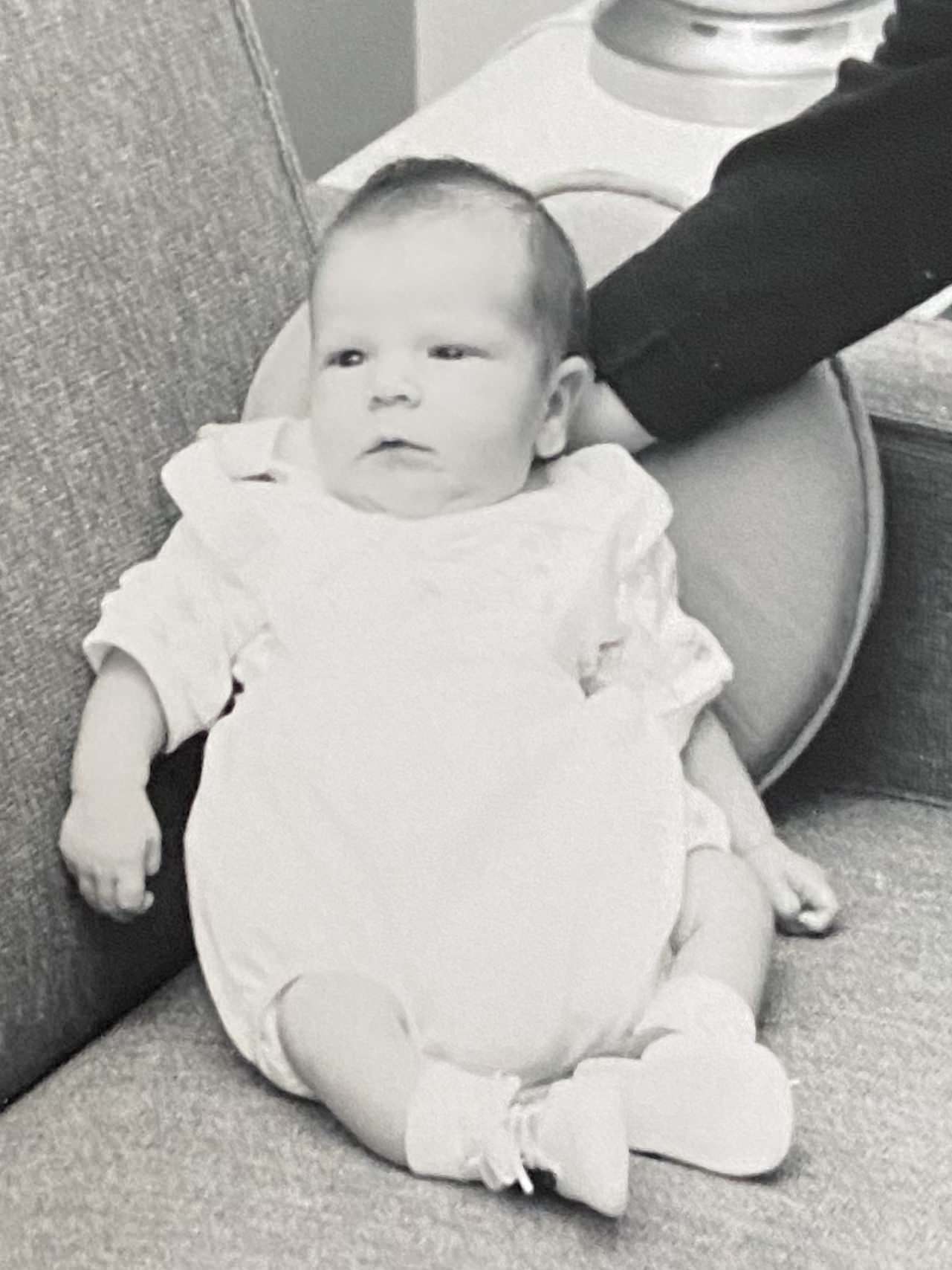
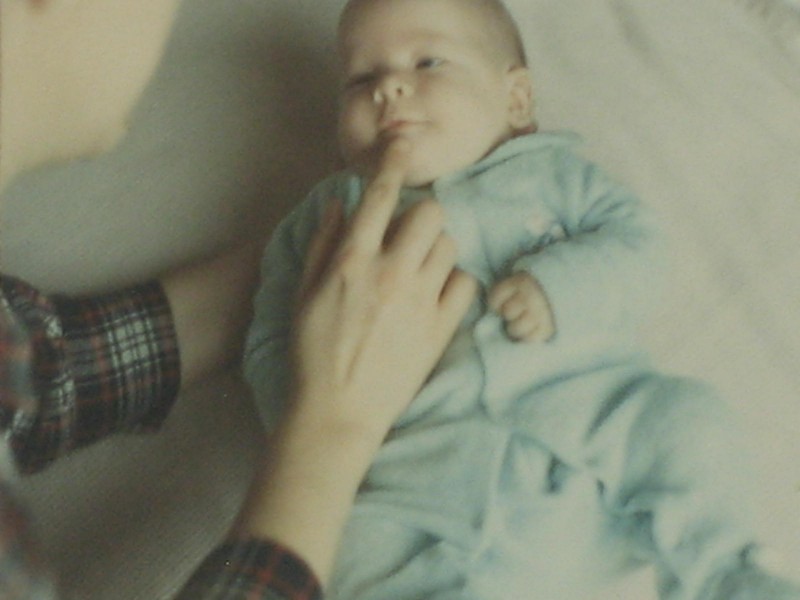
1959
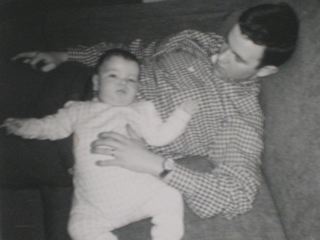
1960
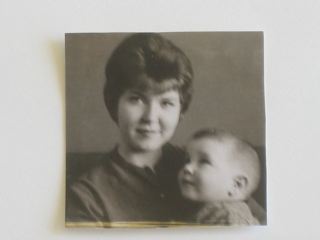
1961
1962
November 7 – Birth of Tracie Lee Savage
Location: Chicago, Illinois


1963


1964

1965

December 9 – Birth of Bradley Donald Savage
Location: Livonia, Michigan
32929 Summers Street

1966
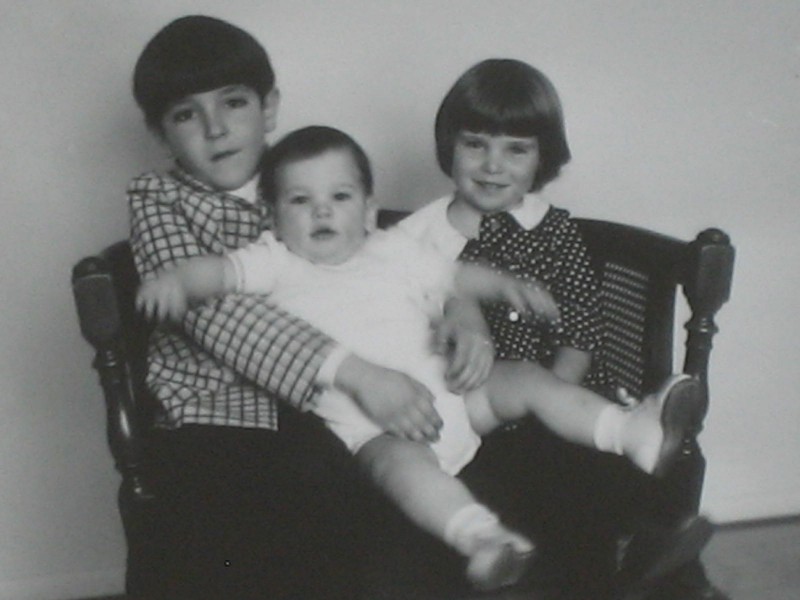
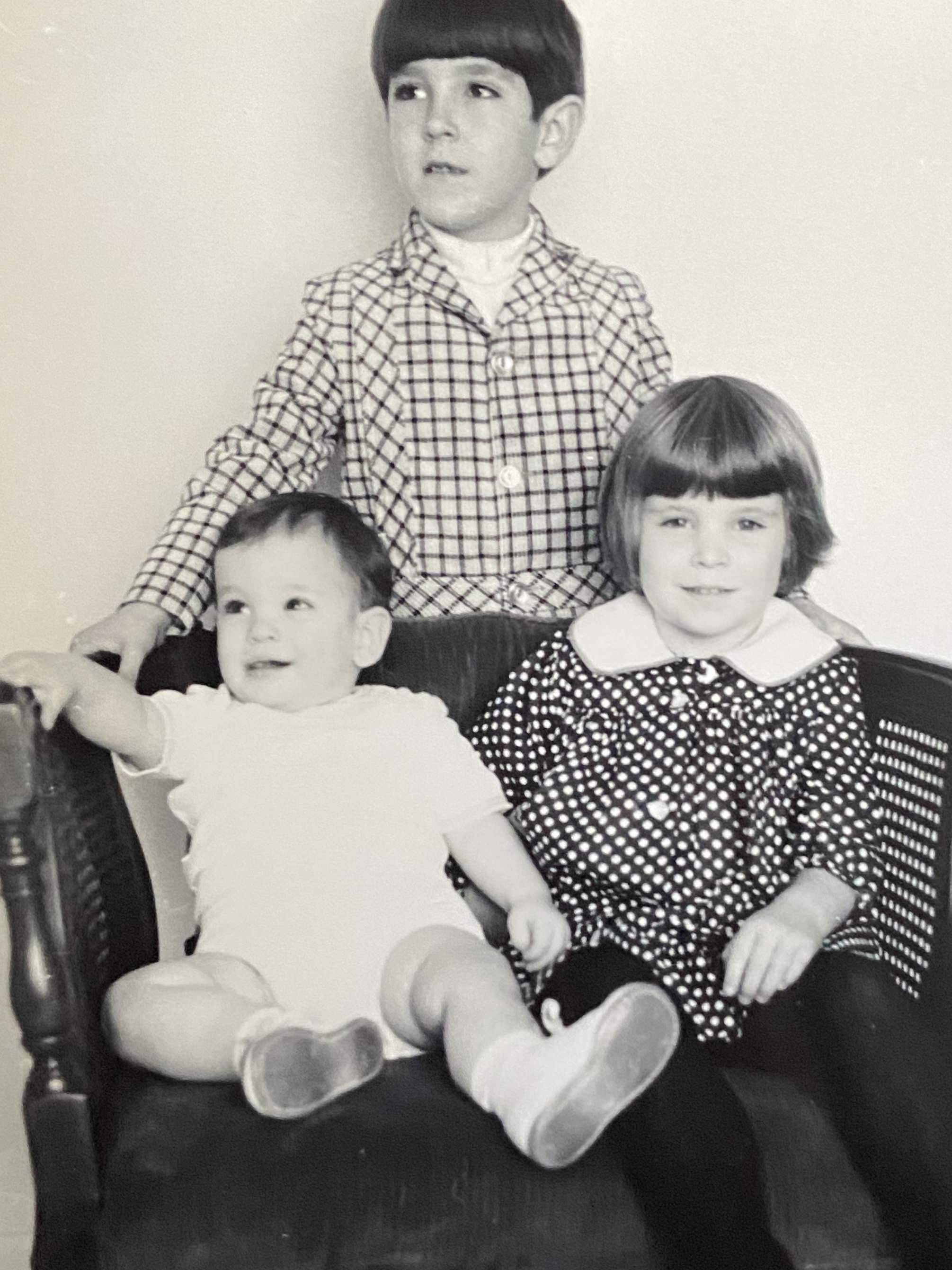
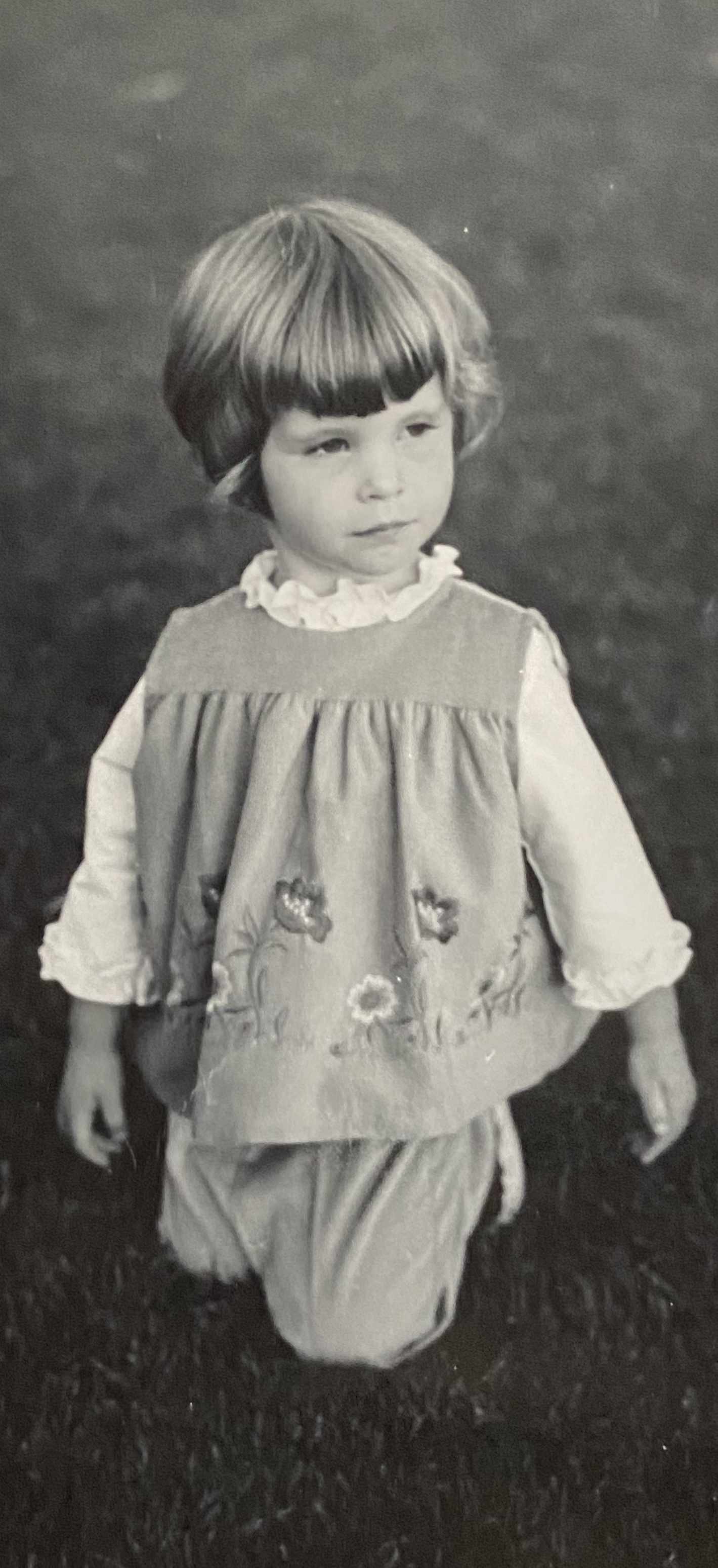
1967

1968

1969
September – Tracie Savage begins 2nd grade at Beckford Elementary School. Teacher: Mrs. Moore
September – Mark Savage begins 6th grade a Beckord Elementary School.
10911 Baton Rouge
Northridge, CA

1970
September – Tracie Savage begins 3rd grade at Beckford Elementary School. Teacher: Mrs. Dodson
1971
1972
1973
September – Mark Savage begins Granada Hills High School
WINSTON
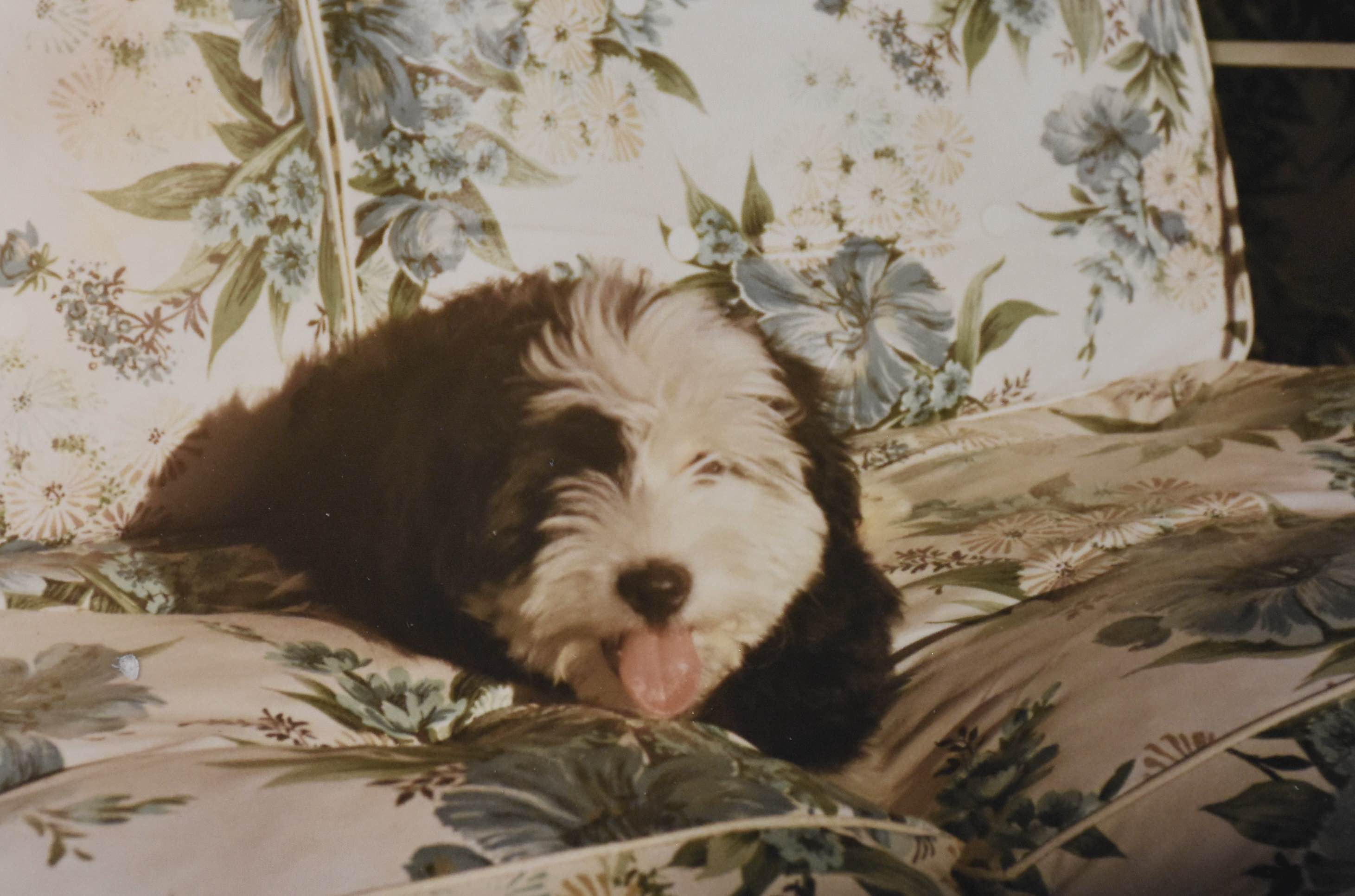
1974
1975
1976
June – Mark Savage graduates from Granada Hills High School

1977
April 27 – Diane Batty dies of cancer at 14 years old. DOB: 9/5/62
June 19th – Tracie Savage graduates from Nobel Jr. High School
June 22nd – Tracie Savage starts two year relationship with Chris Kokiousis
September – Tracie Savage begins Granada Hills High School
1978
July 25 – Tracie Savage takes CA Written Drivers Exam 100/100
November 7 – Tracie Savage takes CA Road test on 16th birthday 99/100
1979
1980
April 12 – Tracie Savage attends Senior Prom with Al Pardo
June – Tracie Savage graduates from Granada Hills High School
June – Tracie Savage goes to Hawaii with high school friends
September – Tracie Savage begins college at UCLA
1981
August – Tracie Savage goes to Hawaii with high school friends
1982
Spring – Tracie Savage films “Friday the 13th – Part 3”
Summer – Tracie Savage goes to Europe with Renee Axotis for 6 weeks
December – Tracie Savage moves to Michigan
1983
January – Tracie Savage begins at University of Michigan
1984
May – Judy Savage and Phil Kal’s wedding reception in LA
September – Tracie Savage interns at WJBK in Detroit (Channel 2)
December – Tracie Savage graduates from University of Michigan
December – Family Christmas in Lake Arrowhead with Kristen and Terry
1985
February – Tracie Savage begins TV news reporting job at WTVG in Toledo, Ohio
October – Tracie Savage begins TV news reporting job at WEYI-TV in Flint, Michigan

1986
July – Tracie Savage quits TV job at WEYI -TV in Flint Michigan
October – Tracie Savage begins 4-year TV reporting job in Dayton, Ohio. WHIO – TV, Channel 7

1987
September – 3 siblings, Bron, Judy spend Labor Day at Sand Pointe cottage in Michigan
October – 3 siblings, Bron, George & Eileen celebrate Grandma Savage’s 90th birthday in Frankenmuth, Mich.
1988
April 16th – Brad Savage and Bron’s wedding
August – Tracie Savage covers Republican National Convention in New Orleans.
1989
1990
1991
January – Tracie Savage leaves Dayton, Ohio. Moves to Los Angeles to begin new job.
February – Tracie Savage begins 3-year TV news job at KCAL-TV in Los Angeles.

April 7th – Brad and Bron have first child – Keaton Alexander Savage
May 11th – George and Eileen have Taylor Joseph Savage
1992
1993
1994
February – Tracie Savage beings 8-year news reporting job at KNBC-TV in Los Angeles.

1995
1996
1997
1998
1999
2000
2001
2002
July

2003
2004
2005
January 25 – Birth of Michael Tate Booras

2006
2007
2008
September – Mark Savage 50th Birthday
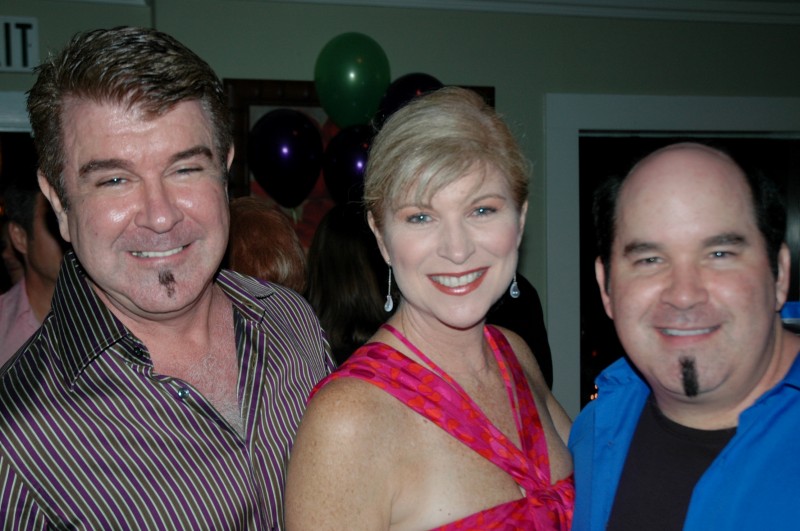
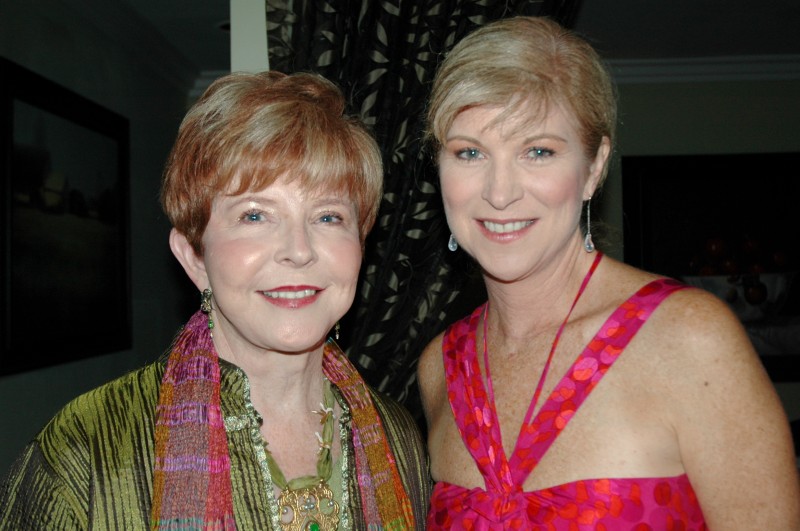
2009
2010
2011
2012
2013
Tracie Savage teaches at L.A. Valley College, Santa Monica College and USC-Annenberg School of Journalism
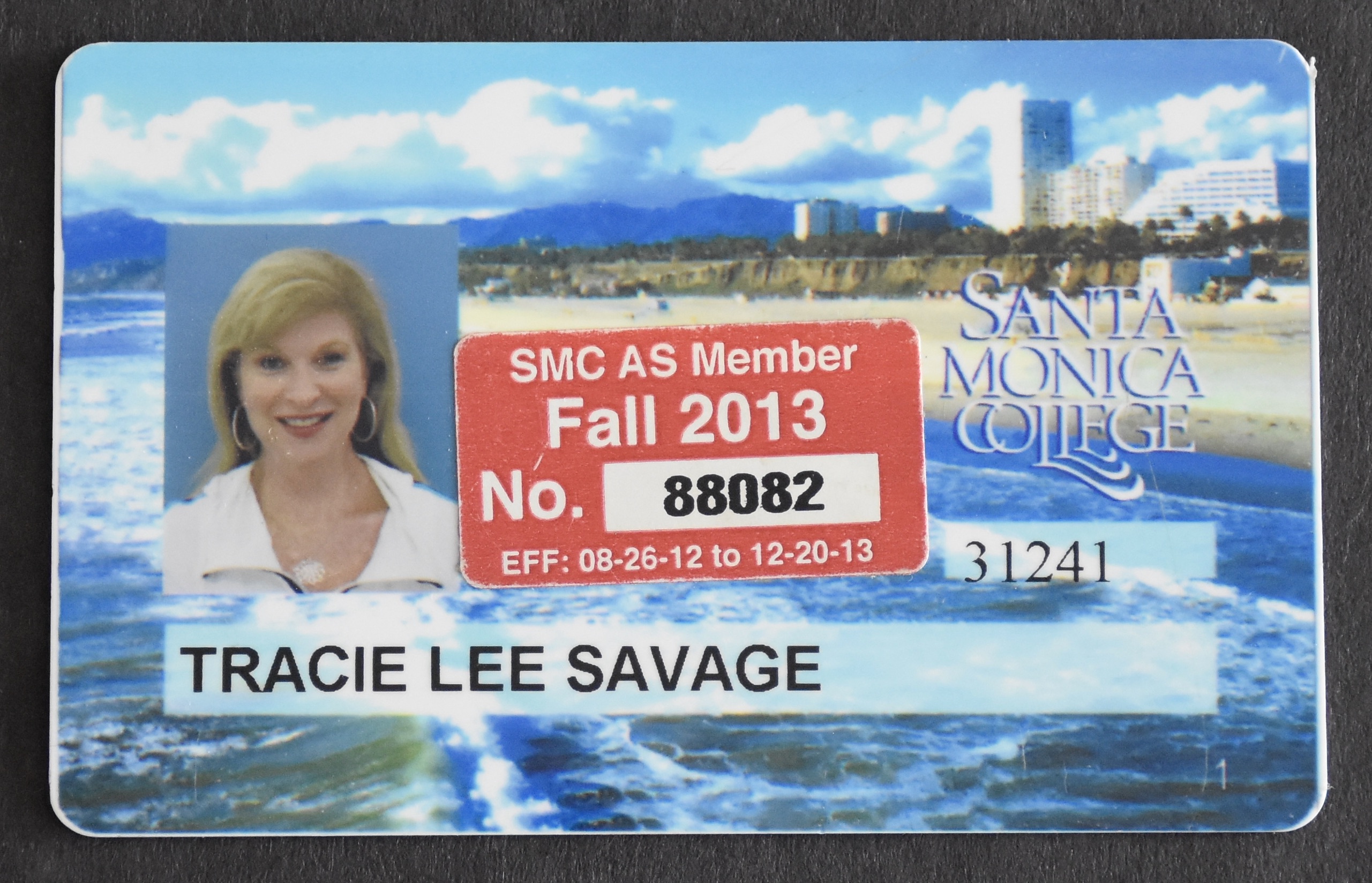
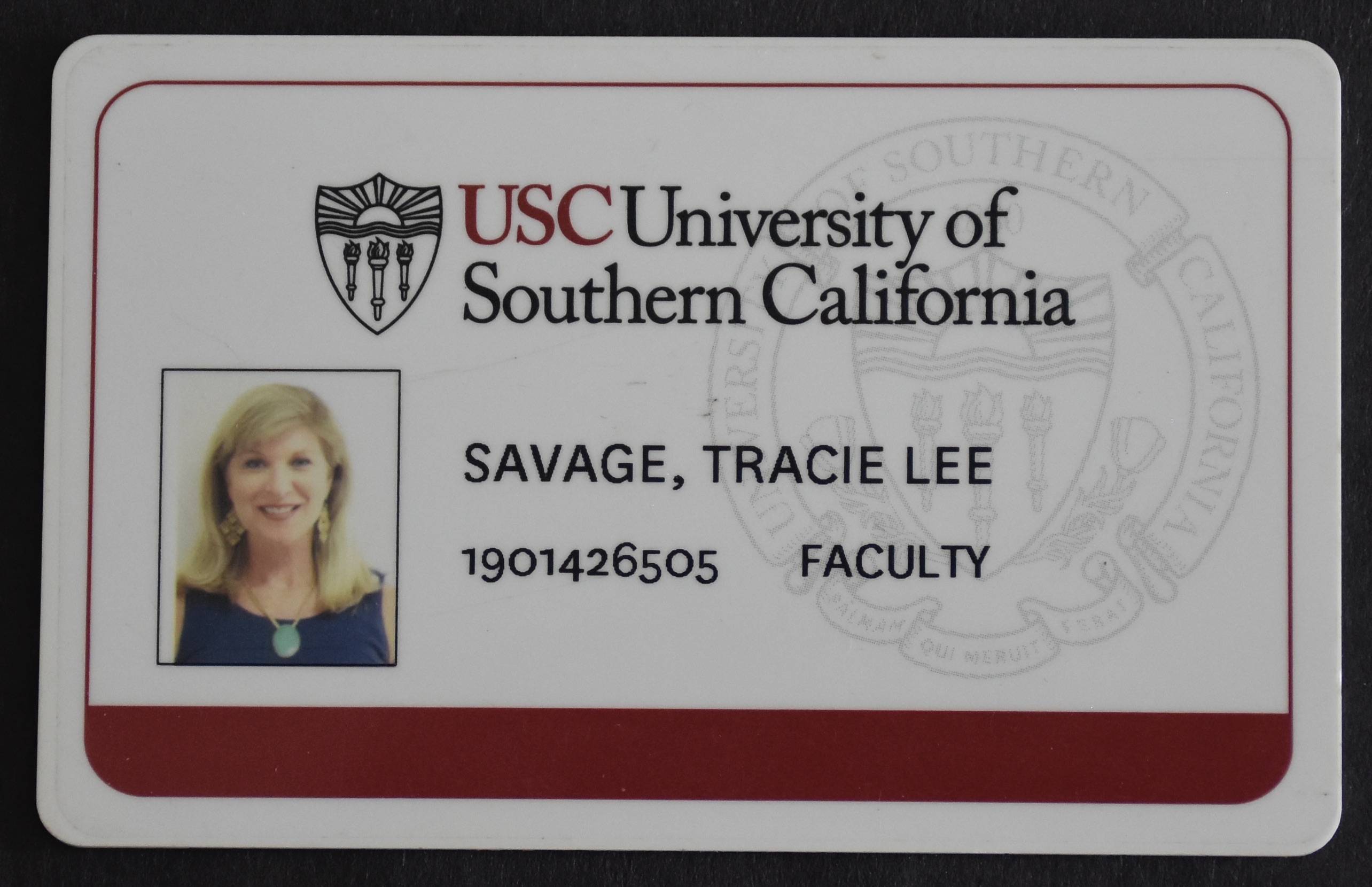
2014
2015
February – Tracie Savage works as Adjunct Prof. at L.A. Pierce College in Woodland Hills, CA
August – Tracie Savage beings full-time teaching job at L.A. Pierce College in Woodland Hills, CA.
2016
July – Tracie Savage and Michael Tate trip – Caseville, Mich.
2017
July – Tracie Savage and Michael Tate 3-week trip to Alaska, Seattle, San Francisco, Pismo Beach.
2018
July – Tracie Savage and Michael Tate 3-week trip to Japan
2019
June – Tracie Savage and Michael Tate 3-week trip to England and Ireland
2020
March – Covid19 Pandemic begins
2021
January 25 – Michael Tate Booras 16th Birthday


